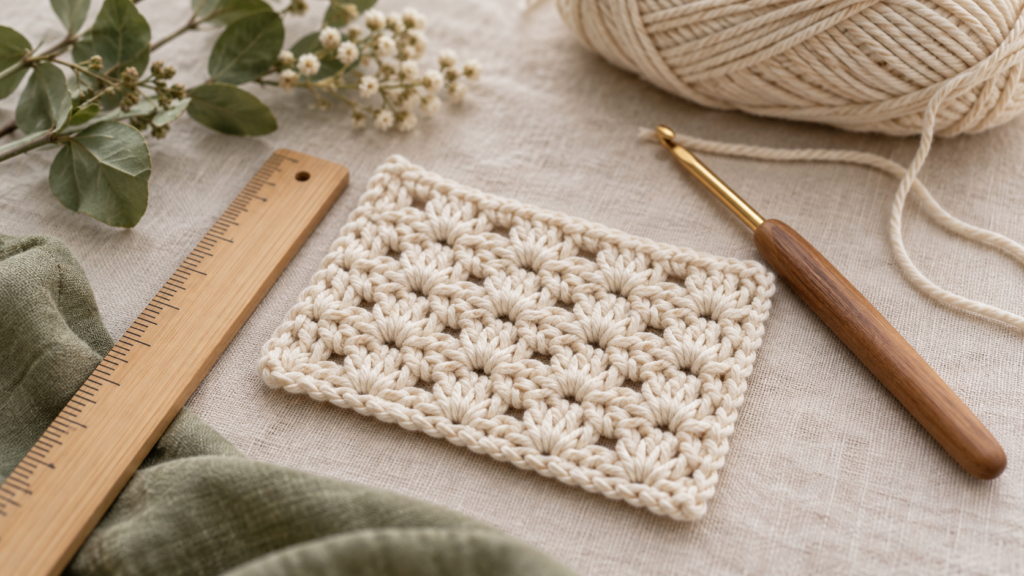
A crochet gauge swatch shows whether your stitches match the size stated in a pattern. It matters most when finished dimensions affect fit, such as hats, garments or blankets made to a set measurement.
Use the pattern materials and stitch
Make the swatch with the yarn, hook and stitch pattern specified in the instructions. The Craft Yarn Council recommends using the yarn, hook and stitch called for by the individual pattern when making a gauge sample.
Make a sample larger than the measuring area
Follow the pattern’s gauge instructions for the swatch size and number of rows. If the pattern gives a measurement over a set number of stitches and rows, make enough fabric to measure that area without using the edges, which can curl or pull unevenly.
Measure the center
Lay the swatch flat without stretching it. Count the stitches and rows across the measurement listed in the pattern. If the pattern specifies a wash or blocking step, complete that before measuring so the sample matches the intended finishing process.
Adjust one variable at a time
If your swatch has more stitches per inch than the pattern, your stitches are smaller; if it has fewer, they are larger. Try another hook size and make a new swatch. Keep the yarn and stitch the same so you can compare the effect of the hook change.
When gauge is less important
For a loose scarf or decorative item with no fixed dimensions, gauge may be less critical. It still affects yarn use and finished size. Use a swatch if you need the project to match a particular length or width.
Keep the successful swatch with the pattern and note the yarn, hook and measured gauge. That gives you a reference if you pause and return to the project later.