
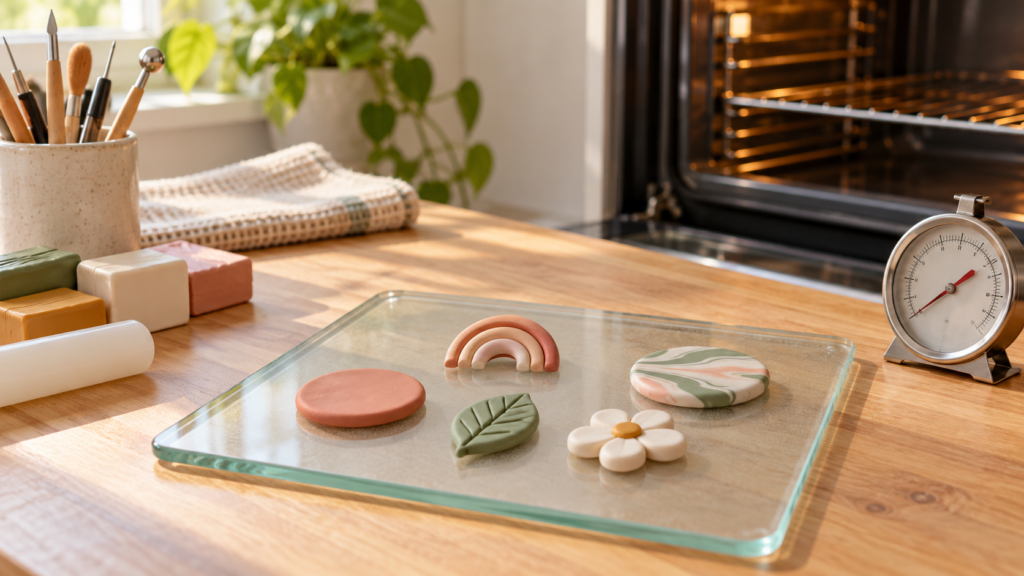
Polymer clay is cured by heating, but temperature and time depend on the product and the thickness of the piece. Use the instructions on the exact package rather than a general setting from another brand.
Check the product label
Read the package for the recommended temperature and baking time. Sculpey also advises following the package directions because different clays can have different curing requirements. Do not raise the temperature to speed up curing.
Measure the thickest section
Identify the thickest part of the piece and use the product’s instructions to calculate the curing time. If the design has sections of different thicknesses, follow the manufacturer’s guidance for that clay and construction.
Verify the oven temperature
Use an oven thermometer to check the temperature near the project. An oven’s displayed setting may differ from the temperature at the baking surface. Sculpey recommends checking oven accuracy and using a thermometer.
Choose a protected baking surface
Use a surface specified as suitable for polymer clay, such as a dedicated glass or metal baking surface or a clay work mat. If a baking tray will later be used for food, place the barrier material recommended by the clay maker between the tray and the clay. Keep clay tools and work surfaces separate from food preparation.
Let the piece cool
Follow the product’s handling directions after baking. The clay may still feel soft while warm; allow it to cool before judging the finished firmness.
Do a small test first
If you are using an unfamiliar oven or clay product, follow the manufacturer’s test method with a small sample. Check for darkening or other changes before baking the finished piece.
These steps are general. The package for the clay you own is the controlling source for its temperature and curing time.