A yarn label answers several different questions: how thick the yarn is, how much is in the ball, what it is made from and how the finished fabric should be washed. Check those details before substituting yarn or buying extra skeins.
Use the weight symbol as a category
The Craft Yarn Council’s numbered system runs from 0 (the finest category) to 7 (jumbo). The number describes yarn thickness, not the weight of the ball in grams. Not every label uses this symbol, and two yarns in the same category can still knit or crochet to different gauges. Read the pattern’s yarn description and compare the actual yarn before choosing a substitute. The Craft Yarn Council’s label guide explains the symbols used on many North American labels.
Compare yardage and fiber
Look at yards or meters, not package weight alone. If a pattern calls for 500 yards, a ball that weighs 100 grams may contain more or less yarn than another 100-gram ball. Divide the pattern’s total yardage by the amount on one ball, then round up to a whole number of balls. Buy enough from one dye lot when a close color match matters; separate batches can differ slightly.
Fiber content affects drape, warmth and care. A wool blend, cotton yarn and acrylic yarn can all carry the same weight category but behave differently. Compare the pattern’s fiber with the label before replacing it.
Use the suggested needle or hook as a test
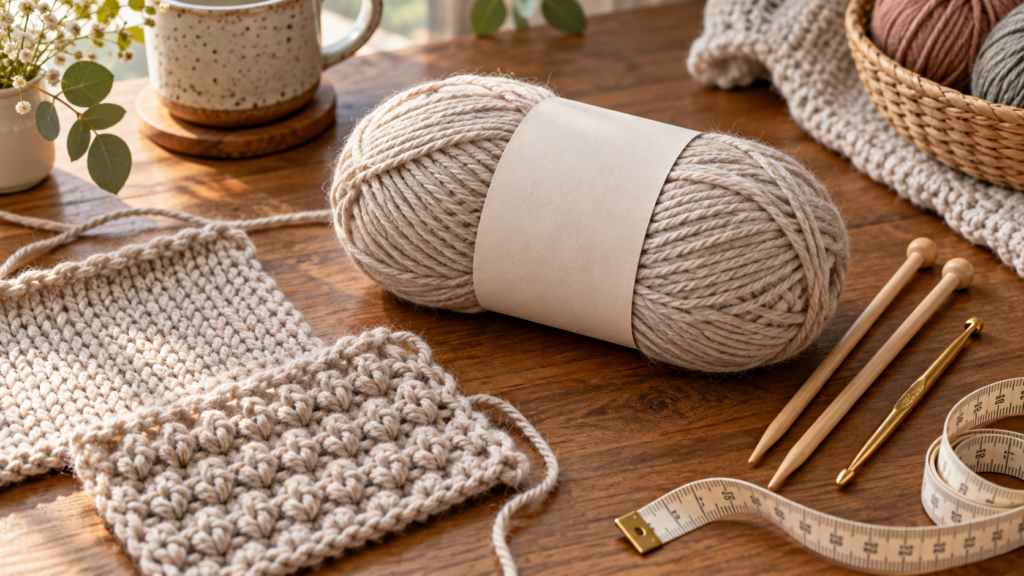
The label’s suggested needle or hook size is a starting point. For a fitted garment, blanket with a fixed size or other project where dimensions matter, make a gauge swatch in the pattern stitch. Measure it after the same washing or blocking treatment you plan to use. If the stitch count differs, adjust the tool and make a new swatch instead of assuming the label recommendation will match the pattern.
Keep the care information
Read the written care instructions and symbols before you start. The care symbols cover washing, bleaching, drying, ironing and professional cleaning; a crossed-out symbol means that method should not be used. The Craft Yarn Council’s care-symbol guide shows how to read them. Save the label with your project notes so you can identify the color number, dye lot and washing method later.