Skip to content
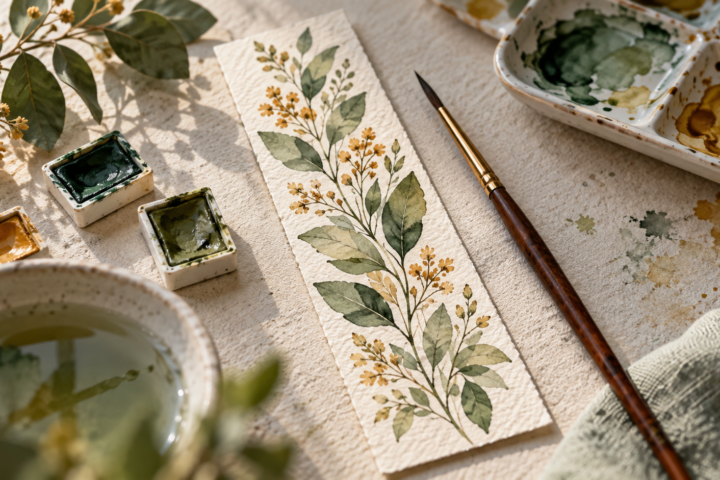
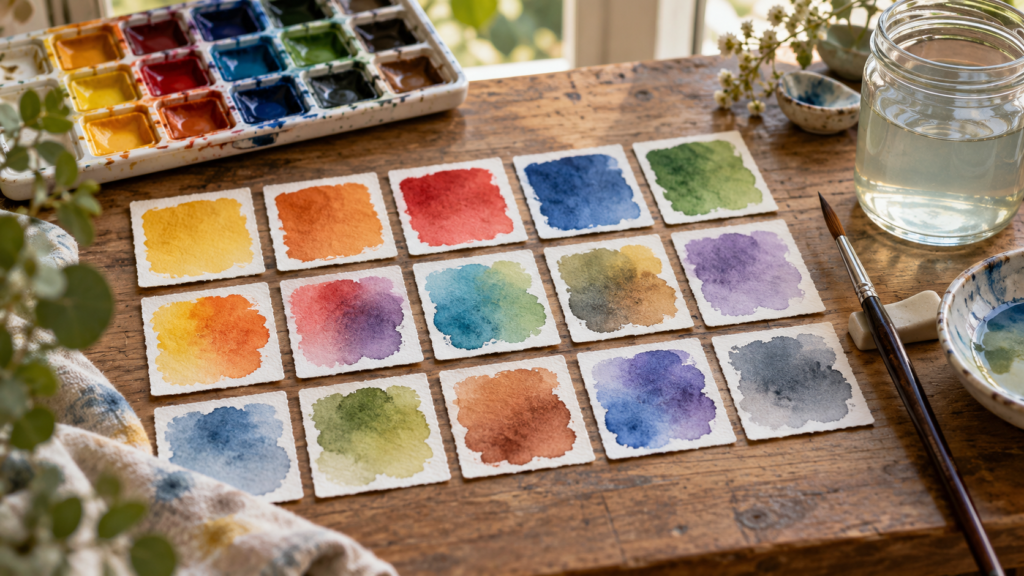
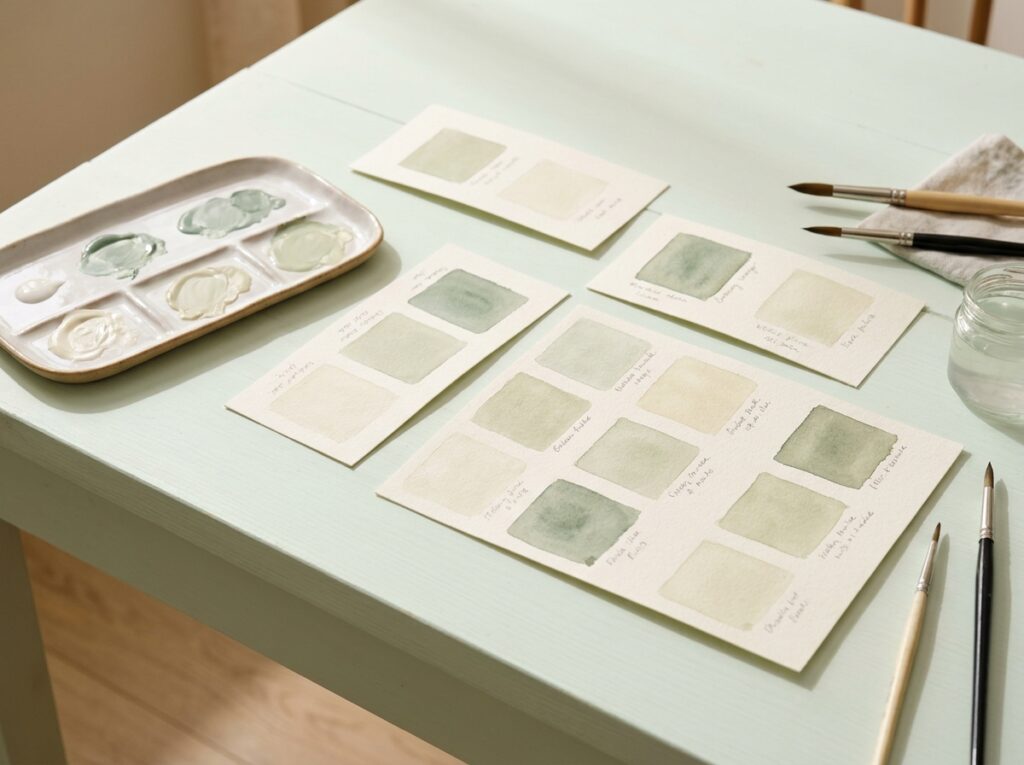
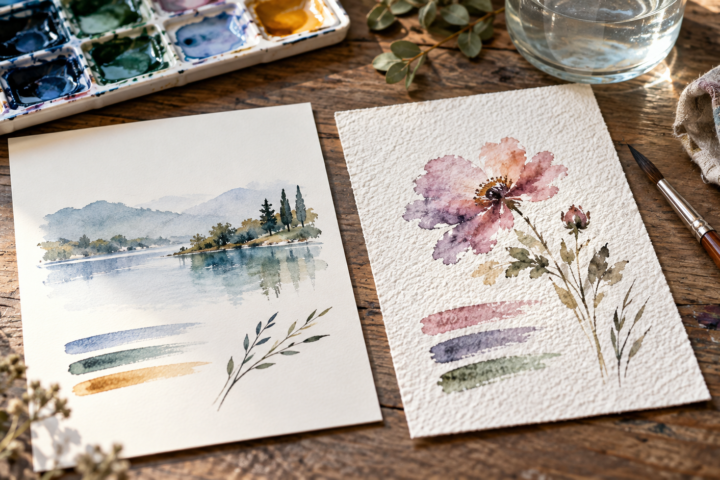
Watercolor color mixing swatches painted on small paper cards

Watercolor Color-Mixing Swatch Cards

Make labeled watercolor swatches on the paper you plan to use, keeping brush and water amounts consistent so dried colors are easier to compare.

Size
Cards: about 3 × 4 in (7.5 × 10 cm), or any size that fits your reference box.

Materials

  • Watercolor paper — Use the surface and weight you want to test.
  • Watercolor paints — Select two to four pigments for each mixing grid.
  • Water — Use a clean container.
  • Scrap paper — For testing brush moisture.

Tools

  • Small round brush — Use a consistent brush for all swatches.
  • Palette — Mix colors without contaminating pans.
  • Ruler and pencil — Mark a simple grid.
  • Waterproof pen — Label cards only after the paint is dry.

Steps

  1. Cut the cards

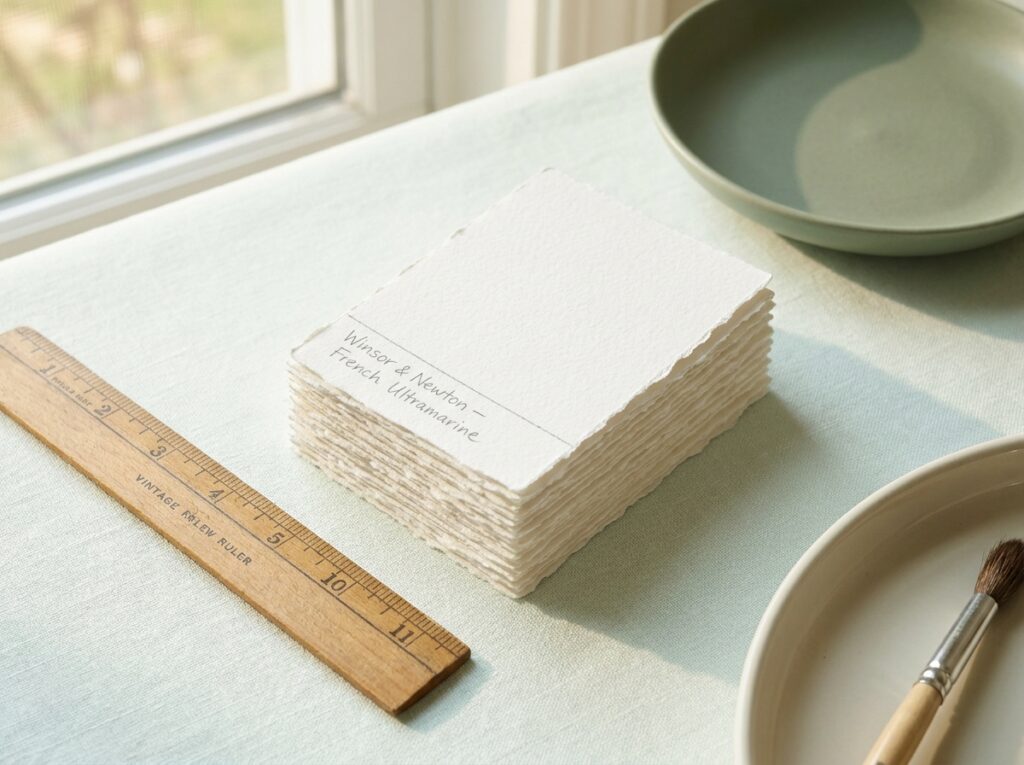
    Cut the paper to the size that fits your reference box. On the back, write the paper brand or surface and the date if you want to compare later batches. Avoid writing where water will soak through to the swatches.

    Illustration: watercolor paper cut into small cards and labeled for a mixing chart.
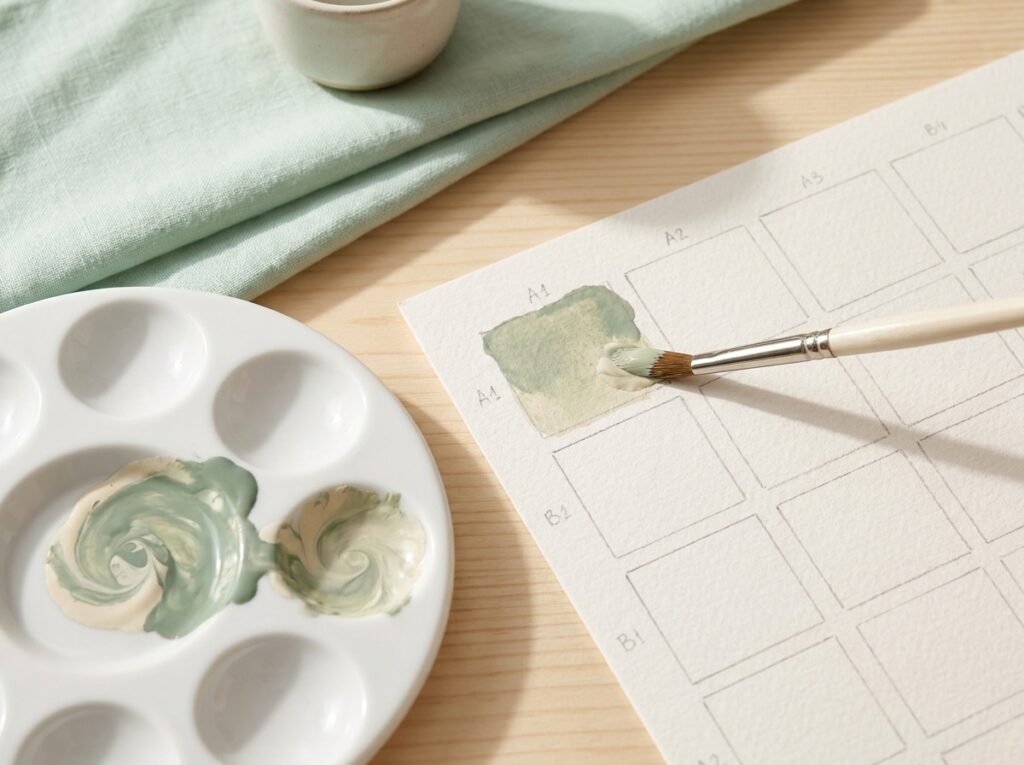
  2. Draw the grid

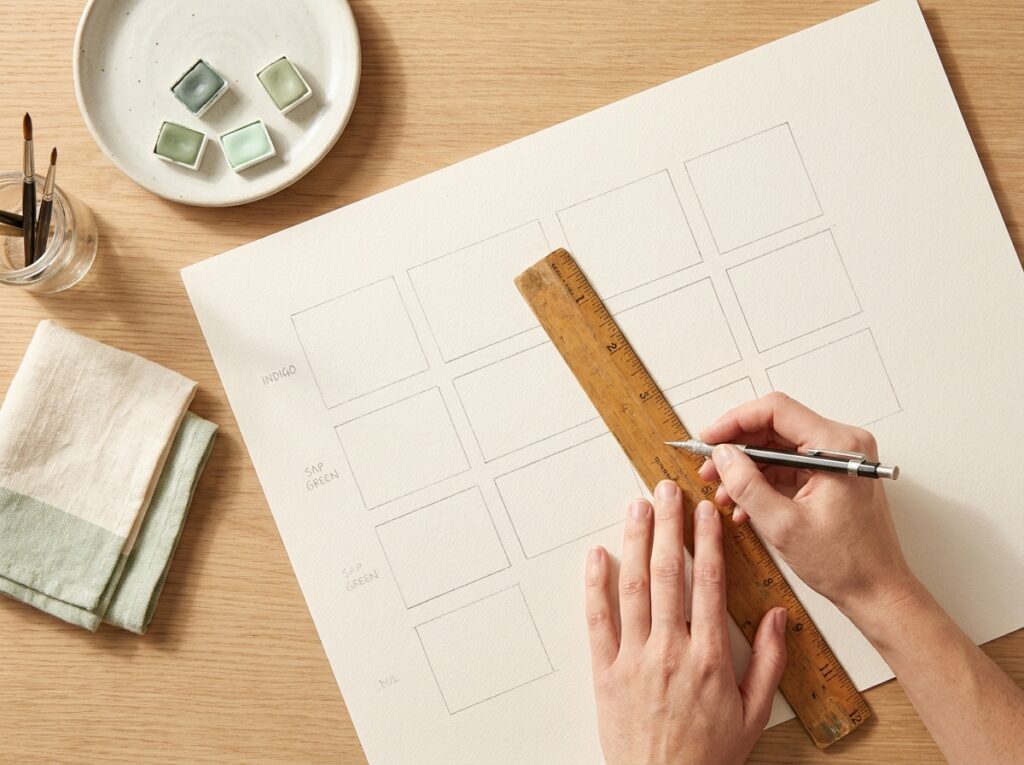
    Use a ruler to mark cells large enough for both a full-strength patch and a diluted wash. Leave a margin for pigment names. If you plan to compare two-color mixes, label rows and columns before the first wet brushstroke.

    Illustration: pencil grid divides a watercolor card into labeled mixing cells.
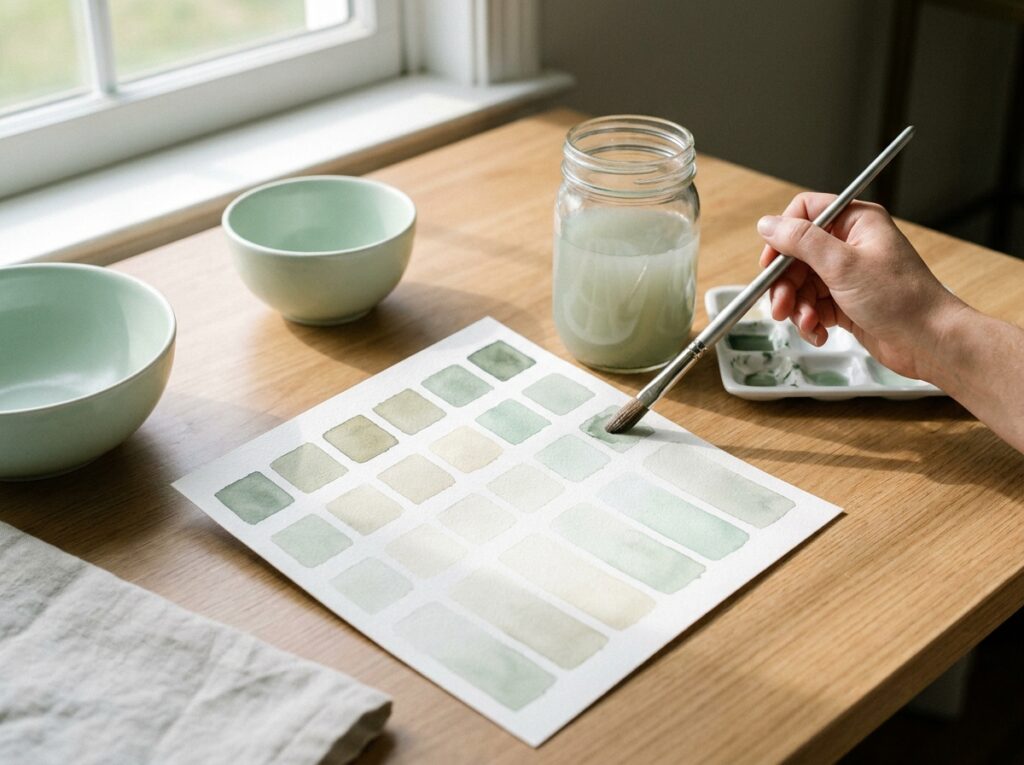
  3. Paint single pigments

    Fill a few cells with each paint on its own. Use a similar brush load and water amount each time, then make a lighter wash beside the full-strength mark. Rinse the brush between pigments so one color does not contaminate another.

    Illustration: single-pigment watercolor swatches shown as a dark mark and a lighter wash.
  4. Mix the colors

    Combine two pigments in a clean palette well, then paint the mixture in its labeled cell. Record the proportions in repeatable terms, such as equal brush loads or two parts yellow to one part blue. Make a second swatch if you change the water amount.

    Illustration: two watercolor pigments combined in a palette and brushed into a labeled grid cell.
  5. Label and dry

    Let the card dry flat before judging the colors. Compare the dried swatch with your reference under the light where you will paint. Add a note if a mix shifted, separated or dried lighter; store the card flat and away from moisture.

    Illustration: labeled watercolor swatch card laid flat to dry beside a palette.

Swatch cards help you compare a paint straight from the pan with mixtures made from the same pigments. Use the paper, brush and paints you expect to use in the finished piece. A different paper surface or wetter brush can change how a color spreads and dries.

The suggested card is about 3 × 4 in (7.5 × 10 cm). Draw a grid with enough room for a solid patch and a small wash in each cell. Label pigments before painting, and note mixture proportions in brush loads or drops rather than relying on memory.

Let the cards dry fully before deciding which mix matches your reference. Watercolor often looks different when dry; keep the dried cards in a box or binder so you can return to the same mixtures later.

Step images are illustrations. They show one possible sequence; fit and tool settings depend on your materials and equipment.
Questions

Why use the same paper for every card?

A consistent paper makes the comparisons easier to read. You can make a separate set when testing another surface.

Should I label colors while wet?

Wait until the paint is dry so labels remain legible and do not smudge.

How many pigments should I mix at once?

Start with pairs. A simple grid makes it easier to see how each pigment changes the mixture.

Related guides

More projects to try