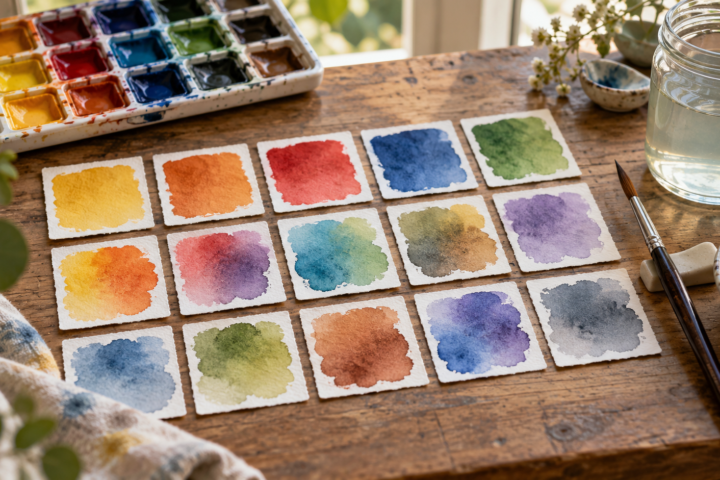
A small test swatch can help you repeat a watercolor mix without guessing from a wet puddle. Use the same paper and brush you plan to paint with; both affect how the color looks on the page.
Start with a reference mix
Choose the pigments and note the order you add them. Begin with a small amount of the dominant color, then add the second pigment gradually. Keep the brush load and water amount similar between tests. If you change the ratio, record the change rather than relying on memory.
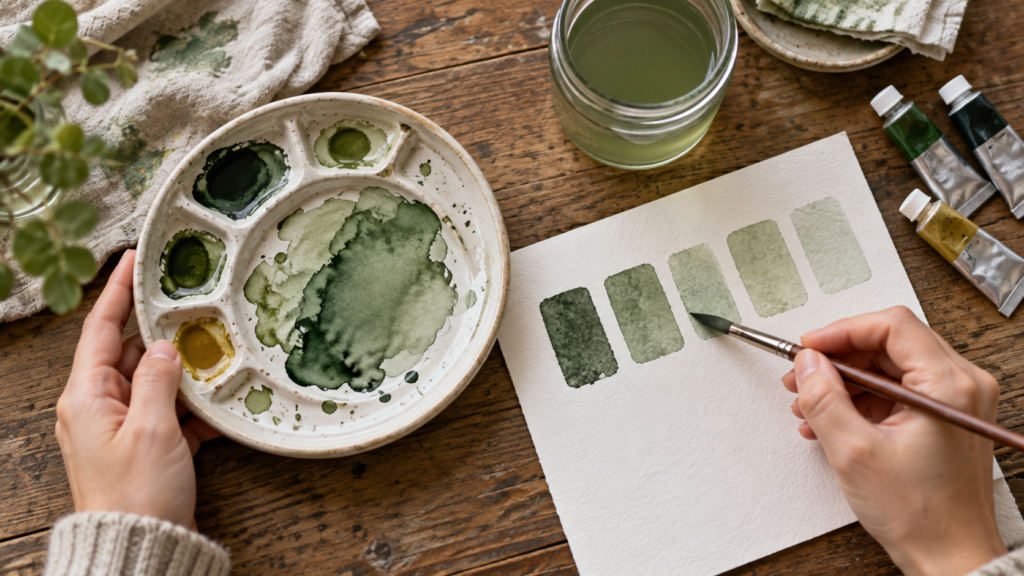
Make a swatch ladder
Paint a row of small rectangles, adding a little more of one pigment to each successive mix. Label the mixes beside or on the back of the sheet. Let the swatches dry before comparing them; the wet puddle can look different from the finished mark.
To compare values, use the same number of brush passes and avoid adding extra water to only one swatch. For a wash, test the edge and the middle of the stroke as well as the strongest color.
Scale up the mix
When a swatch is close, make a larger puddle using the same proportions. Keep a sample beside the painting and check it as it dries. If the mix shifts, adjust the puddle in small steps and make another test mark.
Write pigment names and approximate amounts on the back of the test sheet. This will not recreate every variable, but it gives you a starting point for the next session. Paper texture also changes the mark, so compare swatches on the same surface; the watercolor paper guide explains how to test paper before committing to a full sheet.