Fabric preparation affects stitch tension and the finished shape. Choose a cloth that suits the embroidery design, leave space around the motif and set it in the hoop without stretching it out of shape.
Choose fabric for the stitch
For general hand embroidery, DMC recommends flat cotton fabrics such as percale, evenweave or linen. Stretch fabrics can distort while stitching; DMC suggests stabilizing garments such as T-shirts with a suitable stabilizer. Match thread and fabric weight, then test a few stitches on an offcut.
Leave a working margin
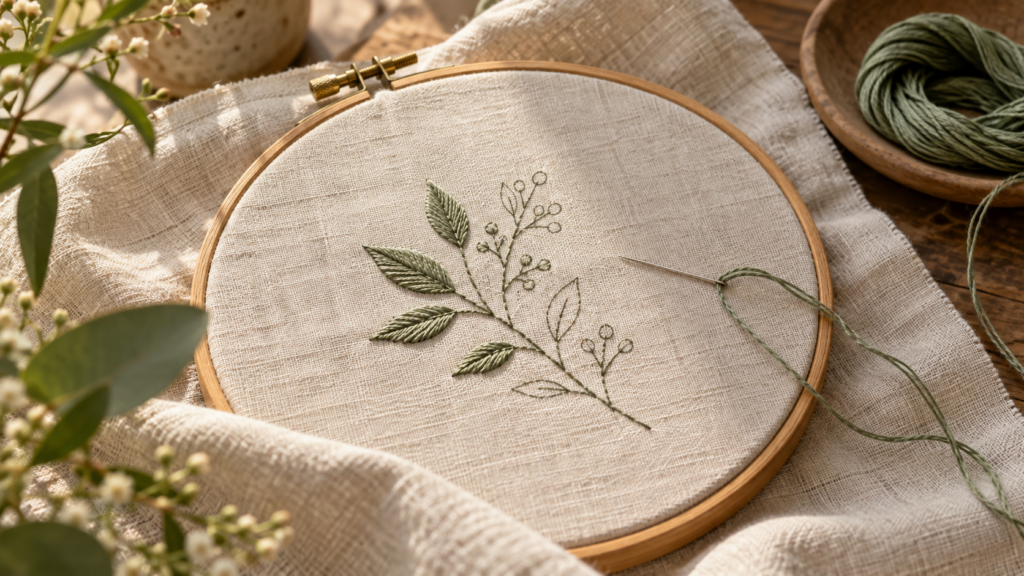
Cut fabric with extra room around the design so the hoop can grip it and the finished piece can be framed or finished later. DMC advises leaving several centimetres around the motif for display in a hoop or frame. Keep the design centered if the hoop itself will be the final frame.
Place the fabric in the hoop
- Loosen the screw and separate the inner and outer rings.
- Lay the fabric over the inner ring, keeping the design centered.
- Press the outer ring over the fabric and inner ring.
- Tighten the screw until the fabric is taut, without pulling the weave unevenly.
Check tension as you stitch
The fabric can loosen during stitching. Re-tighten it when needed. Pulling stitches too tightly can pucker the cloth; loose stitches may look uneven. DMC recommends keeping the needle vertical and using consistent thread tension.
Remove the hoop after stitching
Take the fabric out when the work is finished rather than leaving it stretched in the hoop for long periods. DMC notes that extended hoop storage can leave creases that are difficult to remove.
For a project-specific setup, follow the pattern’s recommendations for fabric, stabilizer, hoop size and thread.