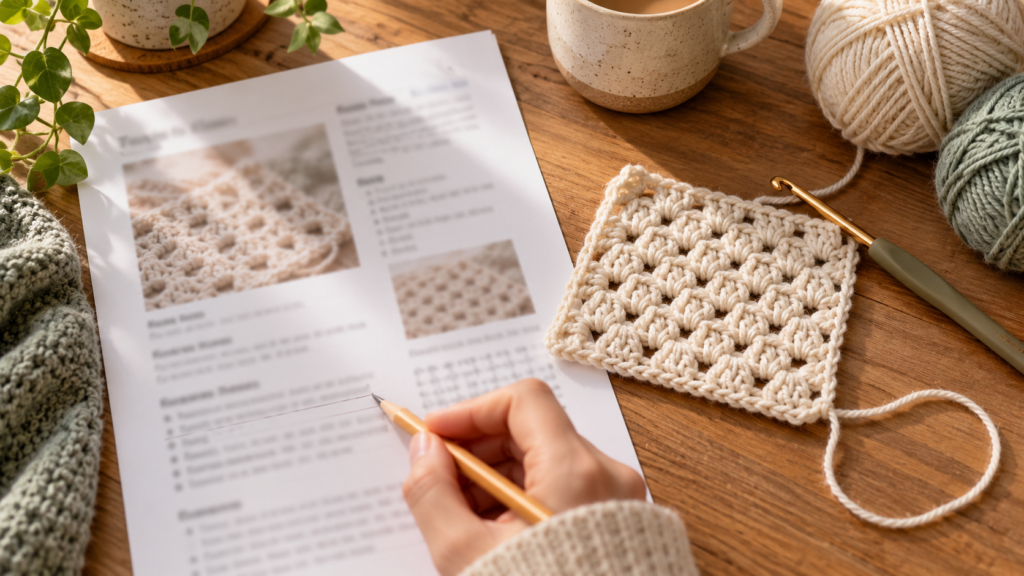
Before crocheting from abbreviations, find the pattern’s terminology note and stitch key. US and UK names can use the same words for different stitches. For example, a US single crochet is called a double crochet in UK terminology. The abbreviation may therefore change with the pattern’s terminology system.
Use the pattern’s own key first
Read the key from top to bottom before starting. Designers may define a special abbreviation that does not appear in a general list. Mark unfamiliar terms and check where parentheses, brackets or asterisks begin and end. A line such as “rep from *” refers to the exact section after the asterisk, not necessarily the whole row.
The Craft Yarn Council’s crochet abbreviation list uses US terminology and notes differences with UK terms. Use it as a reference only when the pattern does not define its own term.
Separate stitches from actions
Stitch names tell you what to make; action words tell you how often or where to make it. “Inc” often means adding stitches at a location, while “rep” sends you back to a written sequence. Follow the pattern’s definition if it gives one. When the instruction groups several stitches in parentheses or brackets, keep that group together while reading.
Track size and stitch counts
If the pattern offers several sizes, identify the number for your size and mark it through every section before crocheting. At the end of each row or round, compare your count with the stated total. If it differs, stop and recount before moving on; an extra stitch can change later shaping or a joined edge.
When a sentence remains unclear, work just that repeat with scrap yarn. A short sample often shows whether the instruction changes stitch placement, groups stitches in one space or repeats a sequence. Keep the terminology note beside you as you work instead of relying on memory.