Choose where the paper flowers will be displayed before selecting templates. A vase, a wall backing and a gift package each need a different arrangement shape.
Choose the display format
Measure the available width, height and depth. A flat wall piece can use broad petals and layered leaves. A vase arrangement needs stems long enough to place blooms at different heights.
Set a focal bloom
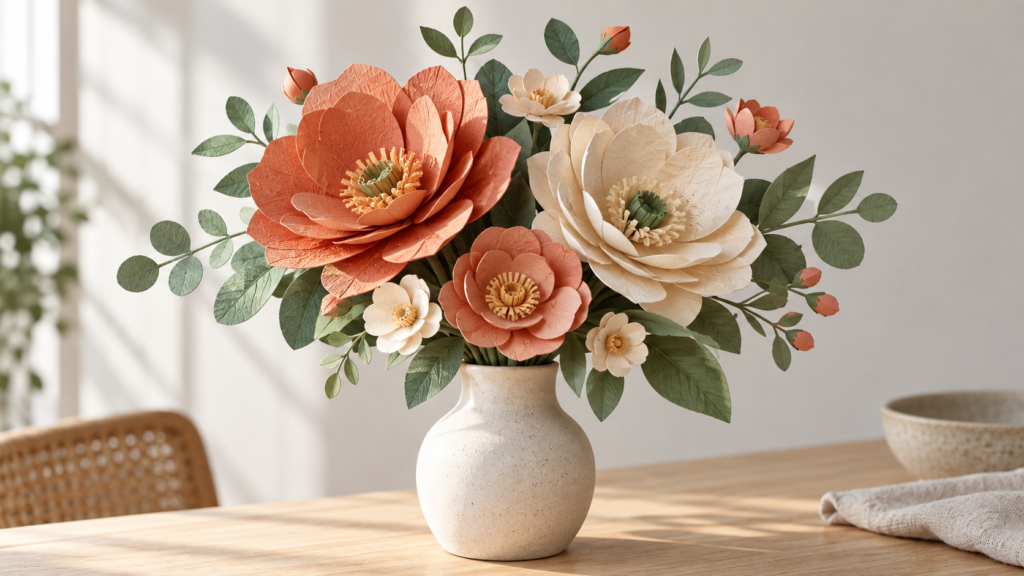
Choose one larger flower or one distinct color as the focal point. Add smaller blooms around it. Sketch the arrangement’s outline and move paper circles or rough flower shapes until the composition fits the display space.
Balance size and color
Vary the flower sizes so the main bloom remains visible. Select a small palette before cutting: one main color, a supporting color and a leaf or neutral tone. If you use patterned paper, place it on fewer flowers so the pattern does not compete with the focal bloom.
Check the template dimensions
Read whether the listed size refers to flat cut pieces or assembled flowers. Check whether leaves, centers, stems and assembly instructions are included. A rolled flower’s flat template size does not show how much space the finished flower will occupy.
Make a paper layout
Cut rough shapes from scrap paper in the planned sizes. Arrange them on the backing or beside the vase. Mark their positions, then cut the final templates. This shows whether the arrangement fits before you cut the full set.
Plan attachment and storage
For a wall piece or gift decoration, decide how the flowers will attach and where the backing will hang. For a vase, plan how the stems will be supported. If the finished piece will be stored flat, keep that in mind when choosing layered details.
Make one sample flower and place it in the intended display area to check its size and color before cutting the rest.