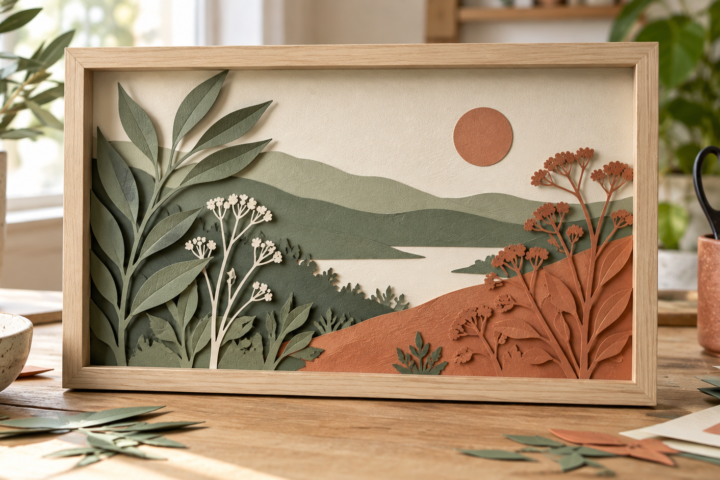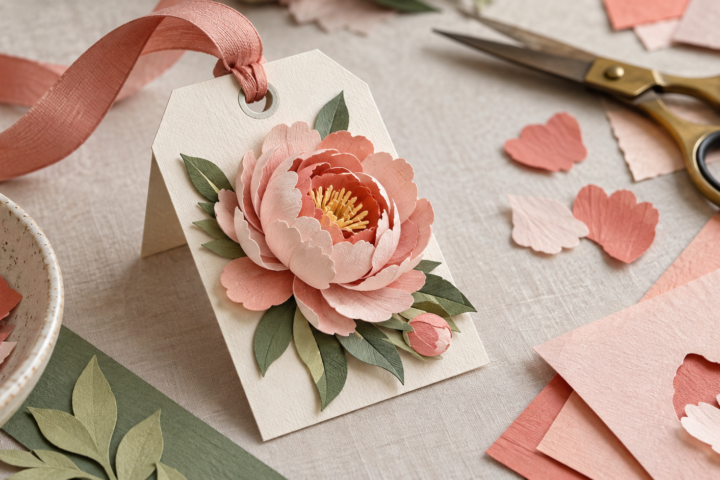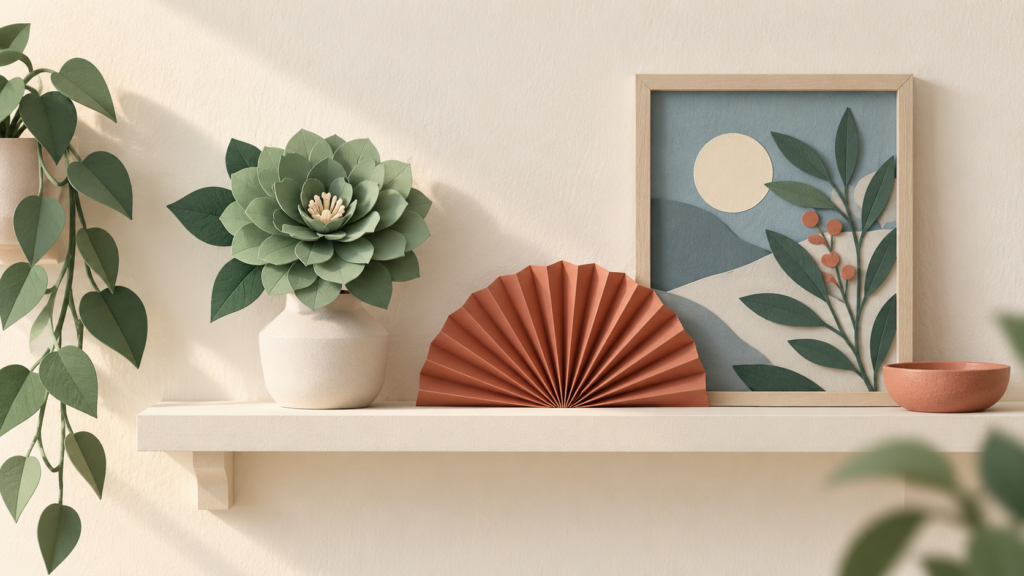
For a small shelf, start with the space available behind and around the object. A deep layered frame needs more depth than a folded fan or a single paper bloom. The viewing angle matters too: a wall-facing decoration can have a finished back, while a freestanding piece should look deliberate from more than one side.
Five forms that use little space
- Accordion fans: Folded ridges add height without a large footprint. Display one as an accent or group several in a repeated color sequence.
- Layered mini scenes: A shallow shadow box turns a small opening into a dimensional focal point. Compare the assembled depth with the shelf before choosing a frame.
- Paper flowers: A single bloom in a narrow vessel uses vertical space. Keep the stem and petals proportional to the container so the arrangement does not dominate a small shelf.
- Folded arches: Repeating rounded panels can stand as a sculptural object. Vary the paper colors across the layers to make the outline easy to follow.
- Hanging shapes: A light strand can use the space above a shelf without taking up its surface. Check that it will not touch a lamp, fan or moving curtain.
Check scale and stability
Make a paper mock-up before cutting the final design. Set it on the shelf, view it from the doorway and check that nearby books or objects still have room. For freestanding forms, test the base on the actual surface; a narrow support can tip when the paper bends or catches a draft.
Color affects how much visual space a piece occupies. A single bright accent can stand out against a quiet shelf, while several strong patterns can compete with book spines and framed photos. Repeat one color from the room if you want the decoration to sit quietly.
For larger wall displays, see layered paper wall art ideas. If flowers fit the space, these paper flower display options compare shelf and wall arrangements. A layered frame can be planned with the shadow box assembly guide.