Paper Halloween garland ideas work best when the display space decides the format. Use a repeated cutout for a quick wall or doorway line, a folded chain when movement matters, or a layered motif when you want each character to read from a distance.
This is a planning guide, not a build log. No template mentioned here was downloaded, cut, or assembled for this article. Source instructions and visible examples support the construction suggestions; the final size, paper choice, and attachment still depend on your space.
Choose the garland format before cutting
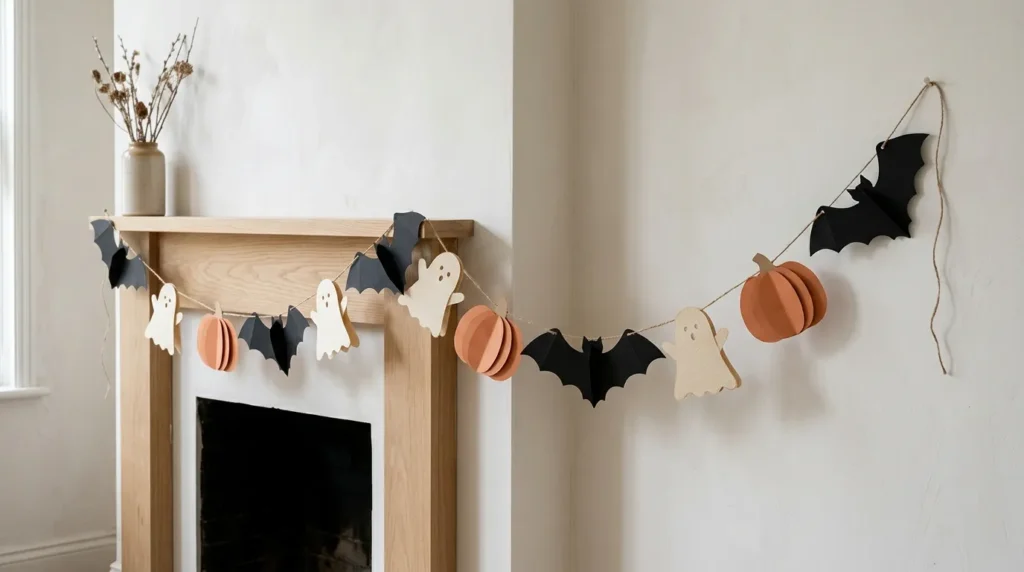
A flat cutout garland is the easiest format to scale. Cut pumpkins, ghosts, bats, stars, or letters, then attach the pieces to string or twine. A mixed set can feel playful, but repeating one motif produces a calmer line that works after Halloween as well.
Folded forms add movement and some depth. Paper chains, accordion folds, and folded bats can turn slightly when air moves through the room. Layered pieces take longer because each motif has more parts, but they give you a stronger front-facing pattern for a mantel or photo wall.
Set the scale for the room
Measure the span first. A garland for a narrow doorway needs smaller pieces and shorter gaps than one running across a party wall. Mark the two end points with removable tape, then estimate how many motifs can fit without making the line look crowded.
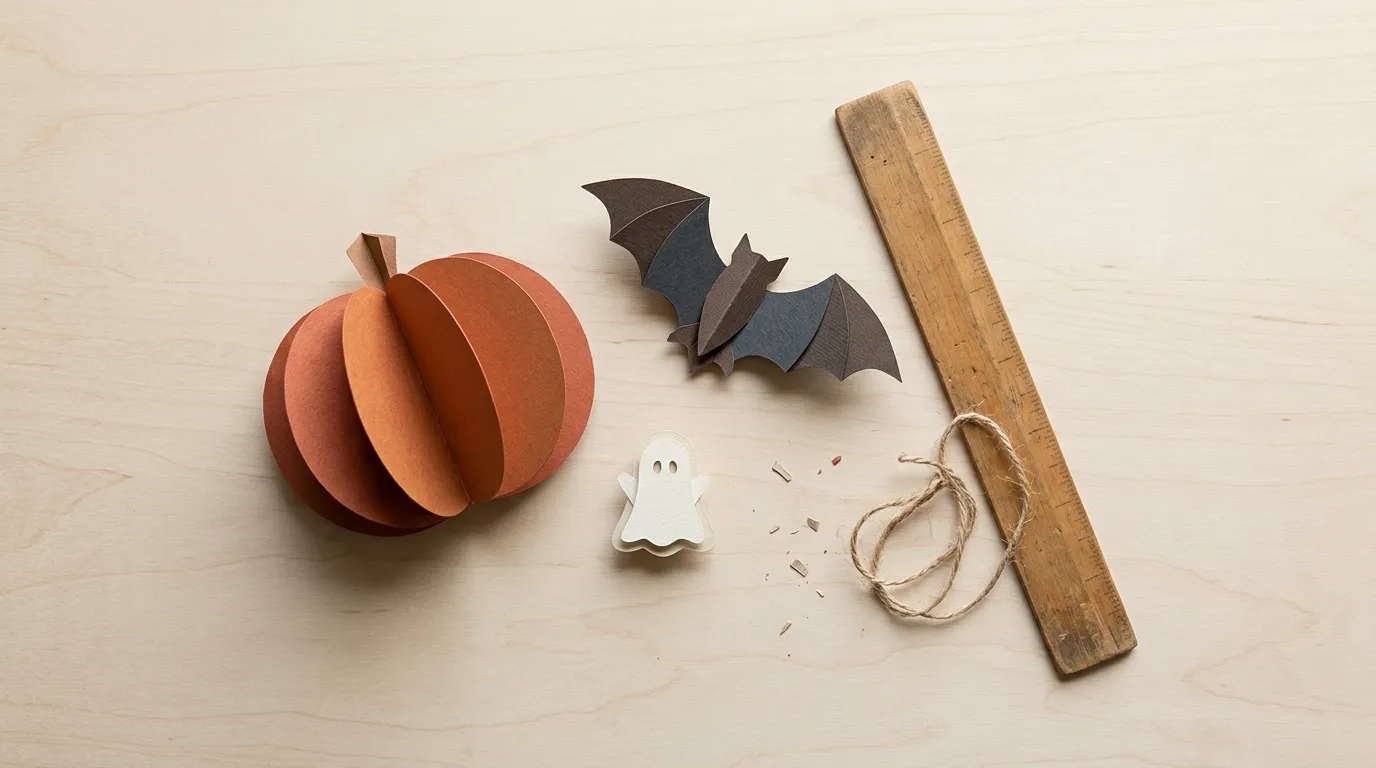
Make a short sample before producing the full strand. Include one complete repeat, the planned gap, and the hanging method. Step back to the distance from which people will see the decoration. Small details that look clear on a table may disappear above a mantel.
Use larger silhouettes when the wall is busy or the light is low. Thin interior cuts can become hard to read, especially in dark paper. For hand cutting, choose shapes with strong outer contours; the guide to hand-cut paper designs covers that decision in more detail.
Build a repeatable motif rhythm
Start by placing the largest or most detailed motif at the center of the planned span. Repeat it at the ends only if the line needs visual balance. Smaller shapes can fill the spaces between them, but keep the gaps consistent enough that the garland does not look accidental.
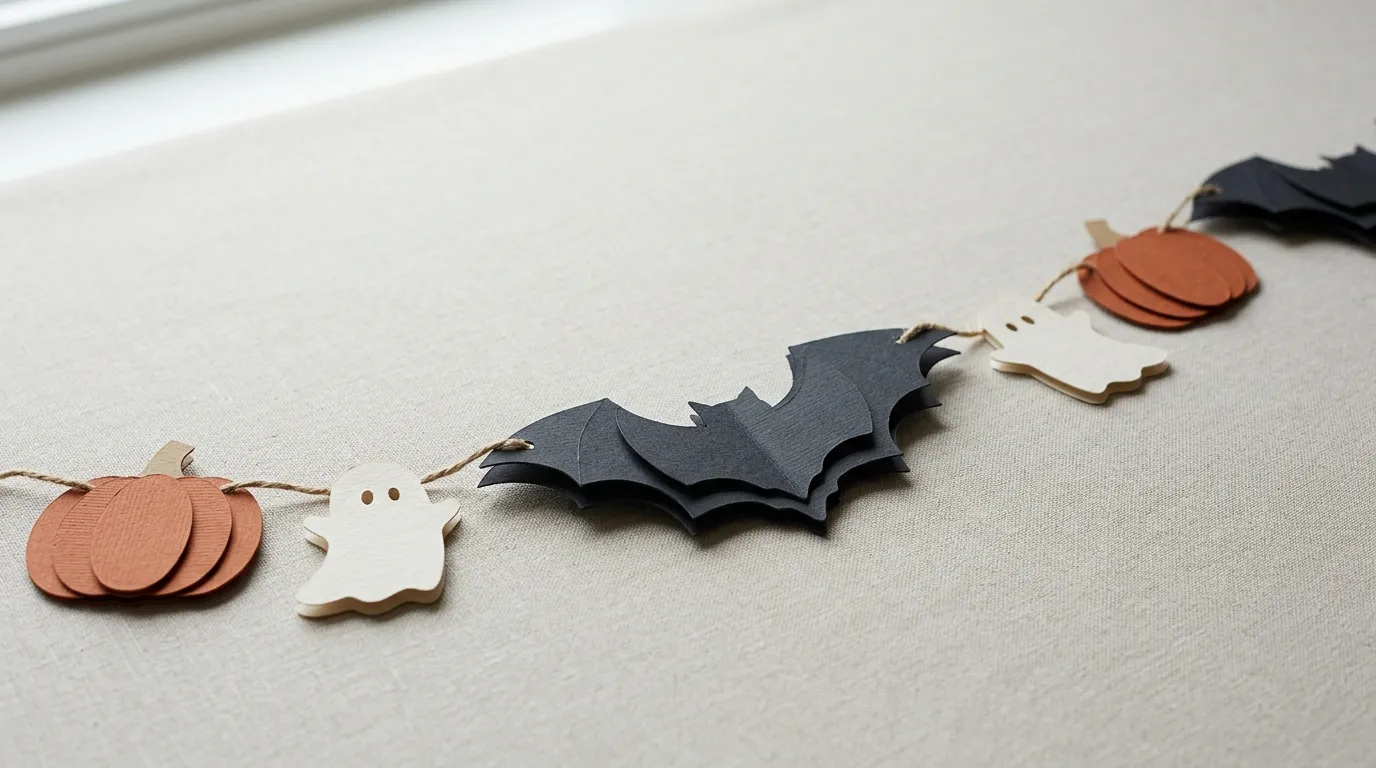
Color can do the organizing work. Black and white gives a bat or ghost garland a clear silhouette. Orange, cream, and muted green make pumpkins and leaves easier to keep on display through fall. If each piece uses several colors, test the order on the floor before gluing.
Choose an attachment method
String, twine, or thin ribbon can run behind the motifs. Glue or clear tape may work for a temporary display, while punched holes and small loops make the pieces easier to remove and store. Keep the attachment point near the top third of each shape so the paper hangs without tipping forward.
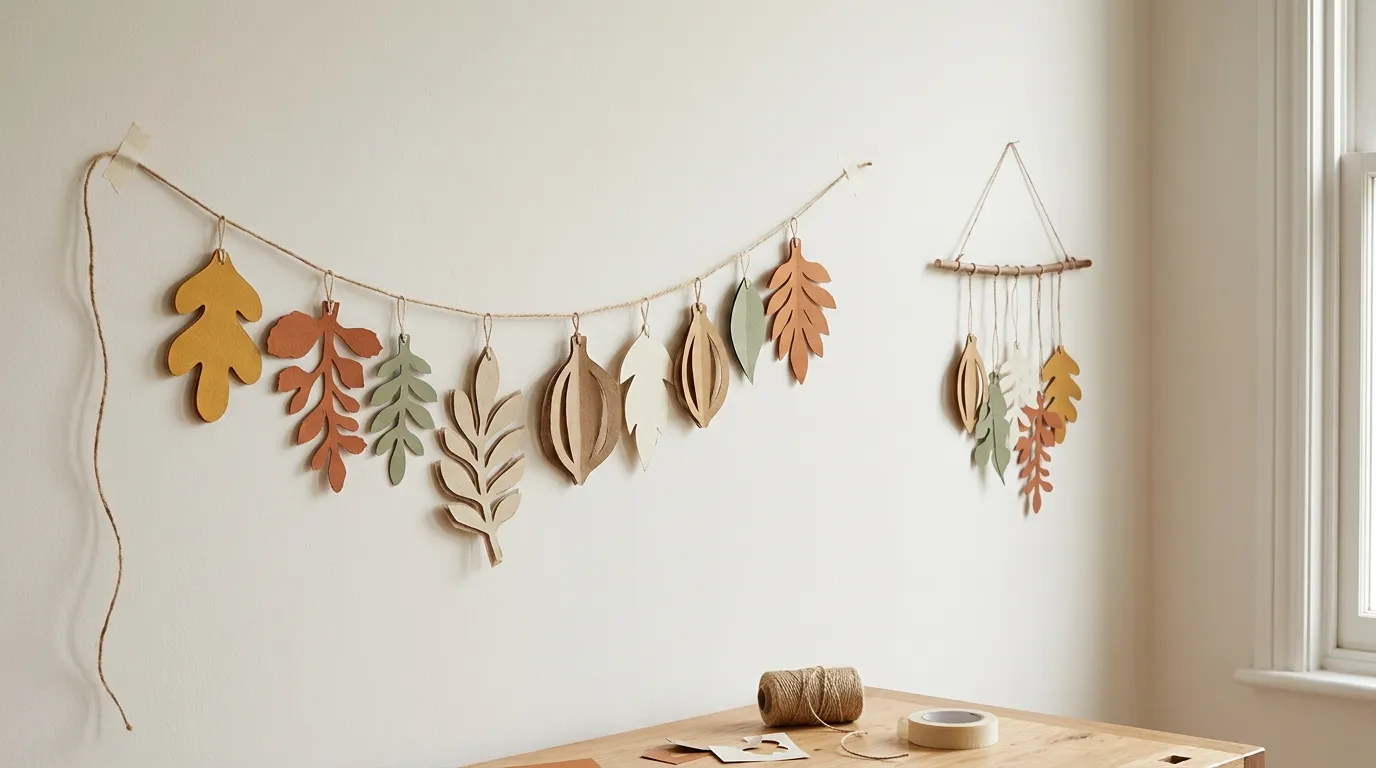
For wall or ceiling placement, match the hanging method to the surface. Martha Stewart’s paper-bat instructions name painter’s tape or removable hooks for hanging. Test one piece first, especially on painted walls, wallpaper, or a surface that may mark easily. The general paper garland planning guide can help you map the span and attachment points.
Check the template before making the full strand
Look for the finished motif size, the number of pieces on a sheet, and any score or fold marks. A printable outline may be intended for scissors, while an SVG may contain separate cut paths or several layers. Check whether the design includes the small details shown in the preview or only the main silhouette.
Print or cut one motif at the real size. Check its stiffness, the visibility of the holes or tabs, and the amount of space needed for the string. This small test can expose a scale problem before you make twenty copies.
Store the garland for next year
Remove the pieces from the wall by the attachment method rather than pulling the paper. Let any adhesive residue settle before packing the strand flat. Store folded pieces with a sheet of plain paper between layers, and label the box with the finished span and the order of the motifs.
For more seasonal layout ideas, compare the paper rosette backdrop guide. It uses the same basic questions: how large the display is, how far away it will be viewed, and where the attachment points can go.
Common mistakes
- Cutting the full set before testing one motif at the intended size.
- Using delicate interior details where the display will be viewed from across the room.
- Leaving the end points undefined, which makes the final span too short or too crowded.
- Choosing an adhesive without testing it on the actual wall or paper.
- Storing a damp or curled garland without flattening and labeling it first.
Disclosure: This guide contains no affiliate links. It describes planning choices supported by the named sources and does not claim a completed Halloween garland.