Choose paper packaging by the shape of the gift and the way it will be carried. A small keepsake may fit a folded box, while a book or flat object can be easier to wrap with a paper band or sleeve. Check the finished size against the item before decorating the package.
Six packaging ideas
- Two-piece box: A base and separate lid give a neat presentation for a firm, small gift. Test the fit before adding a liner or embellishment.
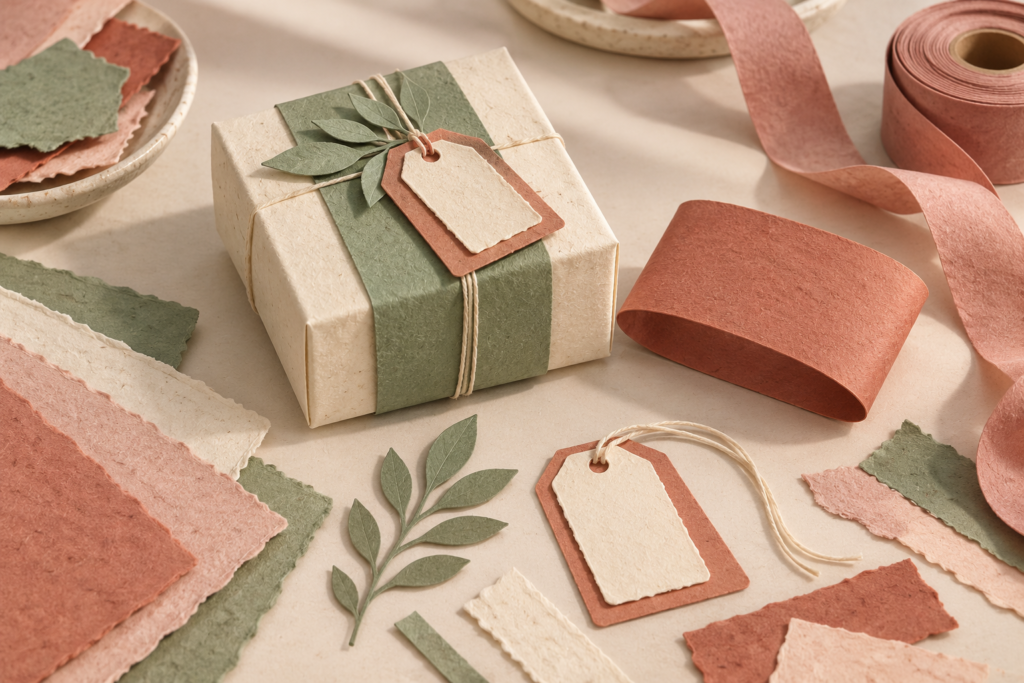
- Paper sleeve: Wrap a strip around an existing box or stack of cards. It adds color without changing the shape of the container.
- Folded pillow box: Curved ends make a compact package for light items. Use a template that matches the gift and confirm where the closure folds.
- Belly band: A flat band can hold a bundle of stationery or a folded cloth in place. Leave room for the band to slide off without tearing the paper.
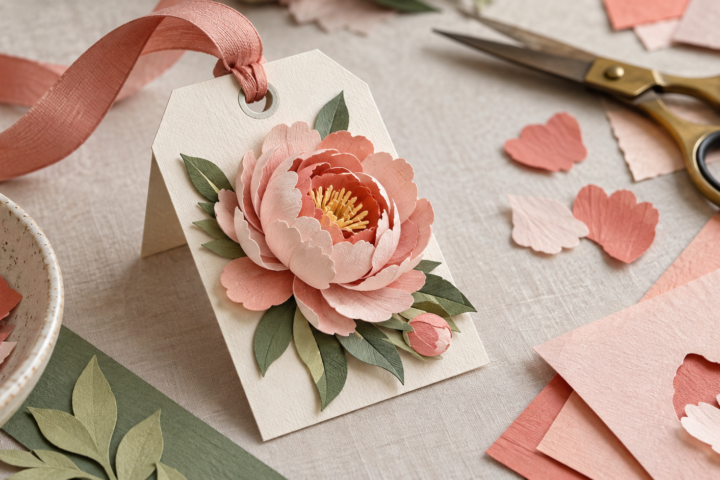
- Layered gift tag: Add one cut shape or flower to identify the gift. Keep the writing area clear and avoid a heavy decoration that pulls on the string.
- Paper-on-paper wrap: Combine a plain outer sheet with a narrow patterned strip or a contrasting corner fold. One accent keeps the wrap easy to read.
Make the folds part of the design
Score a fold before bending stiff paper, and test the crease on an offcut. Our guide to scoring and cutting fold lines explains how to distinguish a crease from a cut. For glued tabs, apply only enough adhesive to secure the joint and let it set before filling the box; the paper adhesive guide compares common choices.
Keep decoration away from closures and corners that take pressure. If the package will be mailed or carried in a bag, check that the lid, band or tie stays in place through ordinary handling. Paper packages are best for gifts whose weight and shape suit the selected template.