A paper mobile needs room to move without catching on a wall, lamp, vent or curtain. Choose the hanging point first, then sketch the space the shapes will occupy. The design can be wide or narrow, but each arm should look balanced when the pieces are suspended.
Choose a simple visual structure
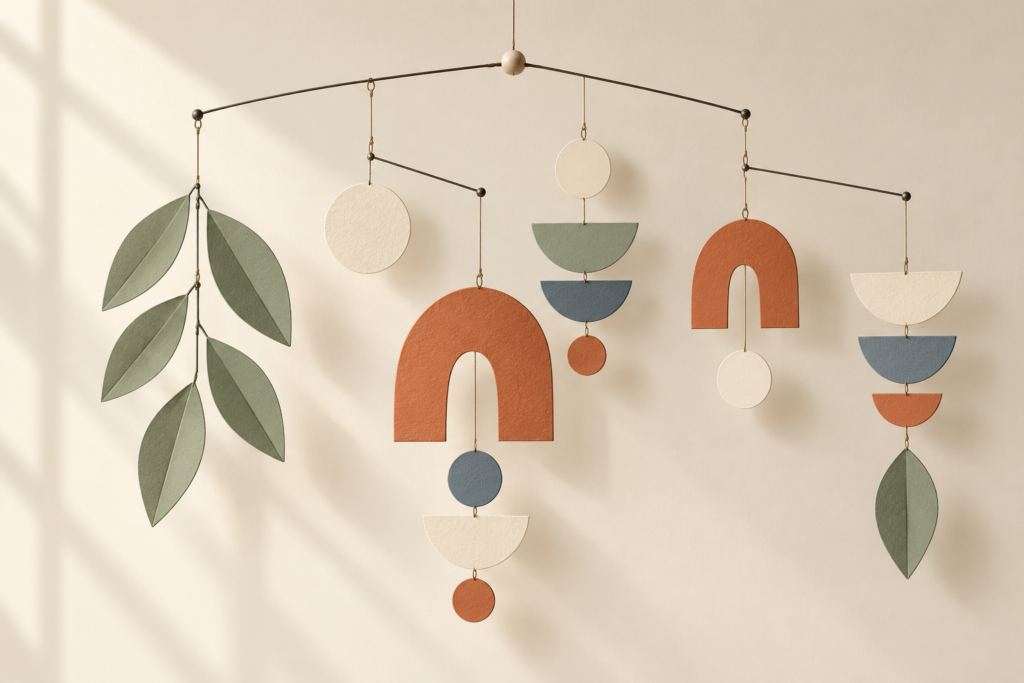
- Two-level cascade: Hang a few shapes at different heights from one central support. Keep the upper level open so the lower forms remain visible.
- Leaf and circle repeat: Alternate two light shapes along the arms. Repeating the same order gives the mobile a clear rhythm from different angles.
- Layered focal pieces: Use a larger cut-paper shape as the focus and smaller forms around it. Make both sides presentable if the mobile will turn in the air.
- Open geometric forms: Use simple outlines that let light and background show through. Check that narrow bridges remain strong enough for the chosen material and file.
- Seasonal color shift: Repeat one shape while changing the paper colors across the mobile. This keeps the structure consistent while giving each section a different accent.
Test the balance before finishing
Assemble a rough version with scrap shapes close to the intended size. Suspend it from the planned center point and watch which side drops. Move the attachment point or redistribute shapes until the mobile rests as intended. Different paper shapes can carry different visual and physical weight, even when they look similar on a page.
Leave clearance around the moving pieces and use a support rated for the surface and total decoration. Follow the mounting hardware instructions. Keep paper away from open flames, hot lights and vents. For smaller shelf pieces that do not need to hang, see these 3D paper decor ideas.
Keep the palette and movement readable
Repeat a color or silhouette so the mobile feels connected from top to bottom. Use a contrasting focal shape sparingly. If the design has a front and back, check the reverse before attaching the final pieces; the mobile will be seen from more than one direction.
Lightweight paper shapes are easier to suspend than heavily layered forms. Test the chosen material and connector before making the full set, and store the finished mobile where the pieces will not be pressed flat.