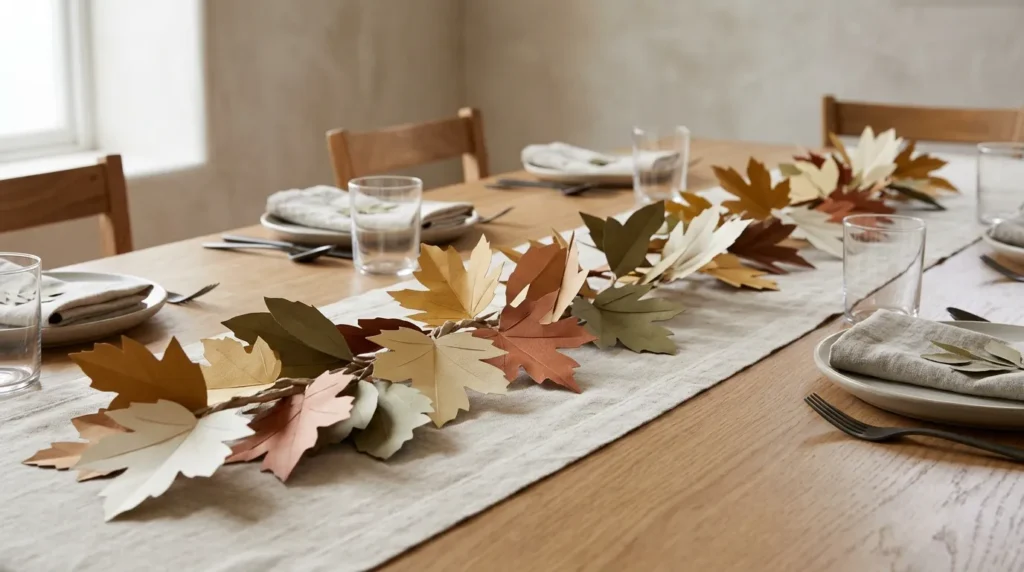
Paper fall leaf garland ideas fall into two useful formats: a hanging strand for a window, mantel, or wall, and a low paper layer that runs along a table or sideboard. Choose the display position first, then set the leaf size and spacing around the objects that are already there.
This is an idea guide, not a record of a completed garland. No template was downloaded, cut, or assembled for this article. The named sources support the display examples; the final paper, attachment, and length still need a small test.
Choose a hanging or flat display
A hanging strand needs a clear line between its attachment points. It can curve above a window, run across a mantel, or frame a small wall display. A flat garland acts more like a runner. It can follow the center of a table while leaving the place settings and serving space clear.
Do not use the same leaf size for both formats by default. A hanging strand needs enough leaf area to read from across the room. A table layer may need smaller leaves so it does not cover dishes, place cards, or the surface beneath it.
The existing paper garland planning guide can help you map the span and attachment points before choosing a template.
Measure the span and sightline
Measure the usable section, not the whole wall or table. For a window, leave the glass and opening readable. For a mantel, keep the garland clear of frames, mirrors, and objects that need to be lifted. For a table, mark the area where plates, serving pieces, or hands will move.
Place a few paper placeholders along the planned line. Stand where the display will be viewed and check whether the leaves are large enough to read. If the garland will sit behind people at a table, keep its highest points low enough to preserve the view across the meal.
Plan leaf size and repetition
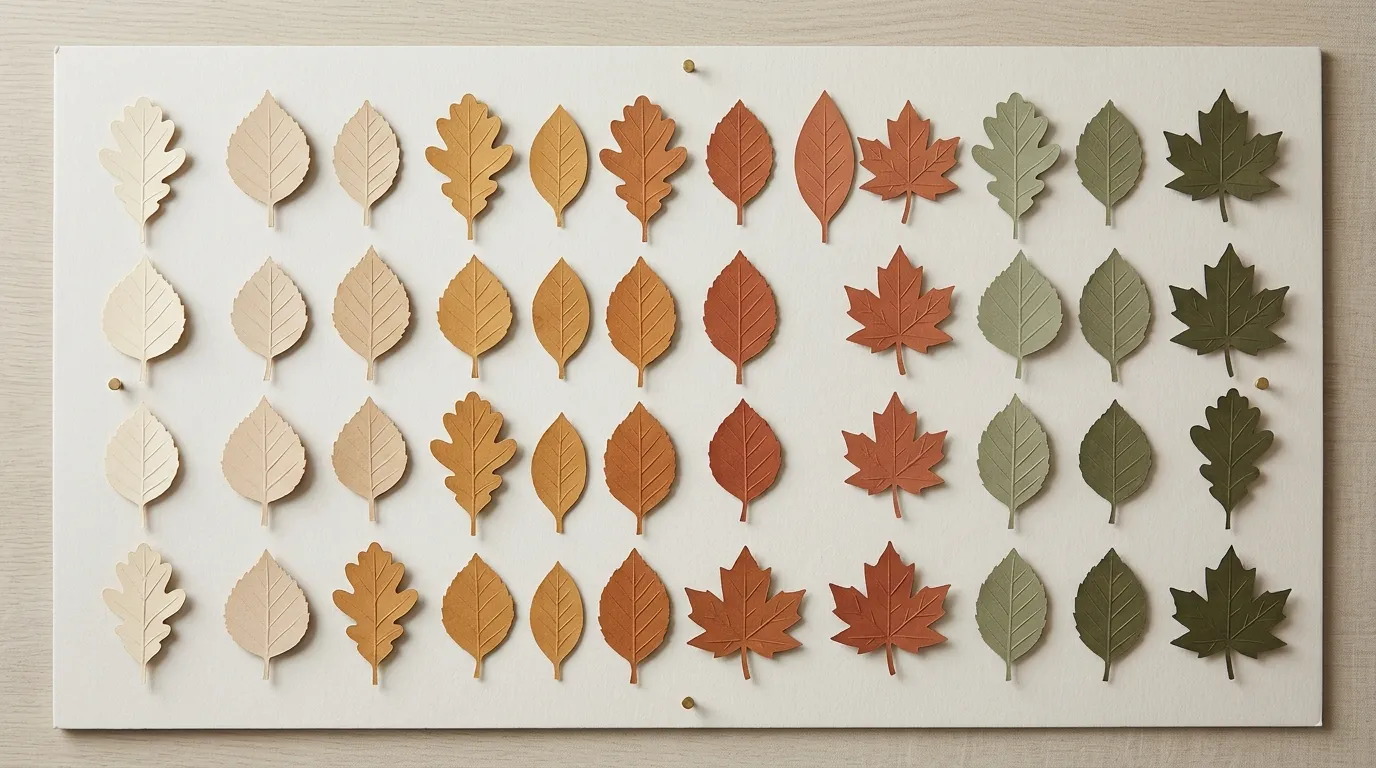
One leaf shape repeated at regular intervals gives a clean border. Several related shapes make the garland look more like a branch or a loose fall layer. Use a larger leaf as the anchor, then repeat smaller leaves only where the line needs weight.
Alternate the direction of the leaves if the strand should feel organic. Keep the attachment points consistent even when the shapes change. Irregular leaf angles with random gaps make the line harder to adjust after it is hung.
If you want a fuller seasonal display, place the paper leaves beside a few paper flowers rather than adding more leaves to the strand. The paper flower decor guide has related advice on scale and display depth.
Choose a fall color order
Choose the color order before you cut. A restrained mix of cream, rust, ochre, olive, and brown can work across a mantel and a Thanksgiving table. Stronger contrast helps a window garland read against daylight, while a table garland may need quieter colors around food and dishes.
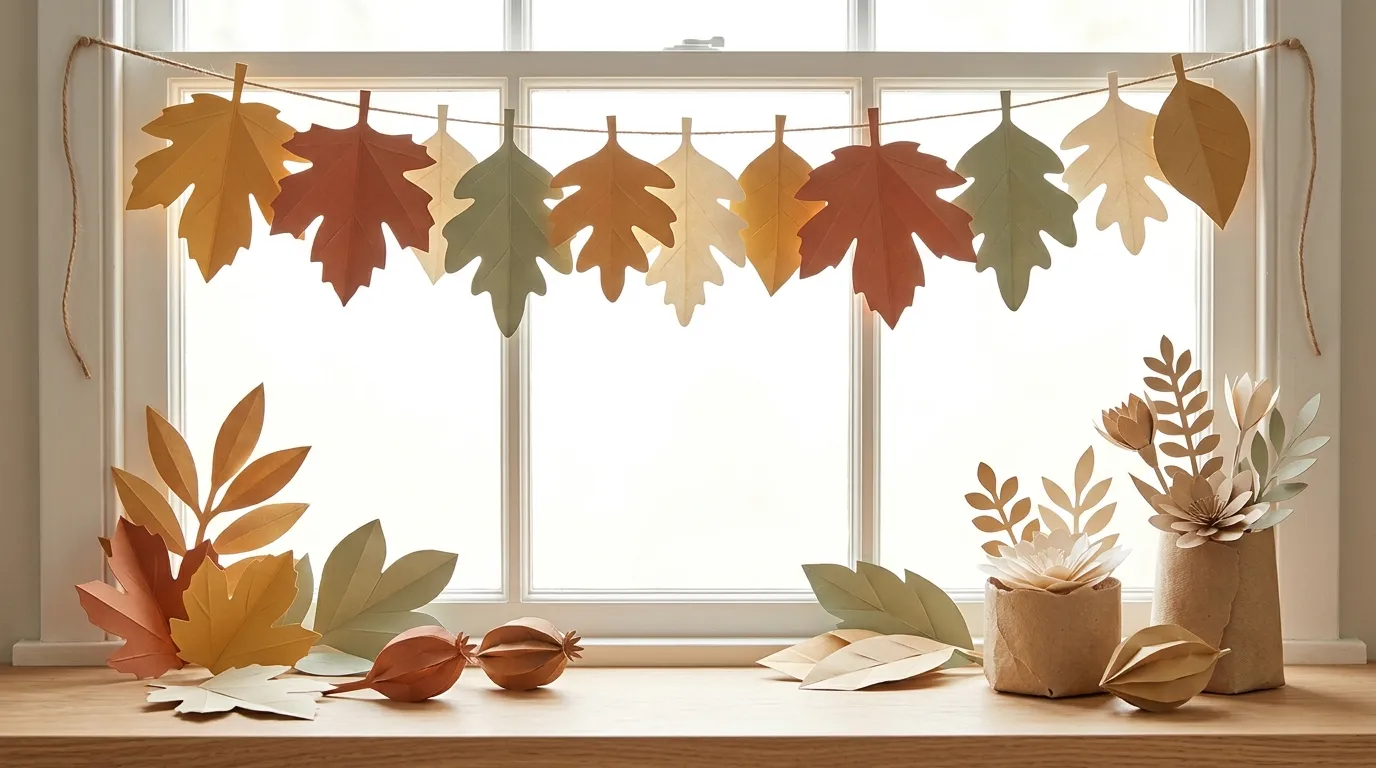
Lay the full color sequence on the floor. Check whether one shade collects in a single section or whether the same two colors repeat too closely. Changing the order is easier before any pieces are glued to the string.
Test the paper and attachment
Cut one leaf at the planned size and fold or curl it only if the design calls for that treatment. Check whether the paper stays flat, whether a fold weakens a narrow stem, and whether the leaf hangs in the direction you want.
Test the attachment on the actual surface. A strand suspended from a window, a mantel, and a wall may need different attachment points. A flat table garland needs enough weight or support to keep it from sliding when someone reaches across the table. Avoid promising that one adhesive will remove cleanly from every finish.
For a table version, compare the footprint with the paper table centerpiece guide. The same clear-space check applies even when the decoration is low.
Keep the garland useful after the season
Make the leaf shapes neutral enough to reuse if you want a longer display window. Cream, kraft, and olive can stay up after Thanksgiving, while bright orange and red make the timing more specific.
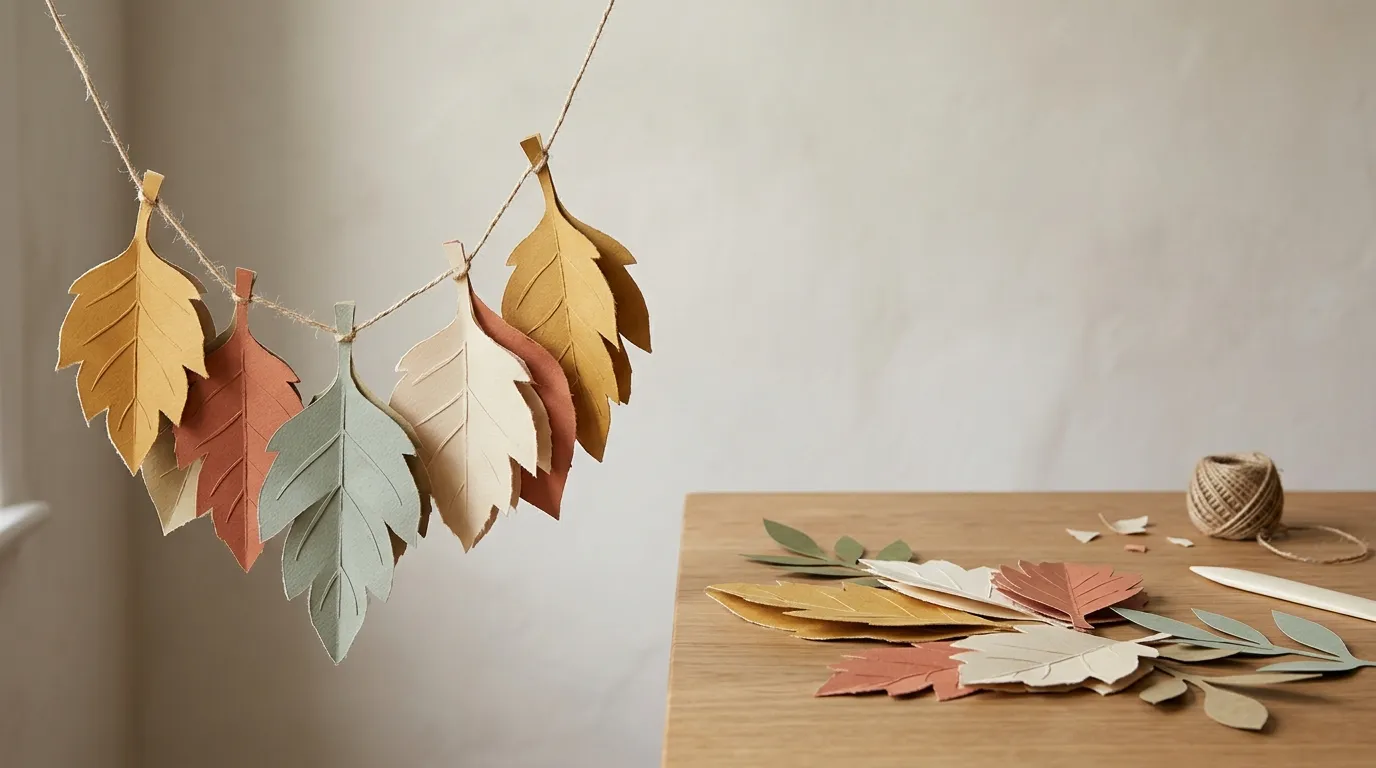
Remove the strand by its attachment points and store the leaves flat. If the leaves are layered, separate them with plain paper. Label the finished span and color order so you do not have to rebuild the layout from memory next year.
Common mistakes
- Measuring the whole wall or table instead of the usable display area.
- Using table-sized leaves on a hanging strand or room-sized leaves beside place settings.
- Changing the color order after the pieces are already attached.
- Ignoring the sightline across a table or through a window.
- Assuming a wall adhesive will work the same way on wood, paint, glass, and fabric.
Disclosure: This guide contains no affiliate links. It compares seasonal layout choices from the named sources and does not claim a completed paper leaf garland.