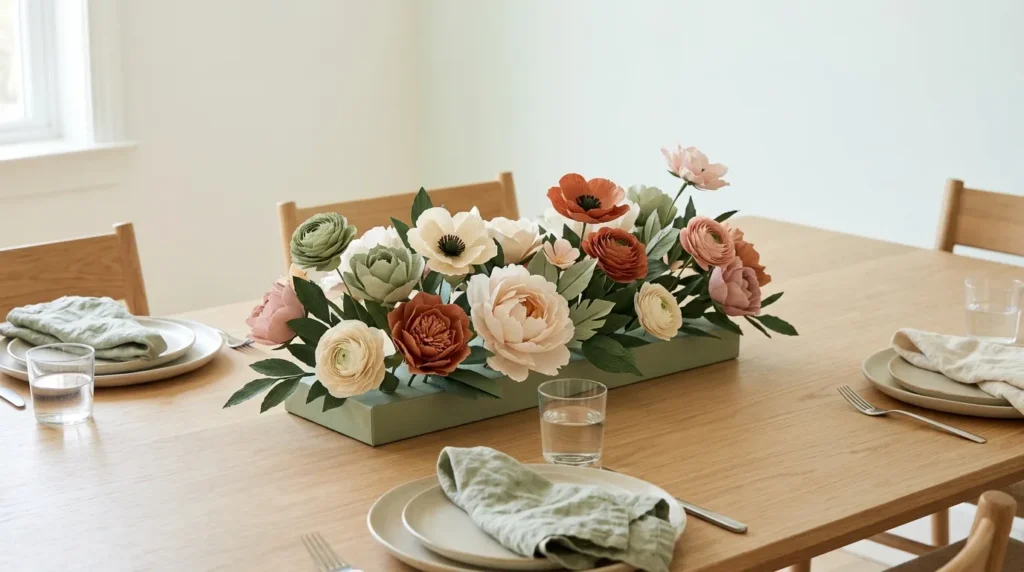
A paper table centerpiece should leave room for people to see one another, set down dishes, and reach across the table. Start with the table’s usable area, not the centerpiece idea. A tall arrangement may suit a sideboard or buffet, while a low group of paper flowers or folded shapes works better where people need a clear view.
Match the height to the way the table is used
Think about whether the arrangement will sit on a dining table, a dessert table, or a narrow side table. For a dining table, check the silhouette while seated. Place a paper mock-up where the centerpiece will go and look across it from both ends. If it blocks faces or the serving area, lower it or split the decoration into smaller pieces.
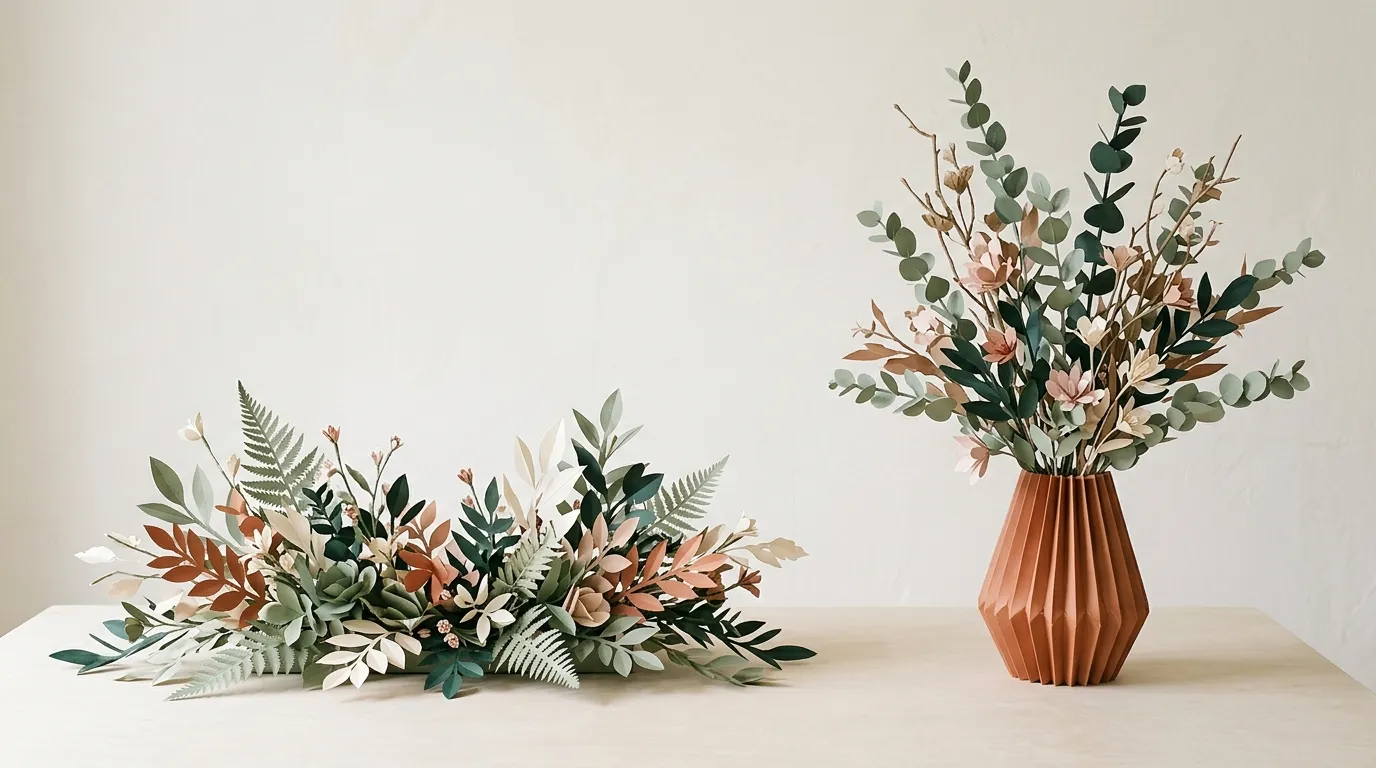
For a party table, guests may stand and move around the display. In that case, leave room for plates and serving trays, and make sure a projecting petal or folded edge will not catch on sleeves. A centerpiece at the middle of a buffet can be taller because guests approach from the side, but it still should not block labels or food.
Paper flowers can be grouped in a low container or built into a standing display. The paper flower decor guide compares other ways to show flowers, while paper garland ideas can extend the same color palette above the table without using its surface.
Keep the footprint steady and easy to move
The base needs to support the widest part of the decoration. If the centerpiece has tall stems or folded forms, keep their weight close to the middle and check whether the base slides on the tablecloth. A broad flat footprint is often easier to place than several narrow supports, especially when the table will be bumped during a gathering.
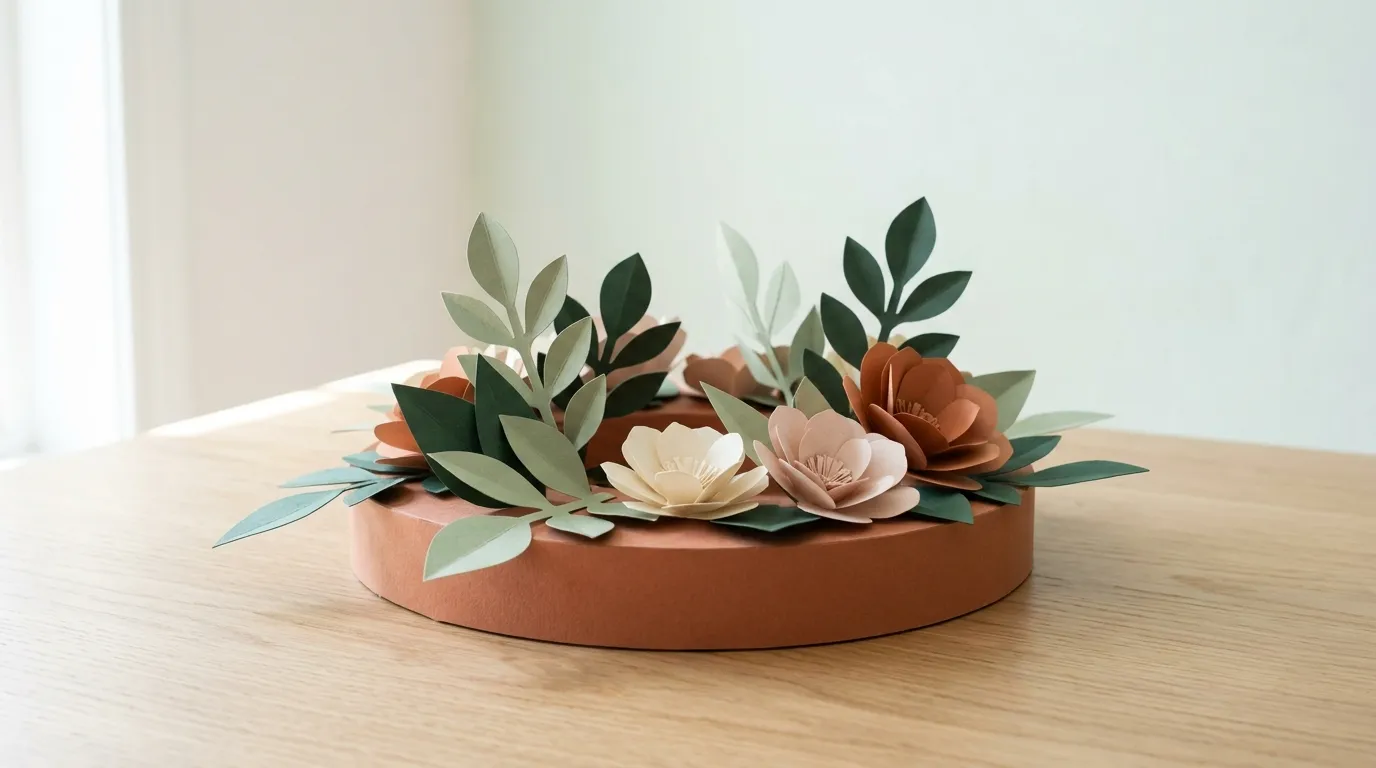
Plan how the centerpiece will be moved. A single base can be lifted as one piece; loose paper pieces may shift when someone clears plates. If you use a tray or board, leave enough margin to hold it without touching the delicate parts. Keep any extra ribbons or tails short enough that they do not trail into a place setting.
Paper does not belong beside an open flame. If the table includes candles, keep the paper arrangement well away from them and follow the candle holder’s safety directions. A non-flame display can use color, height, and shadow without placing paper near heat.
Choose a shape that reads from every seat
A centerpiece is usually seen from more than one direction. A circular or low dome arrangement can work from all sides. A front-facing scene is better placed along a wall or at the end of a buffet, where guests do not expect to view its back. Decide on the viewing direction before choosing a cut file or attaching the pieces.
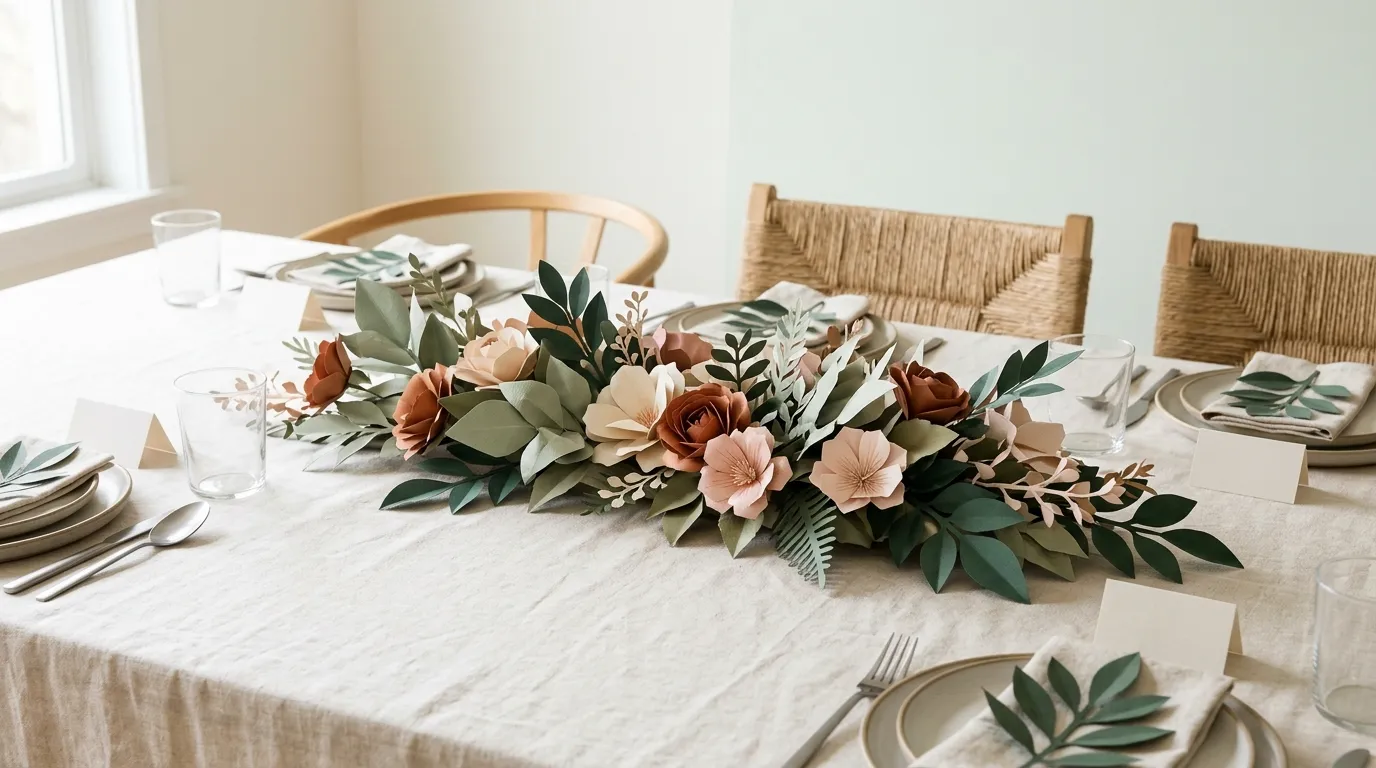
Use one main shape and repeat a small detail if the table needs more visual weight. Several unrelated motifs can compete with food, place cards, and other decorations. If you want a seasonal theme, repeat its color or silhouette in napkin rings or a small paper tag rather than adding another large object to the center.
Make a table mock-up before assembly
- Clear the table and mark the space reserved for food and place settings.
- Use folded paper to mock up the centerpiece’s height and width.
- Check the view while seated and standing at the serving side.
- Lift the base and confirm the pieces stay in place.
When the mock-up fits, assemble the final arrangement according to the file or project directions. Keep the base dry and away from spills, and store the centerpiece flat or in a box that protects raised paper shapes.