Paper Thanksgiving table decor works best when each piece has a job. Use a folded place card for names, a low paper centerpiece for color, and leaves or napkin bands to connect the setting without blocking the view across the table.
This is a seasonal planning guide, not a record of a completed tablescape. No template was downloaded, cut, or assembled for this article. The named sources provide examples and construction checks; the final scale and paper choice still need a test on your table.
Start with the table’s sightline
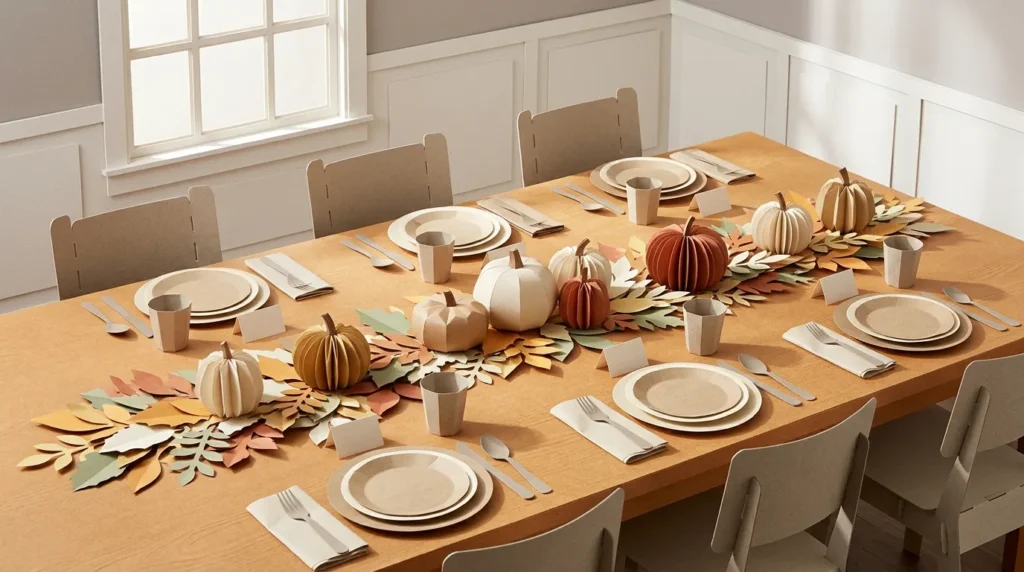
Look across the table from a seated position before choosing the centerpiece. A tall paper tree or layered display may look good from the end of the table and still block the person sitting opposite you. Low leaves, folded bands, and shallow paper forms are easier to keep inside the usable center strip.
Mark the place settings, serving dishes, and any hot items that need space. The remaining area is the actual footprint for the paper decor. The existing paper centerpiece guide uses the same order: table size, clear view, base, then decoration.
Make place cards do useful work
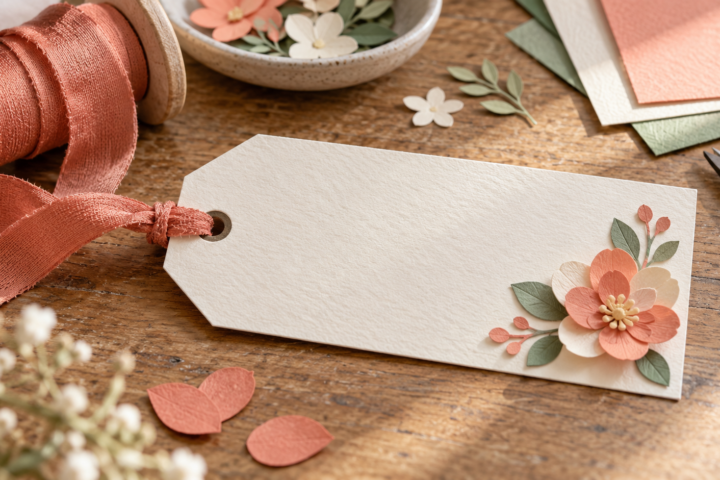
A folded tent card can show a guest’s name while taking up very little table depth. The Home Depot’s tablescape guide gives a roughly 4-by-7-inch rectangle as one example before folding it in half, then recommends practicing the lettering on scratch paper. Use that as a project-specific reference, not a rule for every place card.
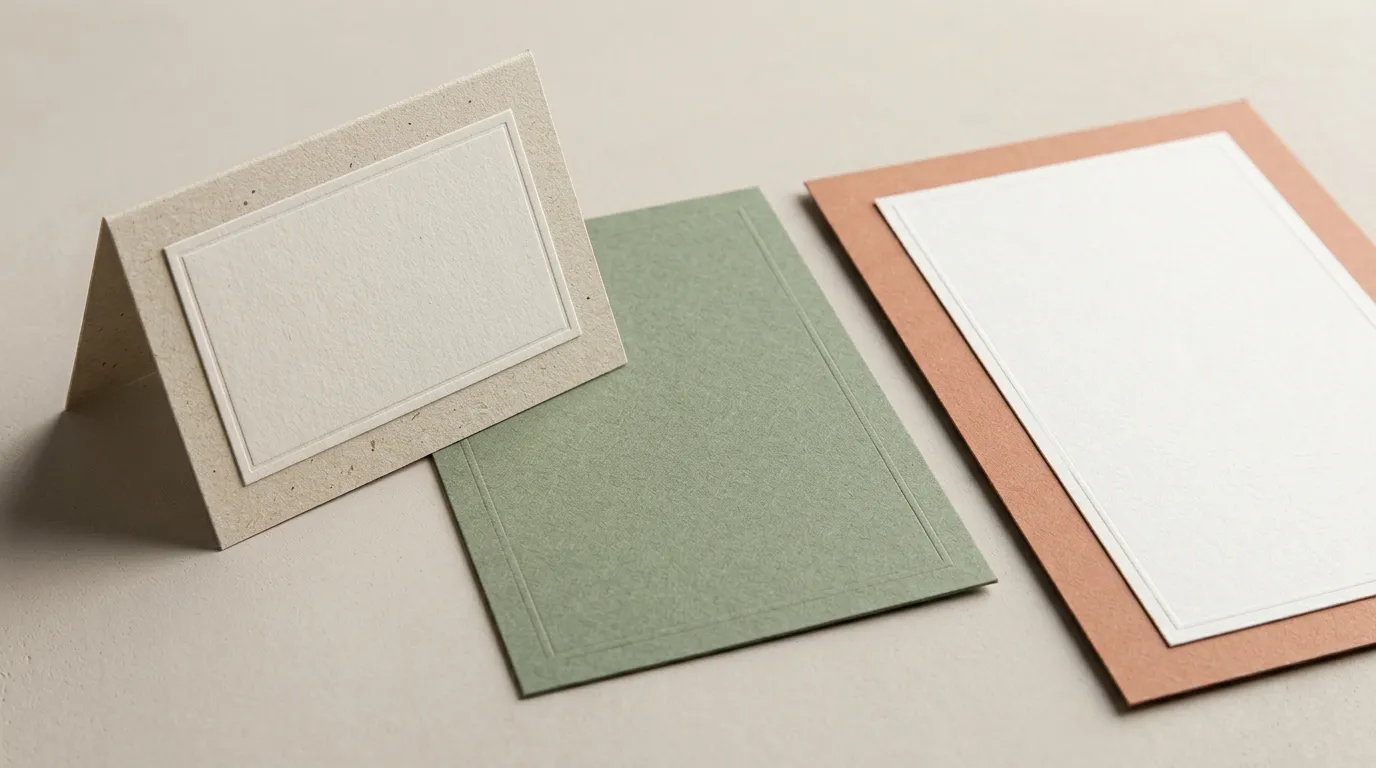
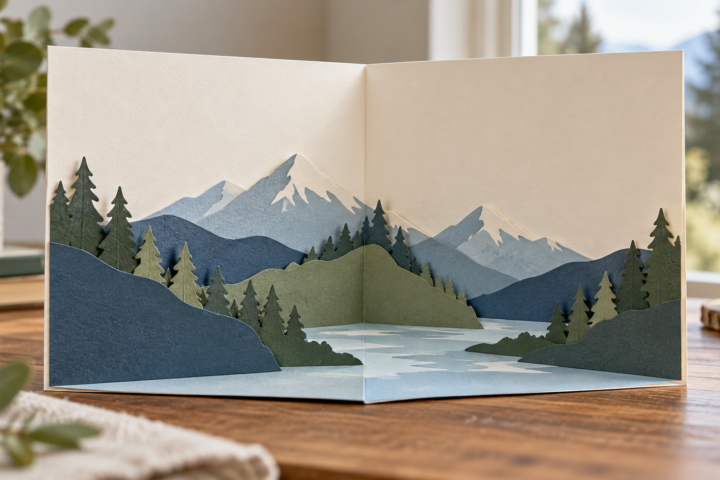
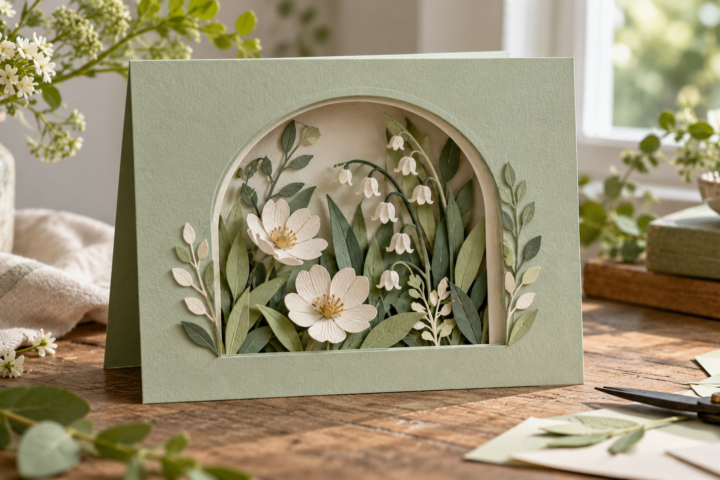
Other formats include a flat card tucked into a napkin, a leaf-shaped tag, or a small pop-up card. Enchanted Learning separates solid cut lines from dotted fold lines in its Thanksgiving pop-up cards and notes that an adult should handle the final cutting step. Do not treat a score or fold line as a cut path.
Leave enough blank space for the name to remain legible. A decorative border should support the writing area, not compete with it.
Keep the centerpiece low
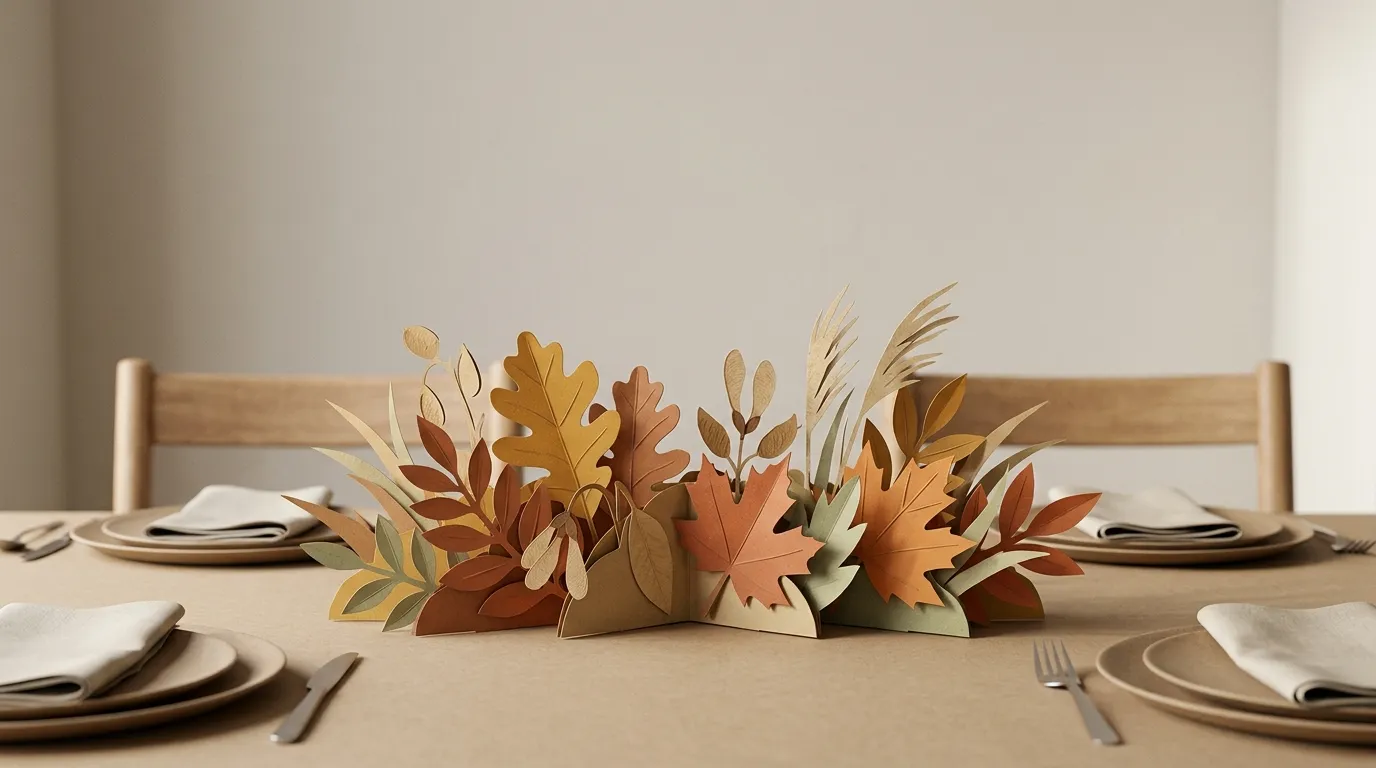
A paper leaf runner can follow the table length without taking the height of a vase. A group of flat pumpkins or folded leaves can sit around a short base. If you use a taller paper form, place it at the end of the table or on a sideboard where it will not interrupt conversation.
Keep paper away from open flame and hot dishes. If the table includes candles, use a clear separation and follow the candle holder’s instructions; paper should not act as a heat shield. This is a practical safety limit, not a claim that any paper template is heat resistant.
Add paper leaves and napkin bands
Leaves can repeat the color of the place cards without making every object match. Cut a small set of shapes, arrange them along the center, and leave gaps where serving pieces or hands will pass. A napkin band can carry one leaf, a simple cut window, or a short name tag.
Use the paper flower decor guide if you want to add a few paper blooms. The same rule applies: decide whether the flower is a focal point or a supporting detail before adding more pieces.
Test folds, cuts, and paper color
Make one place card and one centerpiece element at the intended size. Check whether the fold stands, whether the writing area is large enough, and whether the paper keeps its shape. For a pop-up or layered element, confirm which lines are cut and which lines are folded.
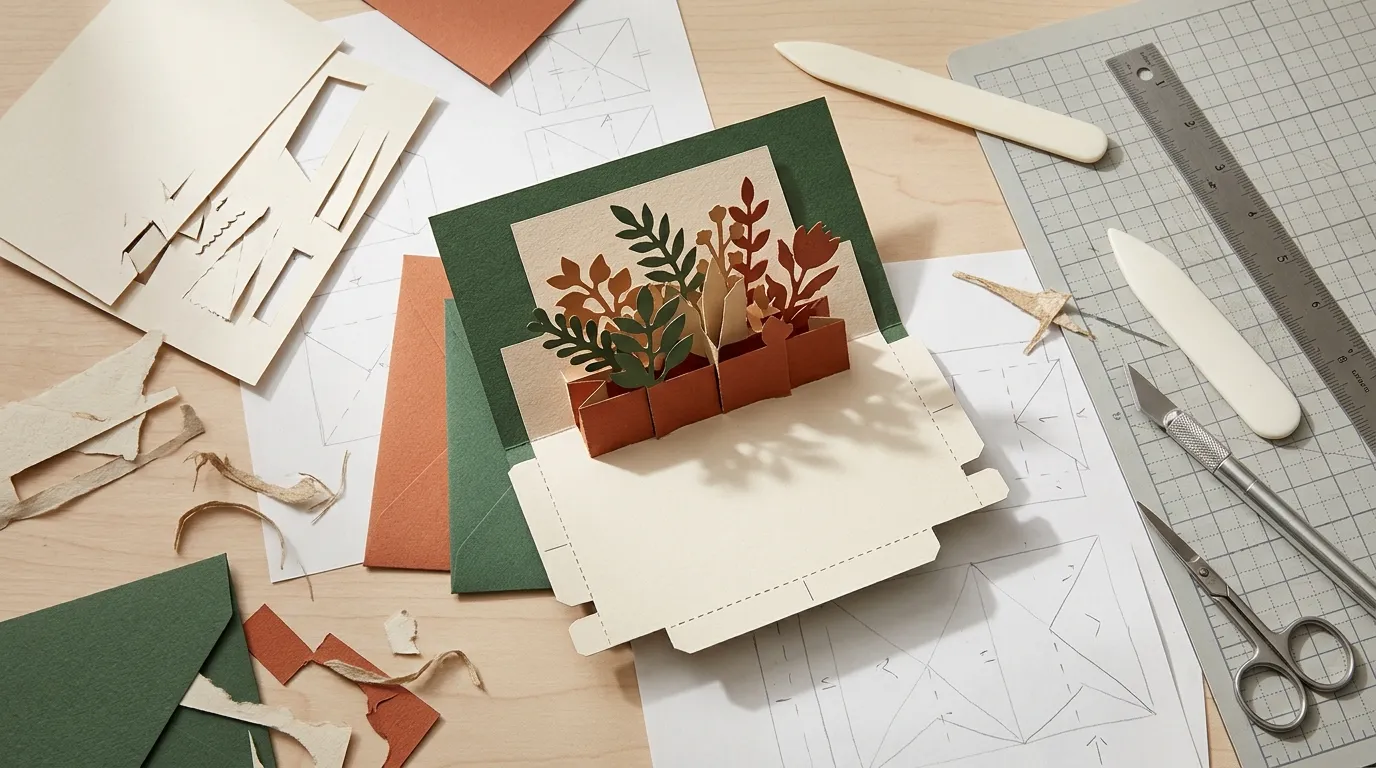
Place the sample beside your plates and napkins. Kraft and cream can blend into a light tablecloth, while dark brown may disappear in a dim room. A small contrast change can make the names and leaf edges easier to read than adding more decoration.
For heavier layered elements, compare the paper with the cardstock guide. The template’s fold and cut detail should determine the paper test.
Store or reuse the pieces
Flat place cards and leaf shapes are easy to store in a labeled envelope. Folded forms need support so the creases do not collapse. Keep the color order and the number of pieces with the set if you want to repeat the table next year.
Choose neutral shapes when you want the decor to work for an autumn dinner beyond Thanksgiving. A leaf, band, or blank place card can be reused for a birthday or harvest table when the colors change.
Common mistakes
- Choosing the centerpiece height before checking the seated sightline.
- Filling the place card with decoration and leaving too little writing space.
- Confusing a fold line with a cut line in a pop-up design.
- Using paper as a barrier around an open flame or hot dish.
- Making the full guest set before testing one card at the real size.
Disclosure: This guide contains no affiliate links. It explains paper table-planning choices from the named sources and does not claim a completed Thanksgiving tablescape.