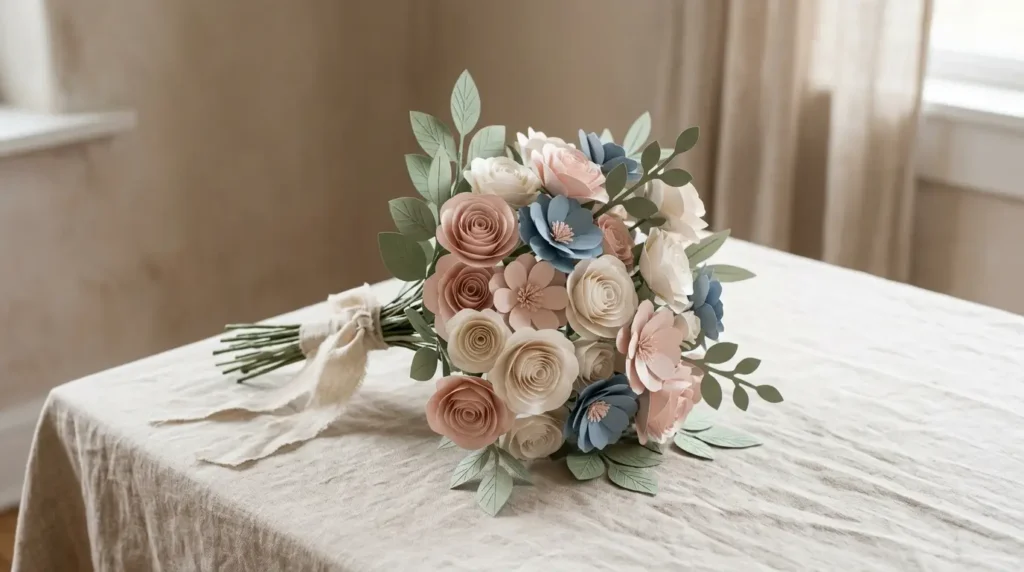
Paper flower wedding bouquet ideas become easier to compare when the bouquet has a defined outline. Decide whether it will be a compact hand-tied cluster, a rounded dome, a loose garden shape, or a small keepsake arrangement before cutting individual flowers. The paper flower arrangement guide covers the same focal-point problem in a smaller planning format, and the paper flower wreath guide shows why the base shape should be chosen before the decorations.
Decide what the bouquet needs to do
A bridal bouquet has to read from the front, remain comfortable to hold, and fit the proportions of the person carrying it. A display bouquet for a welcome table can be wider and more open because it does not need a hand-sized handle. A keepsake bouquet may favor durable layers and a stable base over a soft, natural-looking outline.
Write down the intended use, finished height, widest point, and storage plan. These decisions affect the number of flowers, the amount of stem material, and the way the handle is wrapped.
Choose the silhouette before the flower mix
Use a paper outline to compare a round, hand-tied, asymmetrical, or cascading shape. Mark the handle point and the widest part of the arrangement. The outer edge should still look intentional when the bouquet is viewed from several feet away.
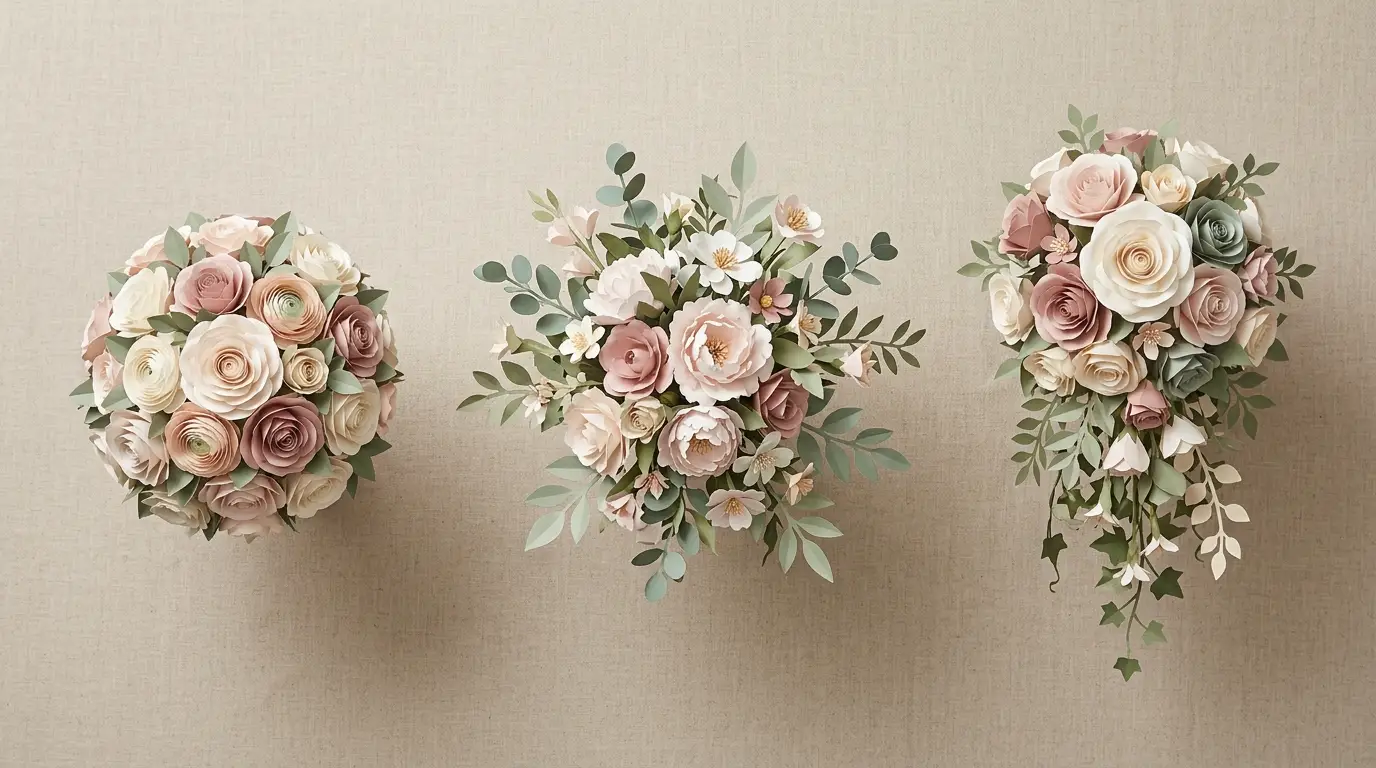
A compact bouquet can use a few larger blooms with leaves filling the gaps. A looser garden shape may need more small flowers and foliage to soften the edge. A cascading arrangement changes the vertical balance, so the lower elements need enough support to stay in position. Do not choose a template set only by the number of flower shapes it contains; check whether those shapes can create the outline you want.
Set a color order, not just a color list
Assign one dominant color, one supporting light or neutral color, and one accent. Place the dominant shade near the focal area, then repeat it at the edge so the eye can move through the bouquet. Keep the accent limited to a few blooms or details unless the event palette is deliberately high contrast.
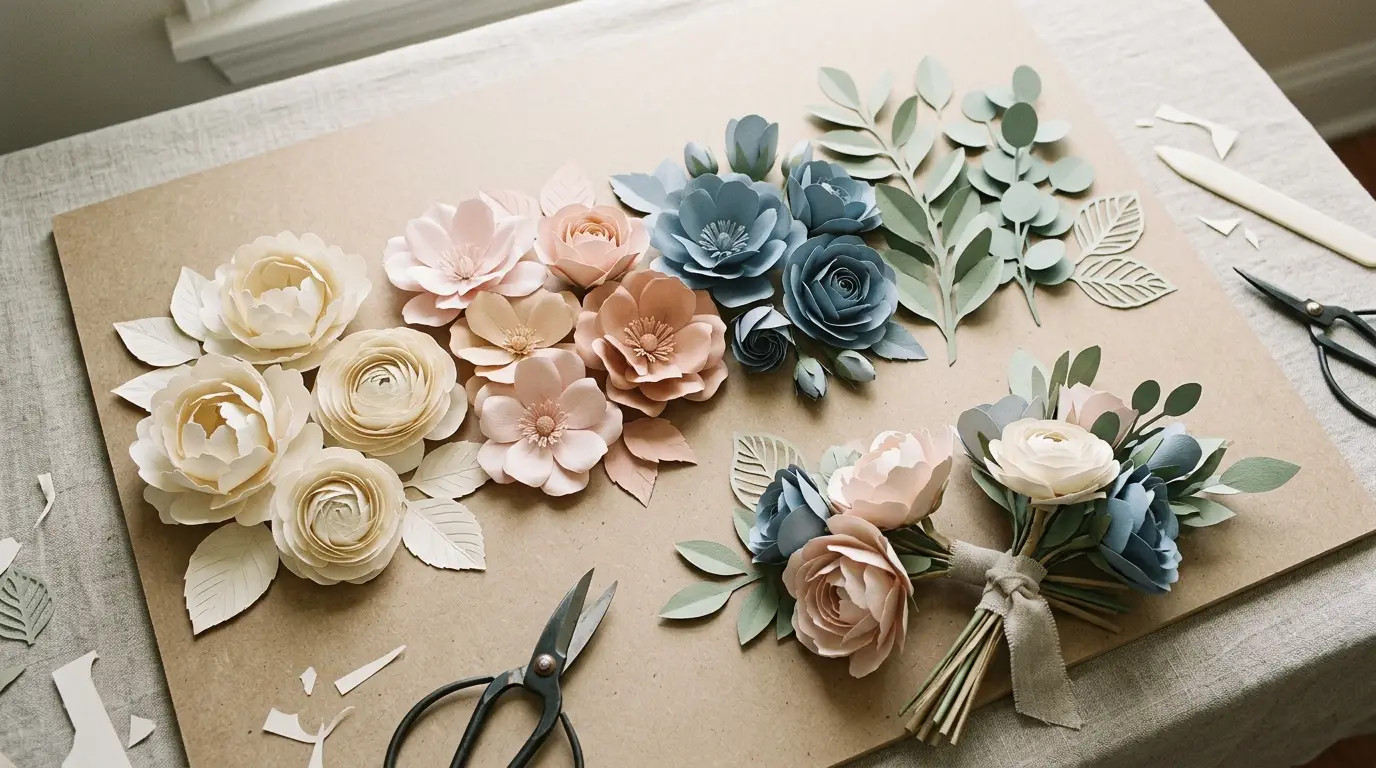
A tonal palette can use several values of one hue, while a garden palette can combine warm and cool paper with green foliage. The choice affects how the layers read. Pale petals may need a darker center or leaf behind them. Dark flowers may need open space around them so the bouquet does not become one heavy block.
Mix flower sizes with a clear hierarchy
Choose the largest flower first and decide where it sits. Add medium flowers to support its position, then use small blooms and leaves to close gaps. Keep the centers from forming an even grid; a slight change in height and angle creates a more natural outline.
Make one of each planned size and place them on a sheet of paper. This mock-up reveals whether the small flowers disappear, whether the large flower is too dominant, and whether the foliage leaves enough negative space. A paper bouquet is still a graphic composition, so the silhouette matters as much as the individual petals.
Plan the stems and handle
Every flower needs a connection point that can survive handling. Decide whether the flowers will sit on wire, paper stems, skewers, or another support allowed by the template instructions. Gather the stems in stages instead of trying to hold the complete bouquet at once.
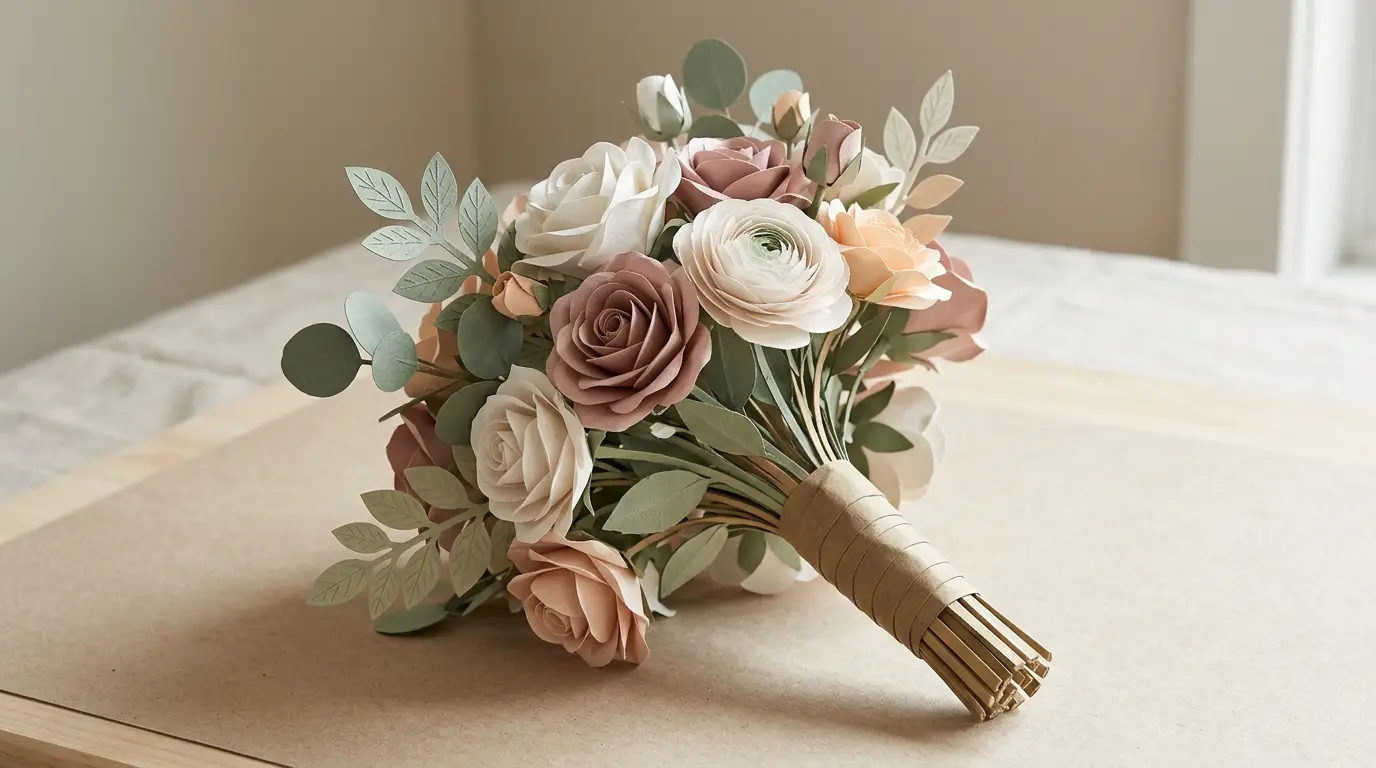
Wrap the handle after the arrangement has the right width. Leave enough room for the person carrying it to hold comfortably, and check that the wrap does not cover a decorative stem detail. If the bouquet will be photographed from the side, test the profile as well as the front view.
Check transport and storage
Paper petals can catch on one another in a crowded box. Prepare a shallow container with a support that keeps the handle and flower heads from pressing against the lid. If the bouquet will travel to a venue, carry it upright when the shape requires it and keep it away from moisture and heat.
Take one photo of the approved arrangement before packing. It gives anyone helping with setup a reference for flower order, foliage direction, and handle placement. If the bouquet is part of a larger event system, repeat its dominant color or one leaf shape in the paper flower decor pieces rather than copying the entire bouquet everywhere.
Common mistakes
- Choosing flower templates before deciding the finished silhouette.
- Using equal amounts of every color and losing a clear focal point.
- Adding small flowers that disappear at the intended viewing distance.
- Waiting until the end to solve the handle, transport, or storage problem.