A 3D paper Christmas tree for a shelf needs to fit the display space and stand in the way the template intends. Choose the structure before cutting. A folded cone, a fan-shaped tree, and a layered silhouette use space differently, even when the finished height looks similar in a preview.
Choose a structure for the available depth
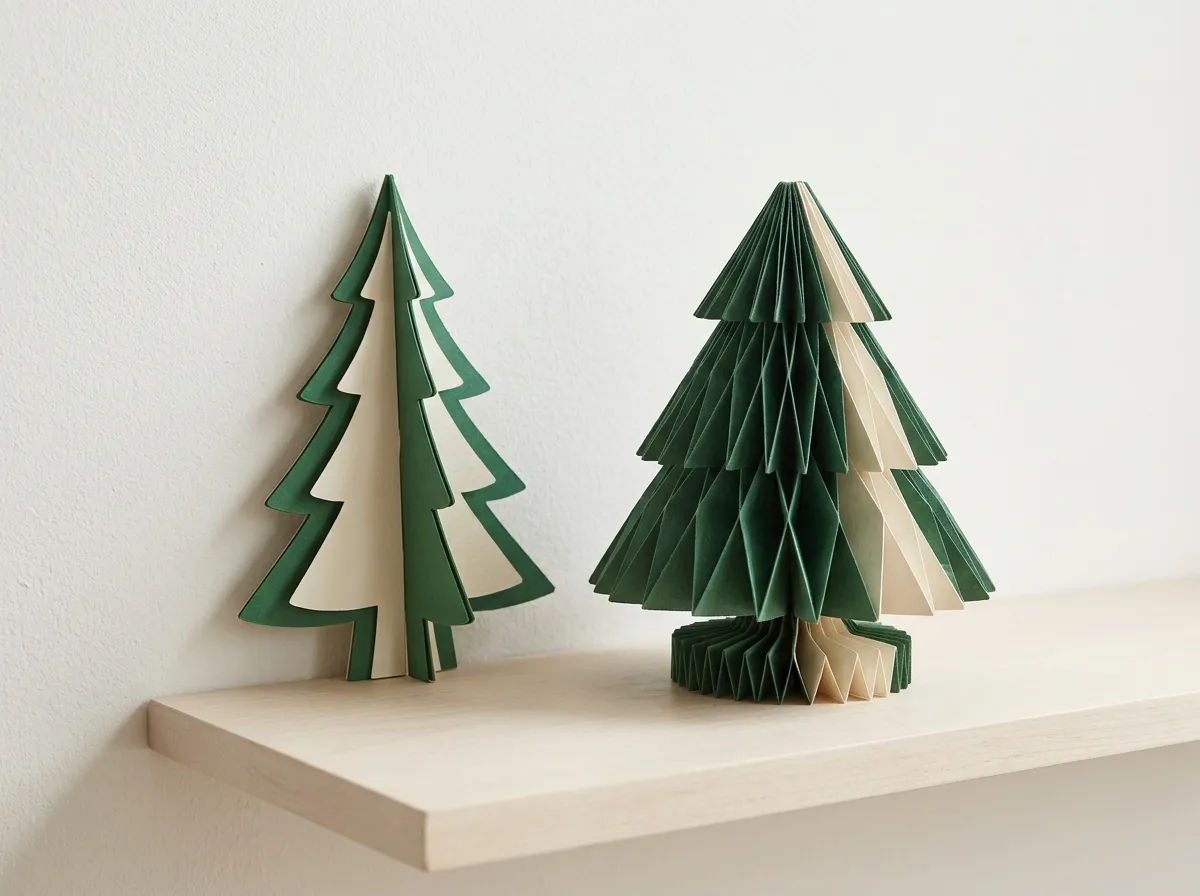
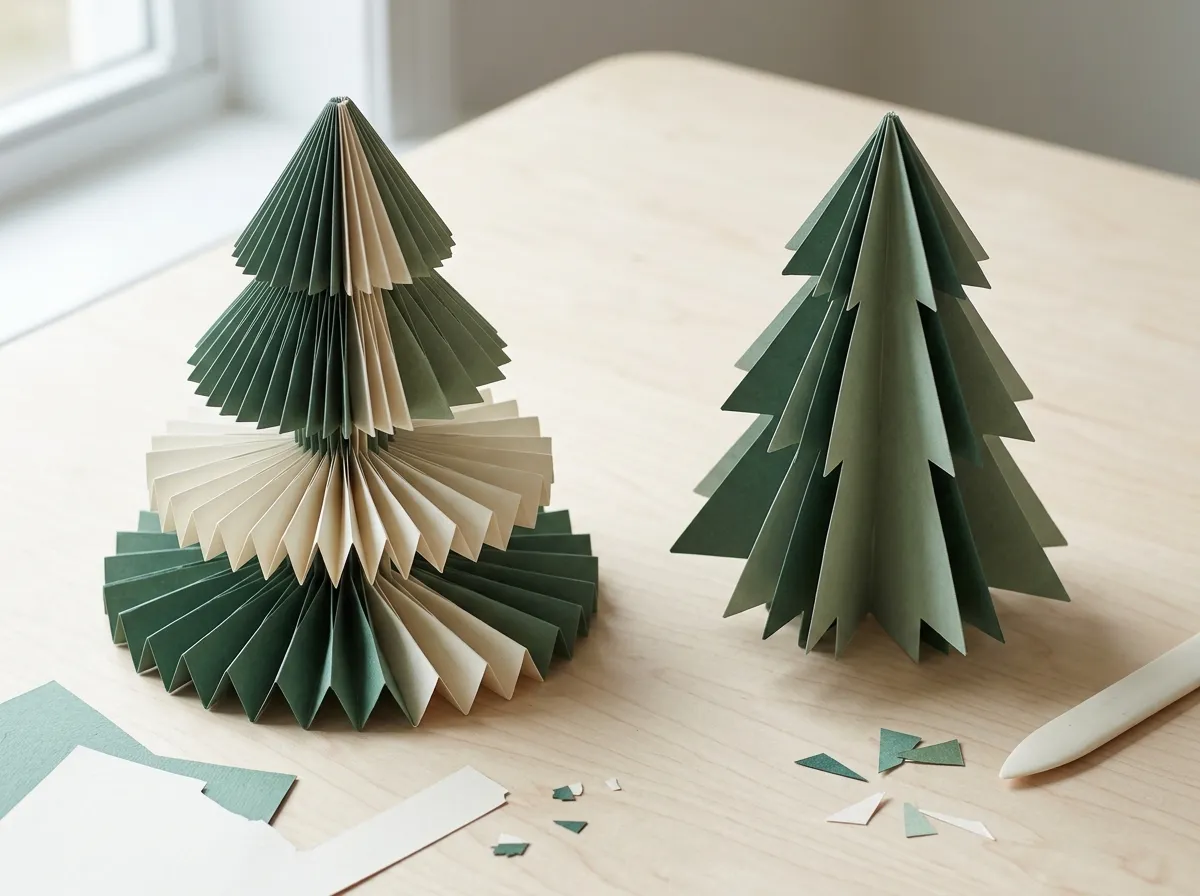
A flat layered tree uses depth mainly at its base or frame. It works when the shelf is shallow or when the tree will sit against a wall. A folded fan or accordion form opens toward the viewer and uses more front-to-back space. A freestanding cone or tabbed model occupies space all around it, so it needs room on both sides.
Look at the finished dimensions and the assembly preview. A front-facing image may hide the width of a folded form or the depth of its support. If the listing does not explain how the tree stands, choose a template with a clear base or support diagram.
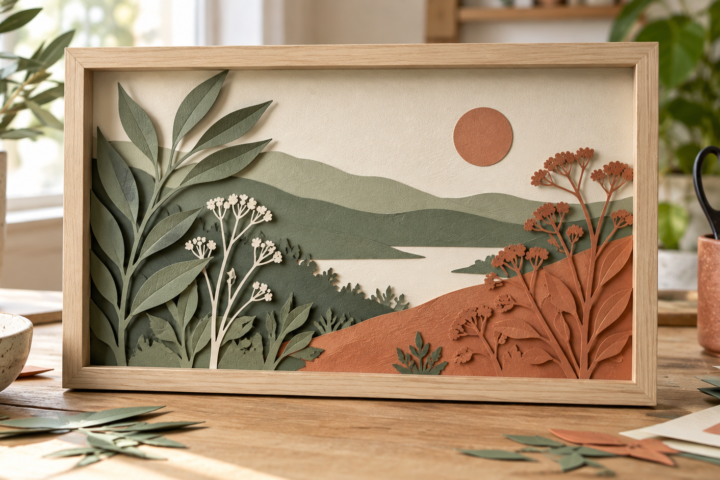
For other compact display forms, see 3D paper decor for shelves and small spaces. For a scene built from separate planes, the layered paper scene guide explains how to plan depth and a frame opening.
Measure the shelf before setting the finished size
Measure the clear height and depth where the tree will stand. Include the shelf lip or nearby objects that limit the usable area. Leave enough space to place the tree without bending its top or catching a branch on another decoration.
Check the tree from the angle where people will see it. A wide base may fit when viewed straight on but extend beyond the shelf from the side. A layered tree may need a backing surface with enough contrast to show its outline.
If you resize the file, check the base and narrow joins at the new scale. A smaller top may look neat while the support underneath becomes too small. Follow the file’s instructions and test a paper mock-up before cutting the final material.
Check the base and assembly order
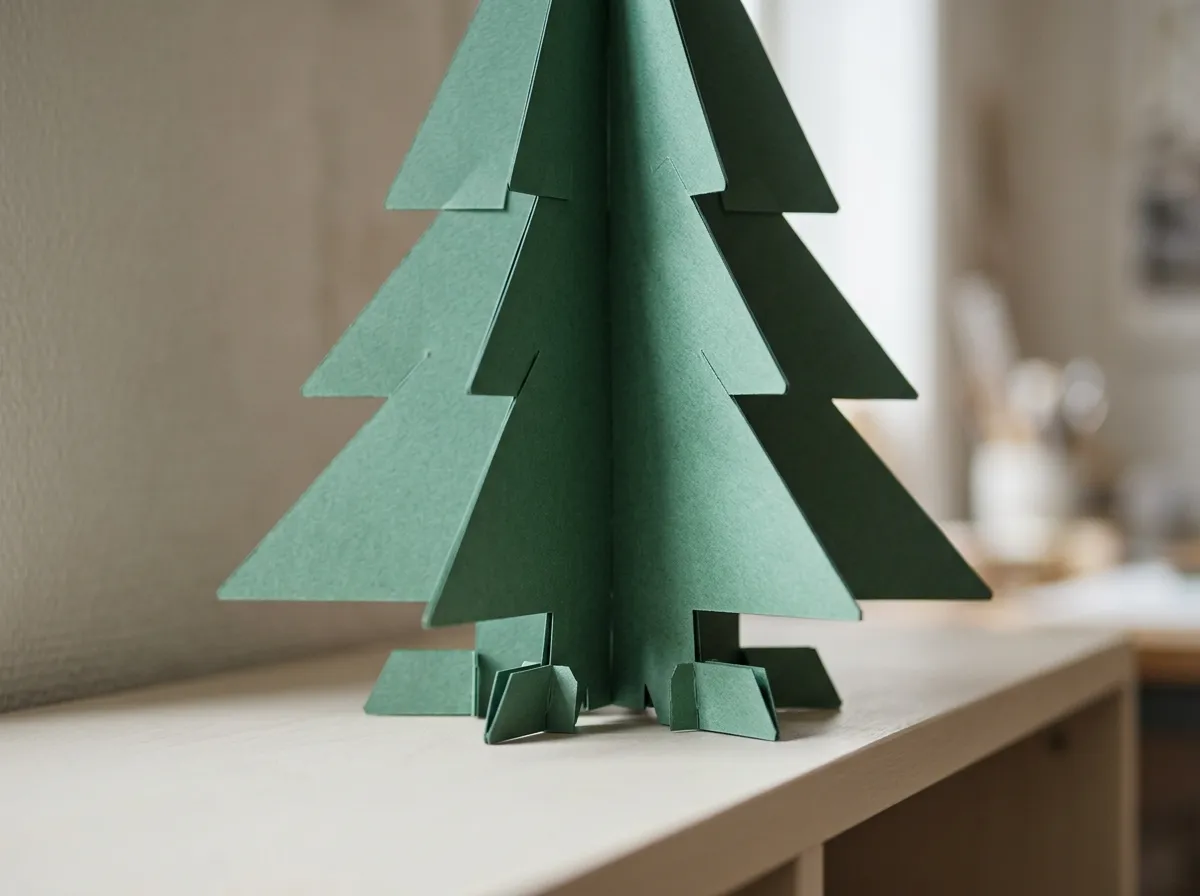
Look for tabs, slots, folded feet, a support panel, or another feature that holds the tree upright. The instructions should identify which pieces connect and in what order. Keep those details with the file; a finished photo rarely shows the reverse side or the support.
Arrange the pieces without glue first. Check whether the base sits flat, whether the tree leans, and whether the layers open in the intended direction. If the design uses two matching halves, compare them before joining them so the top and branches meet as shown.
Use the material specified by the designer or machine instructions. Paper weight and cut settings vary by file and equipment. If you are unsure whether the details will cut cleanly, make one test from a scrap of the same paper and check the smallest openings and tabs.
Choose details that read at shelf distance
Small ornaments, stars, and cut windows can disappear when the tree is viewed from across a room. Inspect the design at the size it will be displayed. If the decorative details become hard to distinguish, choose a simpler silhouette or a larger finished size rather than adding more tiny parts.
A restrained set can use one main shape with a few repeated accents. Keep the tree’s outline easy to read and leave some space around it on the shelf. A group of different heights can work when the bases fit the same display depth and the tallest piece does not block the others.
On a shallow shelf against a wall, a flat layered tree can use less depth than an open fan. A freestanding cone needs clear space around its base. Place the tallest tree where it will not hide an object you still need to see, then check the group from the doorway and from the side. If a tree blends into the shelf or wall, a contrasting backing can clarify its outline without adding more small cut details.
Test one tree before making a set
- Measure the shelf’s clear height and depth.
- Print or preview the template at the intended scale.
- Dry-fit the base and support pieces in the stated order.
- Check the tree from the front and side before cutting more copies.
Keep the test tree with the template as a reference for scale and assembly. When the season ends, store flat parts in order and protect folded or raised forms from pressure.