Before packing up a craft project, put loose pieces back in assembly order and write down the next action. That short reset saves you from sorting everything out again when you return.
Give the project a place to stay
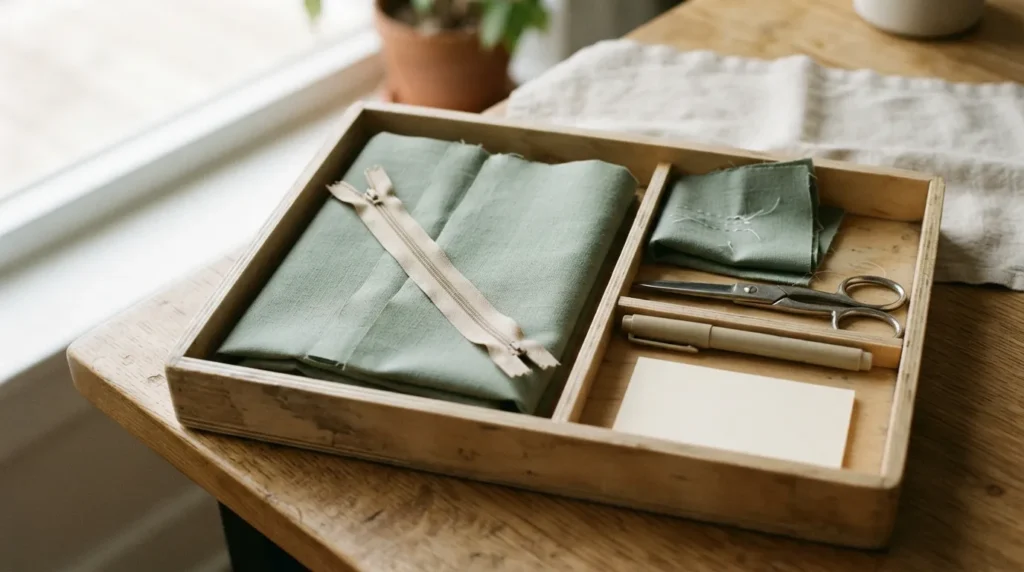
Choose a shallow tray, lidded box or project bag that fits the work without bending it. Keep the current materials together, but separate wet paint, uncured clay and adhesive from paper or fabric. Let materials dry or cure as their labels direct before putting them in a closed container.
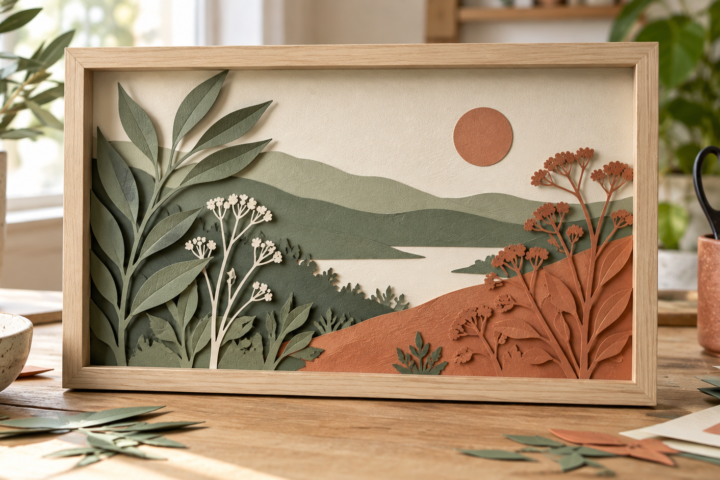
Put small pieces in a labeled envelope or divided container. Arrange them in the order you will use them: for a layered design, from background to foreground; for sewing, keep matching fabric panels and their test scrap together.
Write down the next step
Make the note specific: “topstitch the zipper side,” “test the darker green on scrap,” or “mount the middle layer after the adhesive test dries.” Add a measurement or machine setting if you will need it for that step.
If the layout is hard to describe, take a quick photo of the dry fit before moving anything. It helps when several pieces look alike or the assembly order is easy to forget.
Store tools and samples safely
Put sharp tools in a sheath or closed case. Cap markers and adhesives, and keep needles in a pincushion or container instead of loose in the tray. Store paper and fabric flat when possible; roll them only if the material can be stored that way without creasing. Do not stack supplies on dimensional work.
When a color, adhesive, stitch or machine setting matters, keep the test scrap with the project. Label what you tested and, if useful, the product or setting. An unlabeled sample may not tell you what to repeat.
Pick up where you stopped
When you reopen the project, compare the pieces with your note and check that anything left to dry or cure is ready according to its label. If the next step changes a tool setting or finish, try it on a scrap first. For example, keep the zipper test and lining pieces together while finishing the boxed-bottom zipper pouch.
Before packing up again, close blades, cover needles and put the next-step note on top. The tray should make the next action clear at a glance.