Skip to content
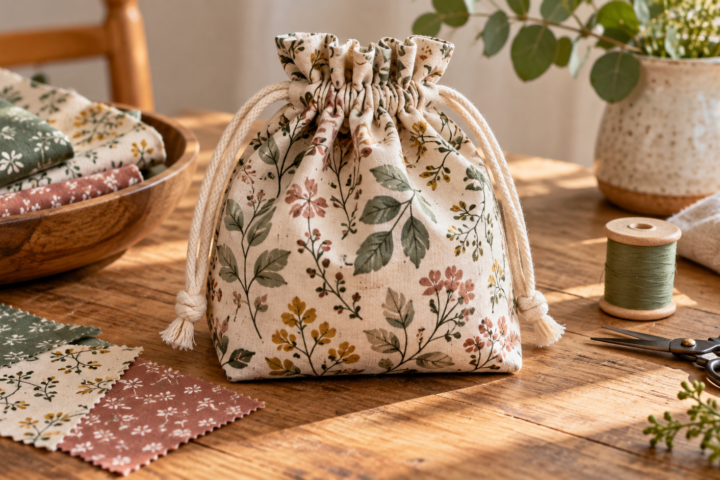
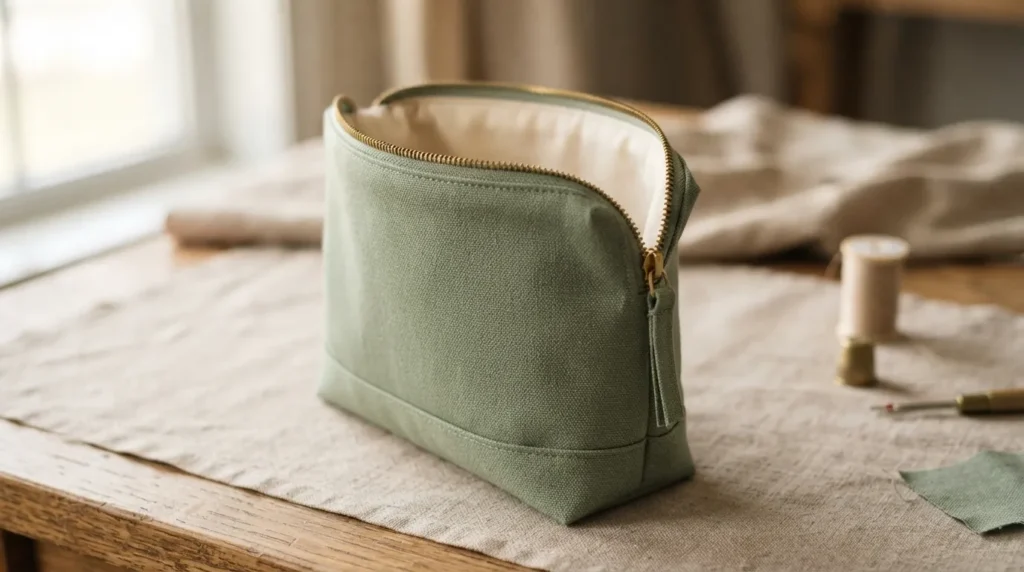
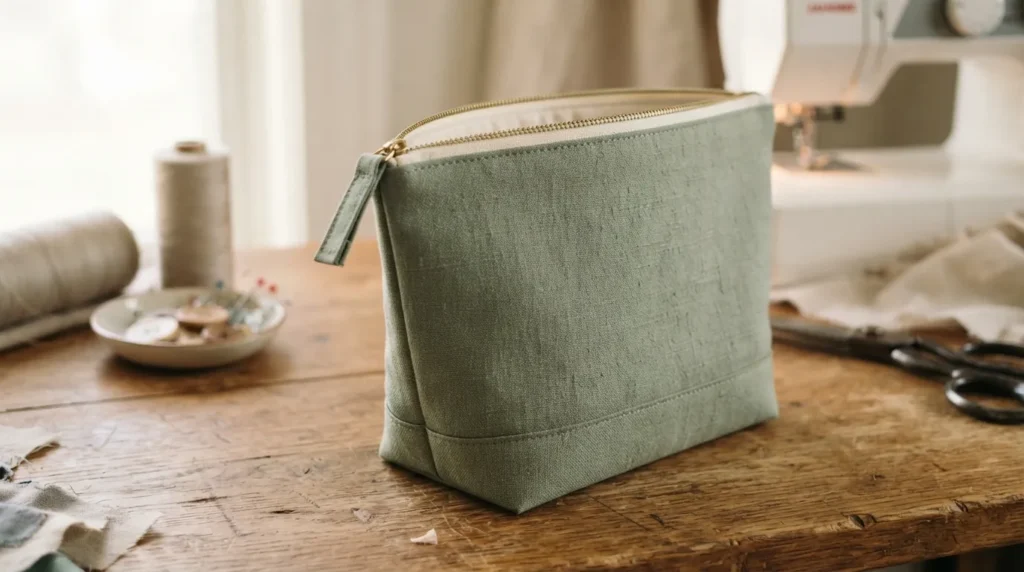
Finished sage cotton zip pouch with a boxed base on a wooden sewing table.

Boxed-Bottom Zipper Pouch in Cotton

Sew a lined cotton pouch with an 8-inch zipper and boxed corners. The 9 × 7.5 inch panels make a small pouch with a base about 2 inches deep.

Size
Approx. 8 in wide at the zipper × 6.5 in high × 2 in deep (20 × 16.5 × 5 cm); final measurements vary with zipper stops and seam allowance.

Materials

  • Outer cotton fabric — Two rectangles, each 9 × 7.5 in.
  • Lining fabric — Two rectangles, each 9 × 7.5 in.
  • 8-inch zipper — Choose a zipper whose stops fit within the panel width.
  • Fusible interfacing — Use only if suited to the fabric; follow the product label.
  • Matching thread — Test the stitch on a fabric scrap.

Tools

  • Sewing machine — Use the needle and settings recommended for your fabric.
  • Zipper foot — Keeps the stitching close to the tape.
  • Ruler and fabric marker — Mark the corner squares and seam allowances.
  • Clips or pins — Keep the zipper layers aligned.
  • Iron and pressing surface — Follow the fabric and interfacing care instructions.

Steps

  1. Cut and stabilize the panels

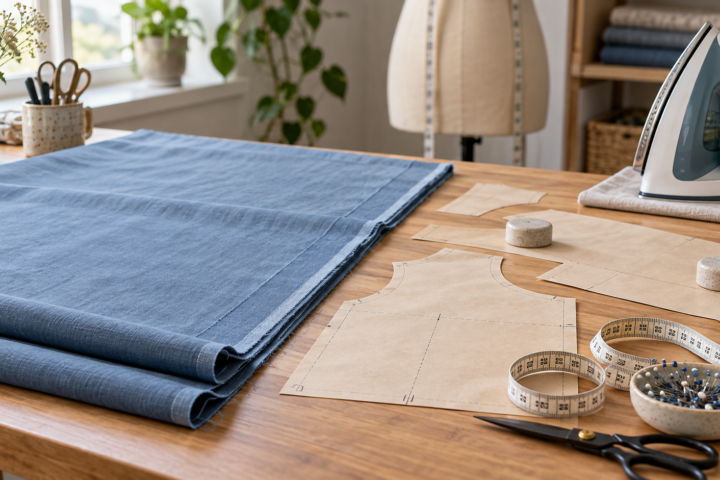
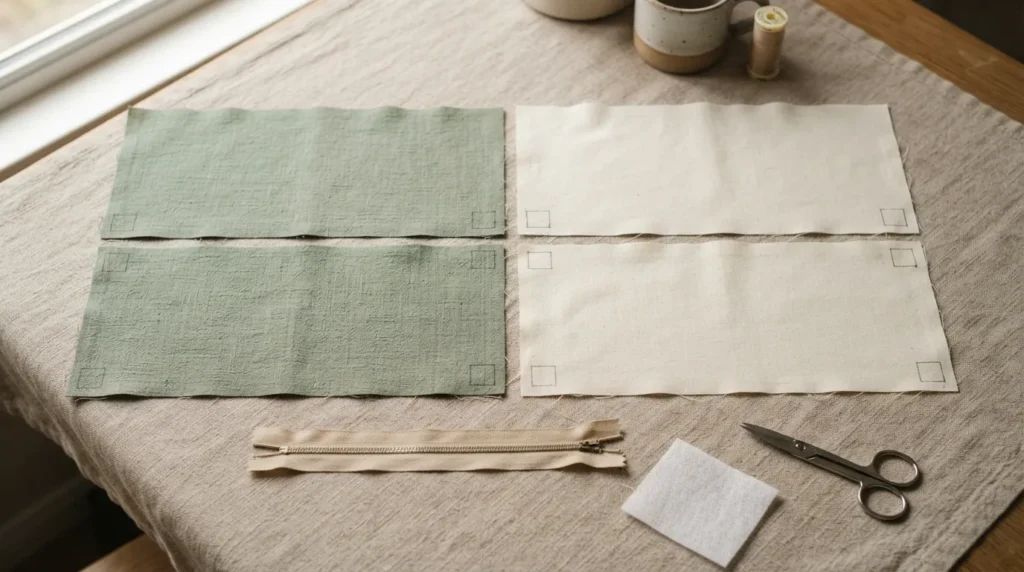
    Cut two outer and two lining rectangles, each 9 × 7.5 inches. Mark and cut a 1-inch square from both lower corners of all four panels. If using interfacing, fuse it to the outer panels according to its label, then let the fabric cool flat.

    Four sage and cream cotton rectangles with marked corner squares, an eight-inch zipper and scissors.
  2. Sew the first zipper side

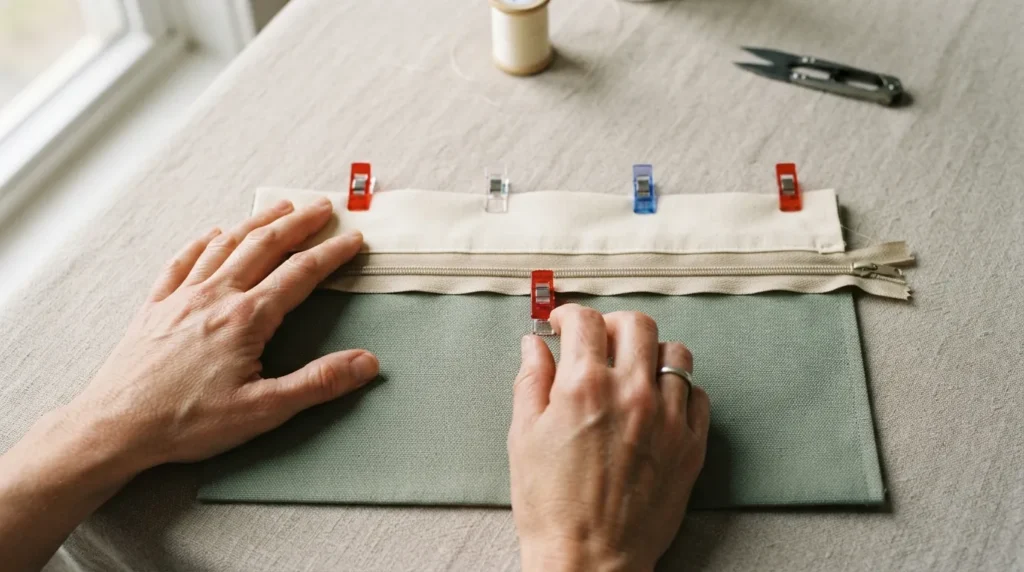
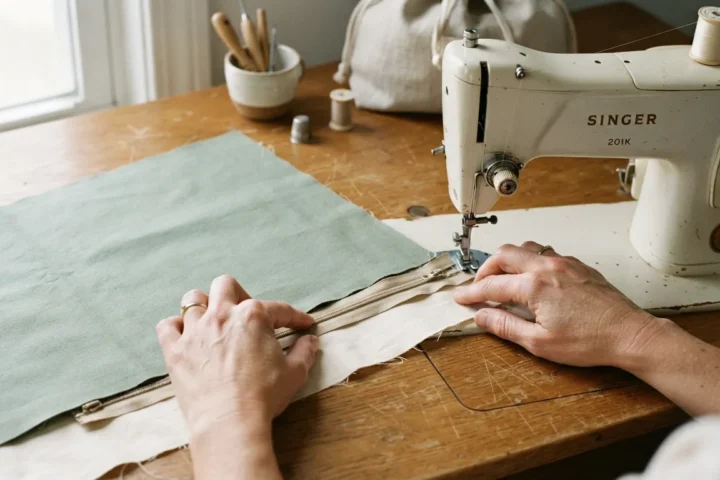
    Place one outer panel right side up. Align the zipper face down along its top edge, then place one lining panel right side down on top. Clip the layers and sew beside the zipper teeth with a zipper foot. Keep the pull clear of the needle.

    Hands clip a zipper between the outer cotton panel and its lining before stitching.
  3. Attach the other zipper side

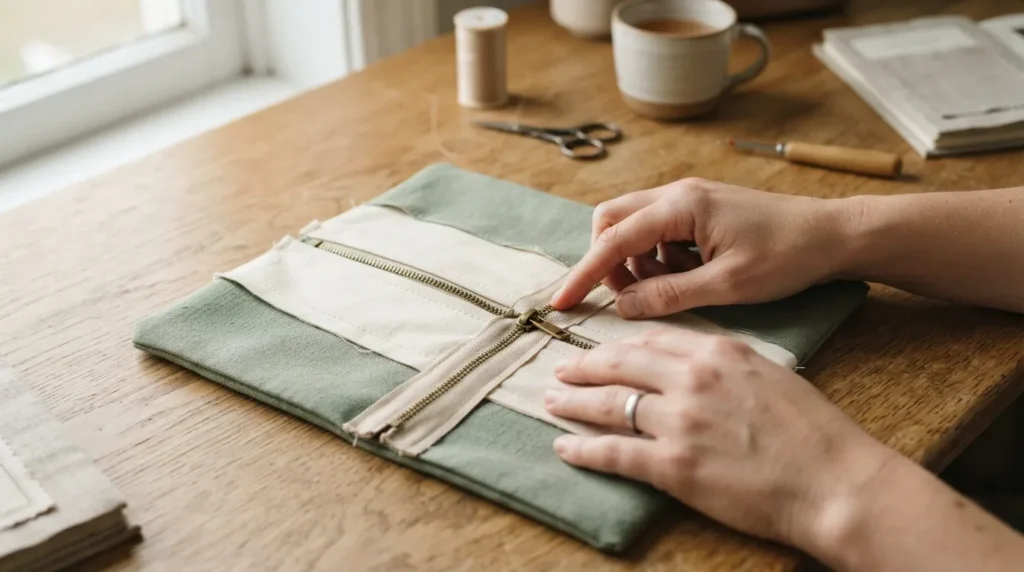
    Press the first fabric pair away from the teeth and topstitch near the fold if the fabric allows it. Repeat with the remaining outer and lining panels on the free zipper tape. Press both sides flat and check that the zipper opens without catching the lining.

    Zipper tape joins both pouch sides as the lining and outer panels are pressed flat.
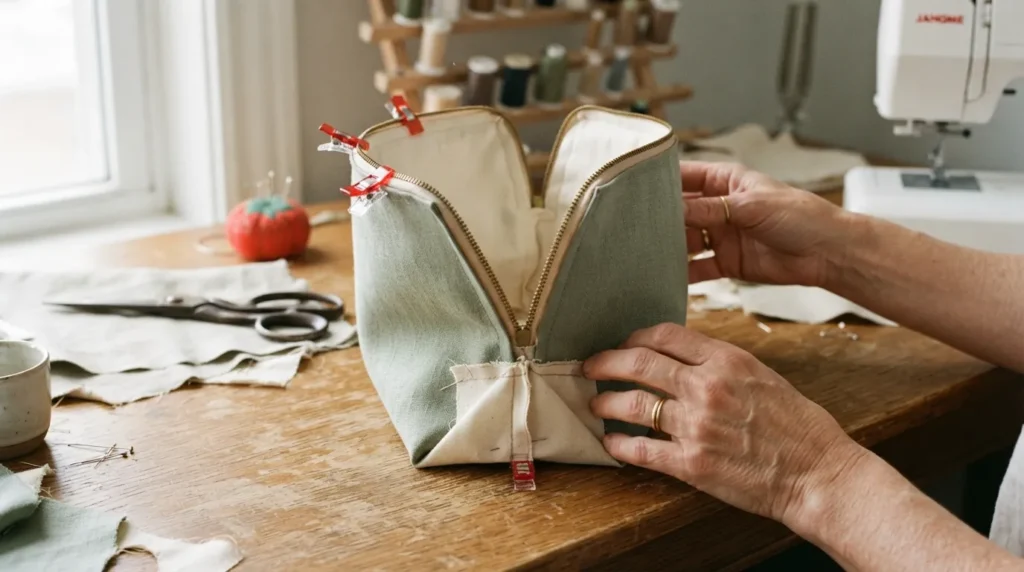
  4. Sew the pouch and box the corners

    Open the zipper halfway. Put outer panels right sides together and lining panels right sides together. Sew around the sides and bottom, leaving a 3-inch turning gap in the lining. Match the seams at each cut corner and sew across the opening to form the boxed base.

    Partly assembled lined pouch opened around the zipper while the boxed bottom corners are shaped.
  5. Turn and finish the pouch

    Turn the pouch through the lining gap. Push out the corners gently, close the lining gap with a narrow seam and tuck the lining inside. Run the zipper several times; if fabric catches, unpick the nearby topstitching and move the lining clear.

    Finished sage green lined cotton pouch stands upright with its zipper open and boxed base visible.

This pouch uses an outer fabric, a lining and one zipper. Cut each fabric layer to the same size, sew the zipper between the layers, then box the lower corners to give the pouch a flat base.

The sample starts with 9 × 7.5 inch panels and an 8-inch zipper. Its finished size is approximately 8 inches across the top, 6.5 inches high and 2 inches deep; the exact shape depends on the zipper stops and seam allowance.

Test your stitch and interfacing on scraps that match the pouch fabric. Keep the zipper partly open before sewing the pouch perimeter so you can turn the work right side out.

Questions

Can I use a different zipper length?

Yes, but adjust the panel width and keep the zipper stops inside the side seams. Test the layout before cutting.

Why does the pouch need an opening in the lining?

You turn the pouch through that opening after sewing the outer layer and lining together.

Can I skip the interfacing?

Yes, if the fabric holds its shape without it. Test a small piece first so the zipper edge does not stretch or collapse.