A French seam encloses the raw fabric edges between two stitching lines. It gives lightweight woven fabric a clean inside finish, especially along straight or gently curved seams. The two passes use the pattern’s total seam allowance, so make a test with matching scraps before sewing the project.
Work out the allowance
For a pattern with a 5/8 in (1.6 cm) seam allowance, one workable split is a first seam at 1/4 in (6 mm), trimmed to about 1/8 in (3 mm), then a second seam at 3/8 in (1 cm) from the fold. Together, the first seam and the enclosing seam use the original 5/8 in allowance. If your pattern uses another allowance or the fabric is thicker, test the split on scraps and check the finished width before cutting the garment pieces.
Sew the first pass with wrong sides together
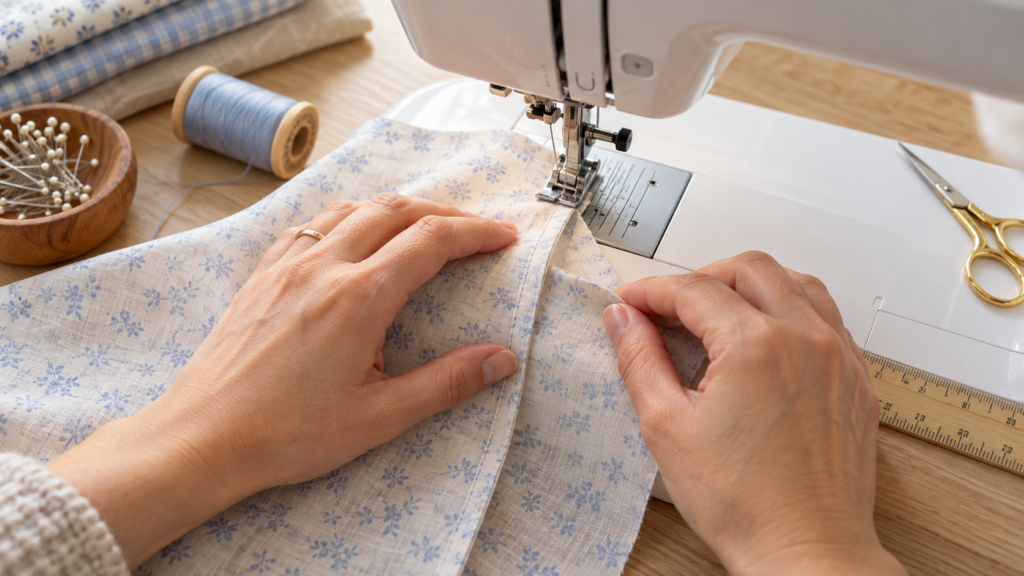
Place the fabric pieces with their wrong sides facing. Stitch the first seam using the smaller allowance from your test. Trim the allowance evenly, then press the seam flat and open it. Do not trim so close that the raw edge can escape from the second seam.
Enclose the raw edge
Turn the pieces so their right sides face each other and the first seam sits at the fold. Press that fold without stretching the bias. Stitch the second line at the distance you tested, enclosing all the trimmed edges. Press the finished seam to one side or as the pattern directs.
Check the result
Look at both sides: the right side should lie smooth, and the wrong side should have no exposed raw threads. If the seam puckers or feels bulky, adjust the first allowance or pressing on a fresh sample. French seams are awkward at thick intersections and tight curves; use the pattern’s suggested finish in those places. Janome’s illustrated French-seam example also shows how two allowances combine to enclose the edge.