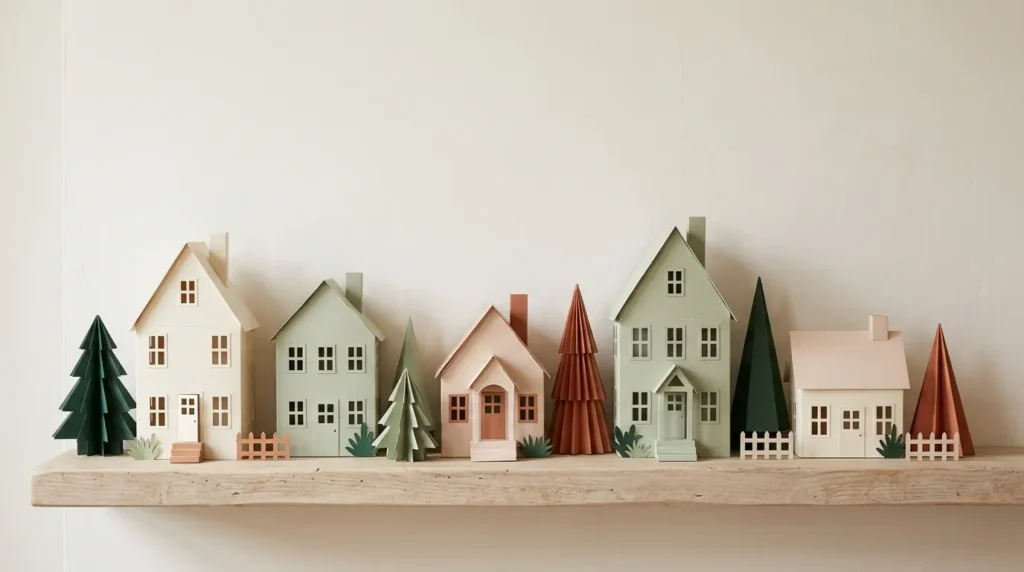
A paper Christmas village looks like one display when the houses share a scale, their rooflines remain visible, and the shelf has enough depth for each building. Plan the arrangement as a group before assembling every house. A simple row of different templates can feel crowded if the tallest roofs overlap or the front buildings hide the doors behind them.
Measure the shelf and choose a viewing angle
Measure the usable shelf depth and height, including any lip that prevents a house from sitting flush. Check the display from the doorway or seat where people will usually see it. A mantel viewed from below needs a different roofline arrangement from a shelf at eye level.
Leave space at the ends of the village. Houses placed right against a wall edge can look cut off, and the outer roofs may be difficult to see from the side. If the shelf is shallow, choose front-facing houses with a flat back. Deeper folded buildings need room behind their façades and may cast shadows over smaller houses.
For other dimensional displays that need to fit a narrow surface, see 3D paper decor for shelves and small spaces. The guide to choosing a first 3D paper craft explains why part count and assembly order matter when comparing files.
Vary the rooflines without mixing scales
Different roof shapes give a village character, but the doors and windows should still look as if the houses belong together. Compare the finished dimensions rather than relying on thumbnail images. A tall narrow house may have a similar height to a short wide one but occupy a different amount of shelf space.
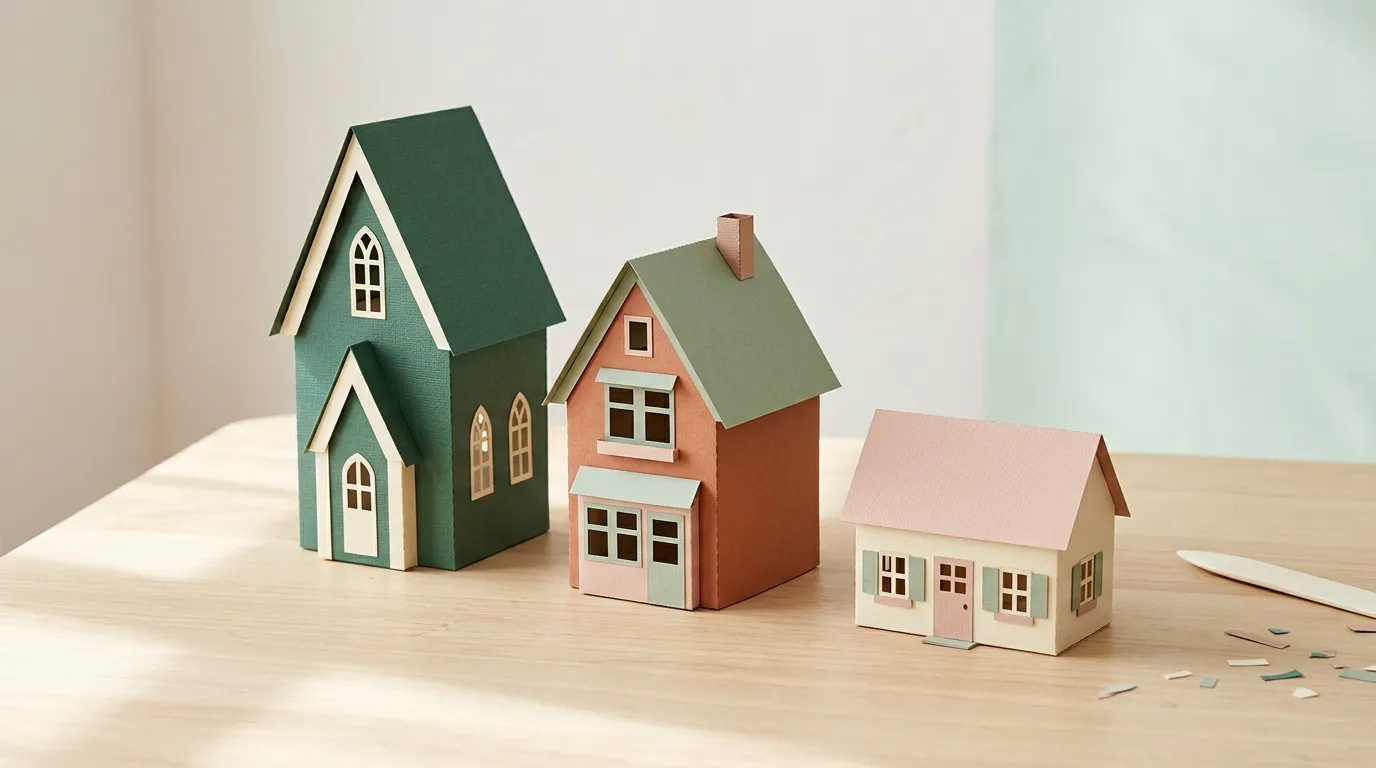
Place the largest or tallest house near the back, then use lower buildings toward the front. Keep gaps between the roof edges so each silhouette stays readable. If one house has a dark or highly detailed façade, balance it with a simpler building nearby instead of placing several busy designs together.
Check the template’s assembly views for tabs, folds, and open backs. The front preview may not show how the building stands or whether the roof needs an internal support. Keep pieces for each house together and dry-fit the walls and roof before attaching small decorative details.
Build a clear foreground and background
A paper village can sit in one line or use a shallow second row. In a single row, each façade stays easy to see. A second row adds depth, but it needs enough height difference so the front houses do not block the windows behind them. Keep the tallest shapes at the back and leave a path for light or a contrasting background to show through.
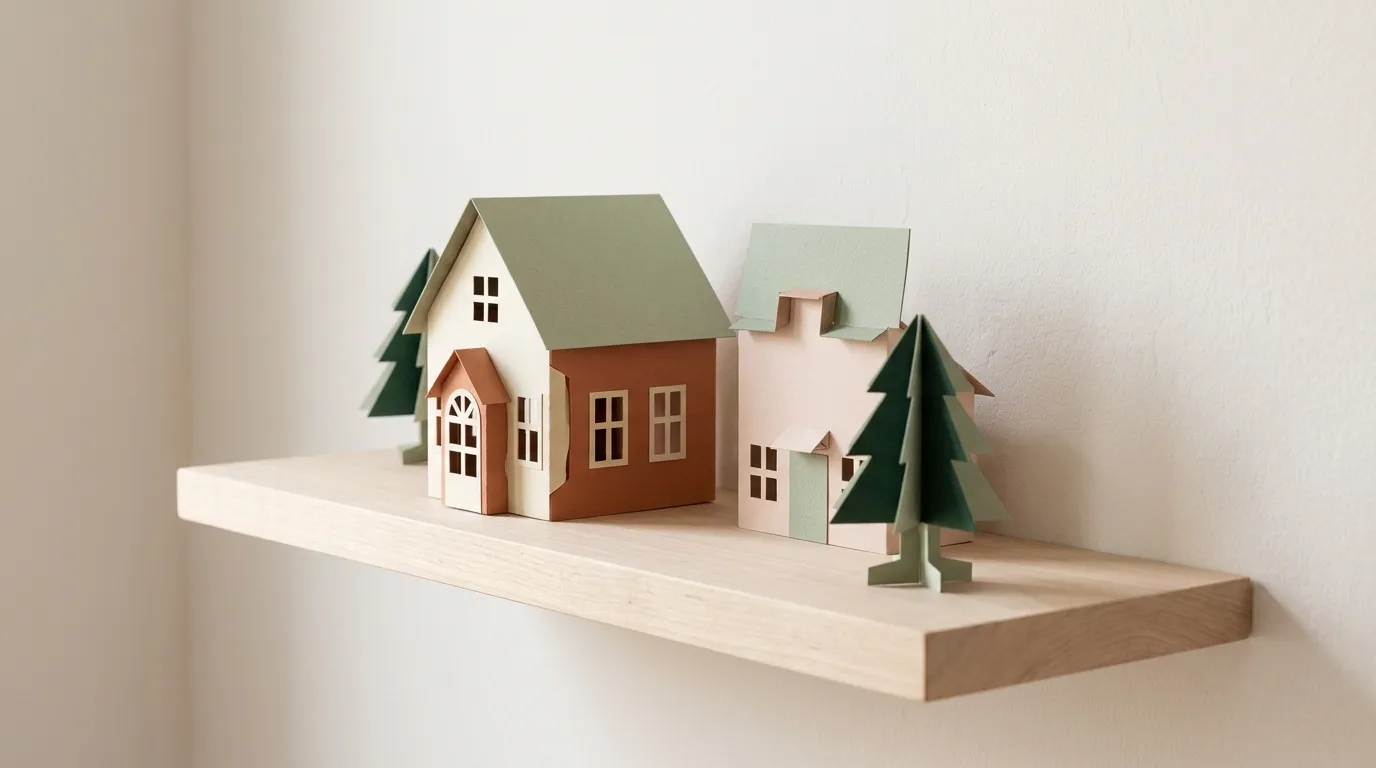
Use a base sheet if it helps the arrangement stay in place. Mark each house’s footprint on scrap paper, then move the pieces until the street or open center looks intentional. A base also makes it easier to lift the full display when cleaning the shelf, but it must fit without curling over the edge.
Keep optional lighting away from paper
Some paper house designs include open windows, but that does not make them suitable for candles. Keep flames away from paper. If you add a battery-powered LED, follow the light maker’s instructions and position it so the device does not touch or heat the paper. Do not assume a light can be enclosed inside a paper house unless its instructions explicitly allow that use.
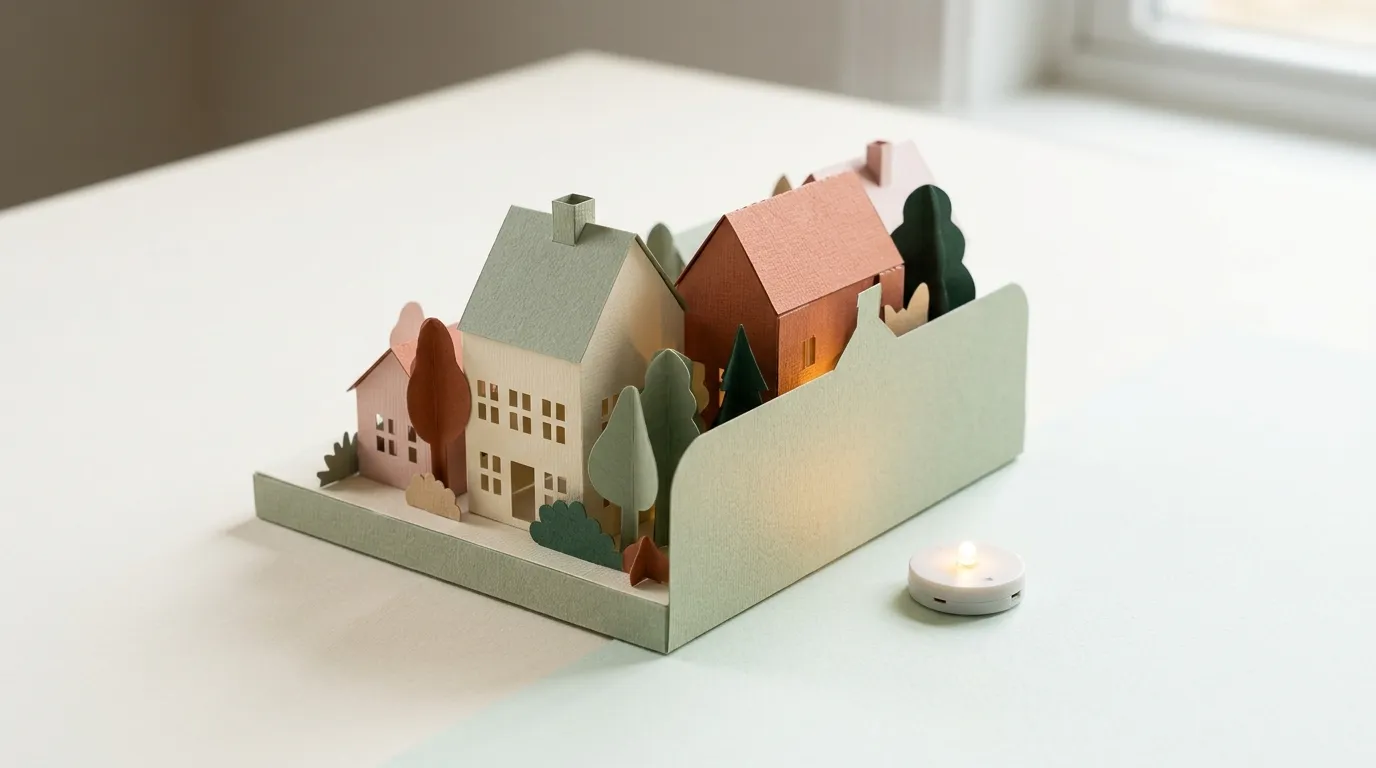
Before decorating every building, assemble one house and test it on the shelf. Check that the base sits flat, the roof stays attached, and the windows face the viewing area. Once the scale and spacing work, arrange the rest of the village and keep the houses in a shallow box when the season ends.