Paper wedding decor works best when each piece has a clear job. A folded place card can identify a guest, a small sign can direct traffic, and a paper flower can repeat the color story without taking over the table. Plan the pieces as one system before choosing templates or cutting a full batch. The paper table centerpiece guide can help with the usable table area, while the paper rosette backdrop guide covers wall width and viewing distance.
Decide what each paper piece needs to do
List the places where guests need information or where the room needs a visual anchor. A welcome sign handles arrival. A seating chart or escort display handles movement. Table numbers, menus, and place cards work close to the meal. Paper flowers, garlands, and favor details add shape around those practical pieces.
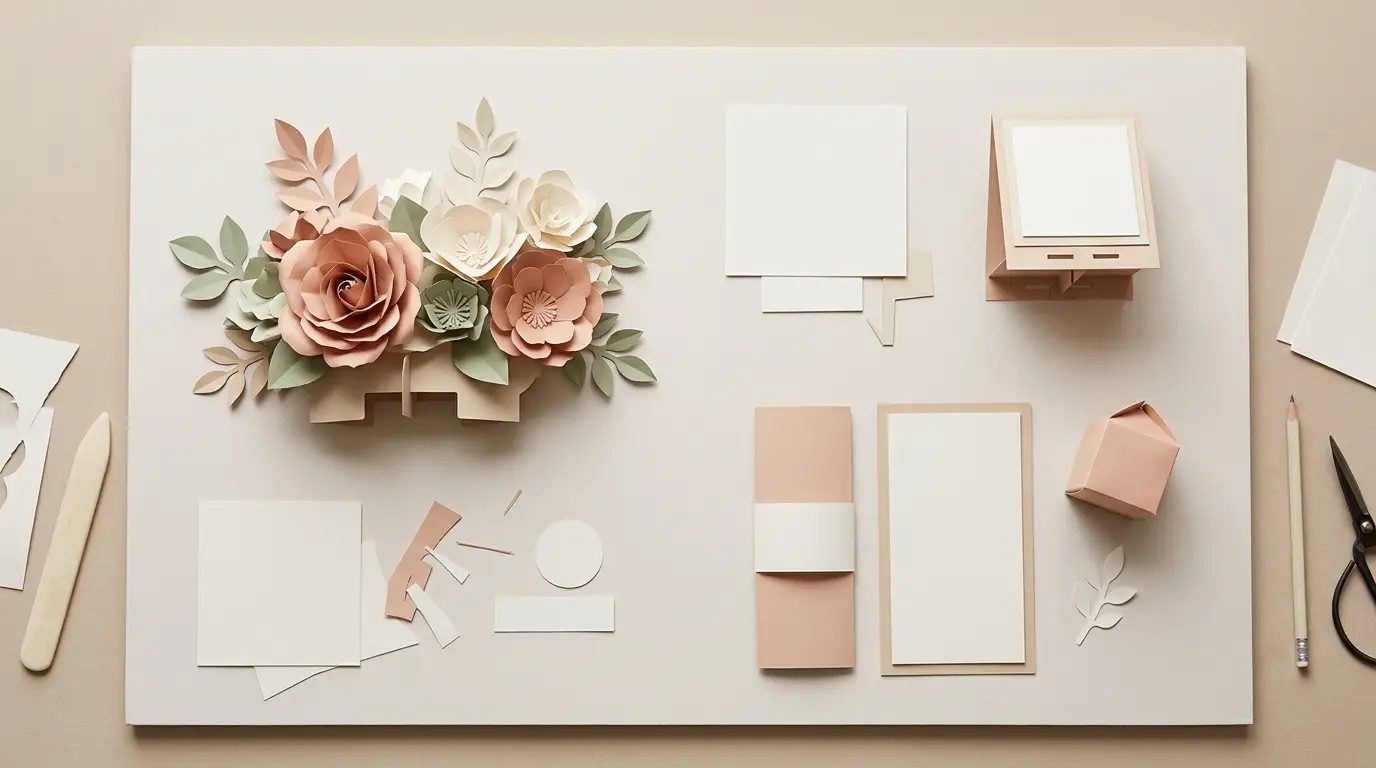
This list prevents a common planning error: making decorative pieces first and discovering later that the table has no room for dishes, or that a sign has too much text for its size. Give every item one primary task. A decorative layer can support that task, but it should not make the words harder to read or the piece harder to place.
Keep one visual system across the event
Choose the type pairing, ink color, paper family, and one recurring motif before you make individual items. If the welcome sign uses a serif heading and a simple sans-serif detail line, carry that relationship into table numbers and menus. If a leaf or flower appears on the sign, repeat it at a smaller scale on the place cards.
Repeating the system does not require identical pieces. A welcome sign can use a large border, while a place card uses one small corner shape. The goal is to make the items look related when guests see them together. If you want a broader floral direction, compare the display formats in the paper flower decor guide before choosing one motif for the whole event.
Choose ideas by placement
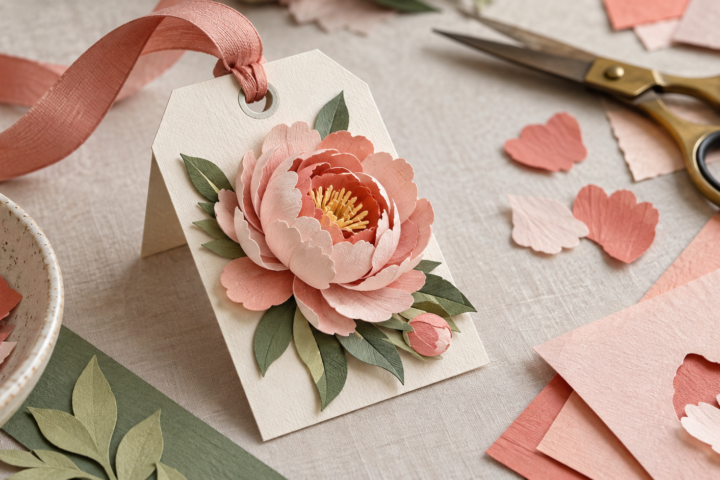
For the entrance, use a flat sign with a strong title and enough contrast to read before guests reach it. For the table, choose low pieces such as folded menus, tent cards, napkin bands, or short paper leaves. For favors, use a small tag, pennant, or repeated box detail that can be cut and assembled consistently. For a photo or sweetheart table, a narrow garland or paper flower cluster can define the area without covering the people seated there.
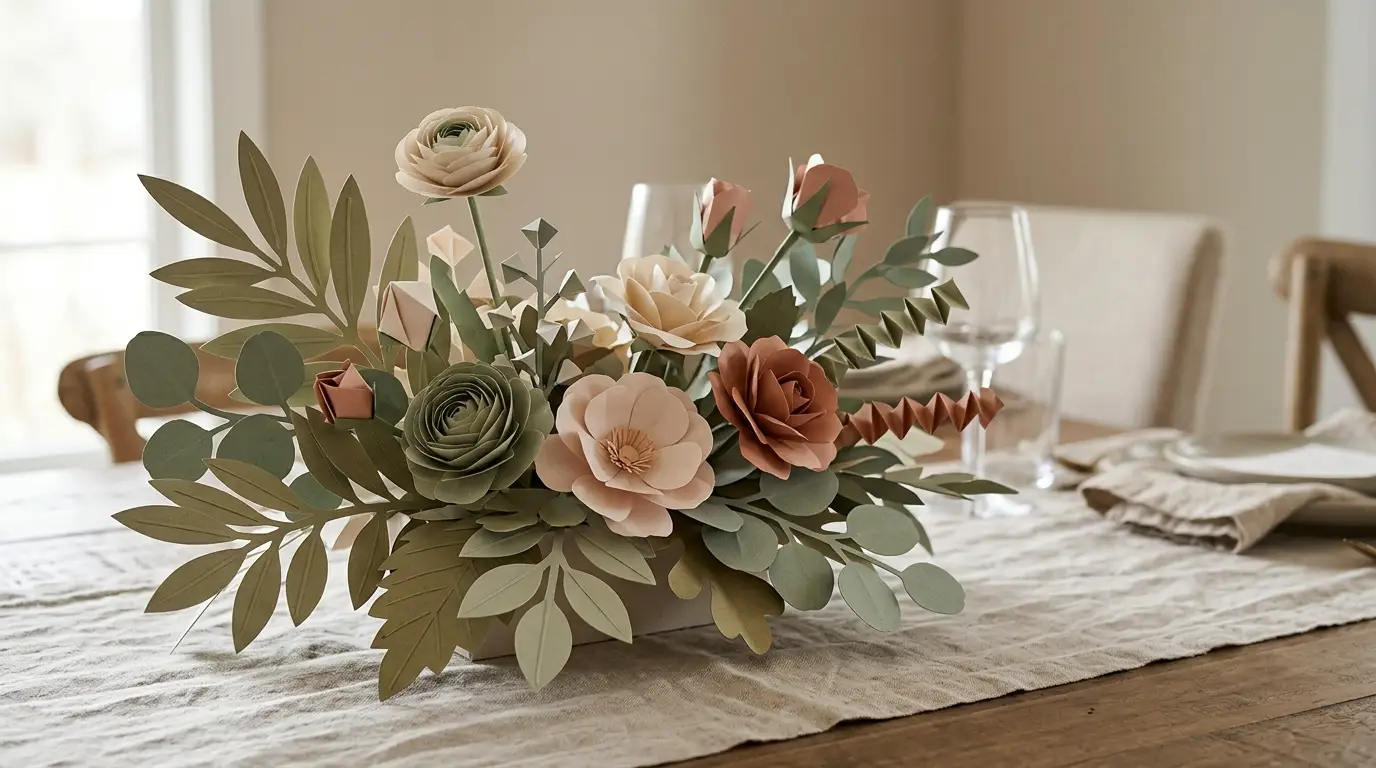
Paper flowers can also work as a bouquet, centerpiece, aisle detail, backdrop, or escort-card display. The Knot’s wedding examples show how the same material can move between these roles. Treat those examples as placement inspiration, then check the actual space, sightline, and support before choosing a format.
Make table pieces useful before making them decorative
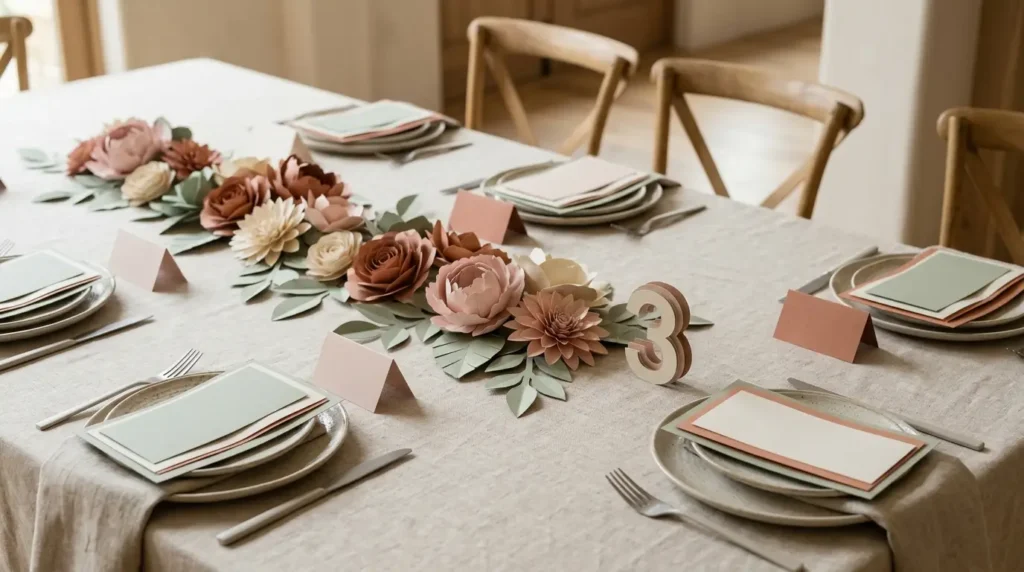
Measure the plate, glass, cutlery, and serving area first. A place card needs a readable name area. A menu needs room for the text and any dietary information. A centerpiece needs a footprint that leaves space for hands and conversation. A favor box needs enough clearance for guests to pick it up without disturbing the setting.
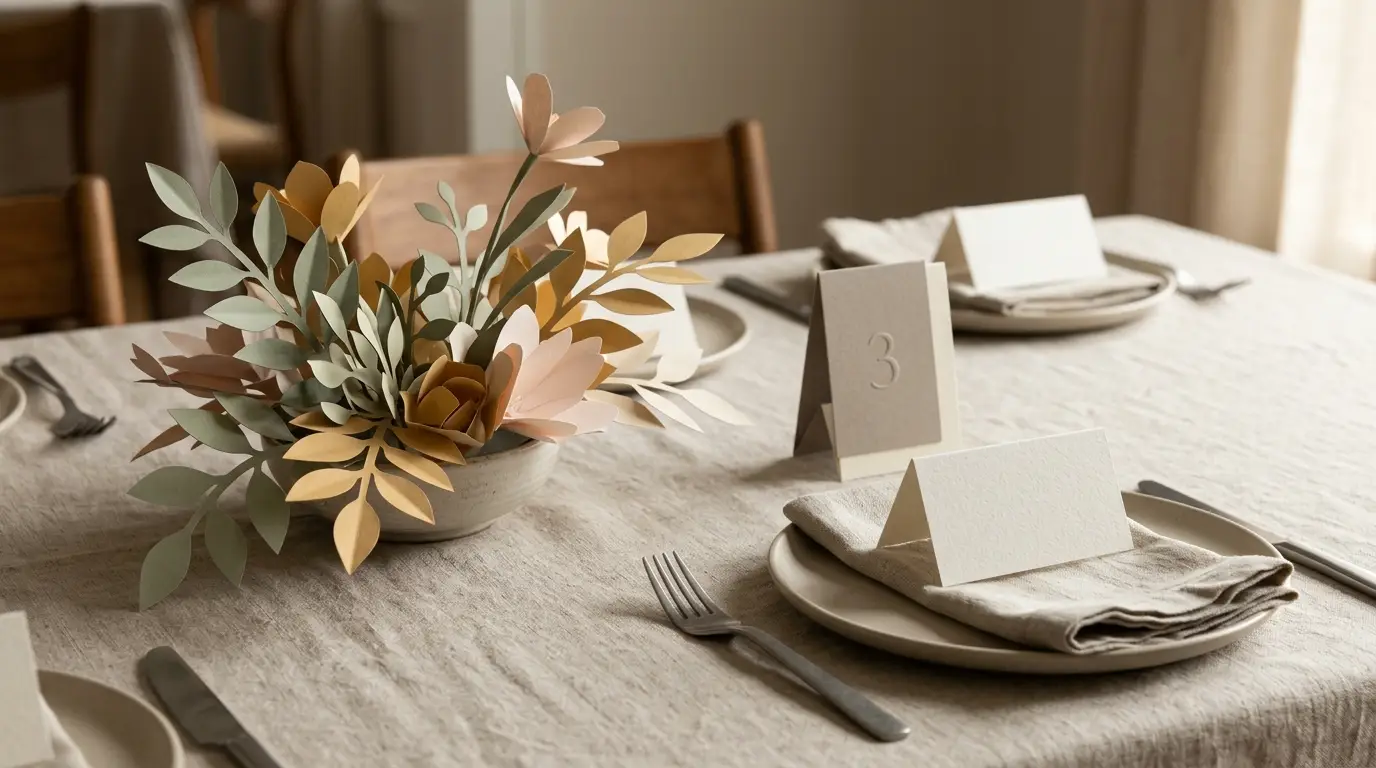
Keep tall elements at the ends of a table or on a separate surface when they interrupt the seated view. A low paper runner or a few flat leaves can add a pattern while leaving the center open. Gathered’s wedding table projects show how folded cards, bunting, paper shapes, and favor pieces can share a paper palette without needing one large centerpiece.
Plan support and attachment before the final cut
Decide whether a sign will hang, sit in a frame, or stand on an easel. A paper panel may need a rigid backing before it can stand. A garland needs attachment points that do not pull the paper out of shape. A favor tag needs a hole or fold that will survive handling.
For outdoor pieces, solve the base and wind exposure before decorating the surface. IfShe recommends treating the sign, type system, and support as one planning problem. A beautiful panel still fails if the easel is too light, the ground is soft, or the paper catches wind. Use the venue’s rules and the support manufacturer’s instructions as the final authority.
Make one complete sample before the batch
Print or cut one finished piece on the paper you plan to use. Check color, fold direction, adhesive marks, edge detail, writing space, and how the item looks from the intended viewing distance. If the piece will be handled, open and close it several times. If it will stand, leave it upright long enough to see whether the base spreads or leans.
Only after that check should you duplicate the design. Save the final wording and layout, then keep a small sample with the materials so helpers can match the assembly order.
Common mistakes
- Making decorative pieces before measuring the table or sign location.
- Using a script or small text for information guests need to read quickly.
- Changing paper colors between items without checking them in the same light.
- Leaving outdoor support, wind, or moisture out of the plan.