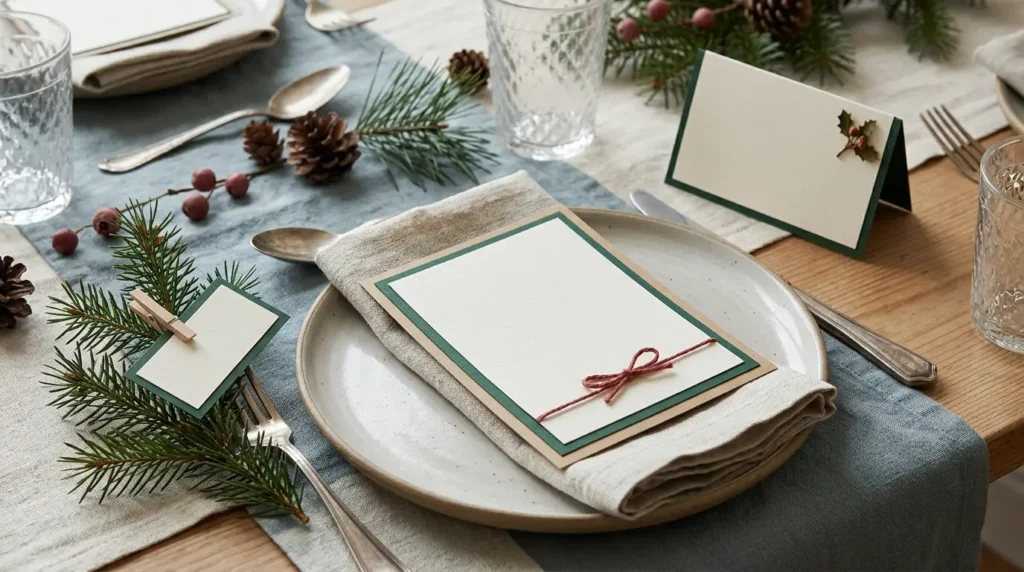
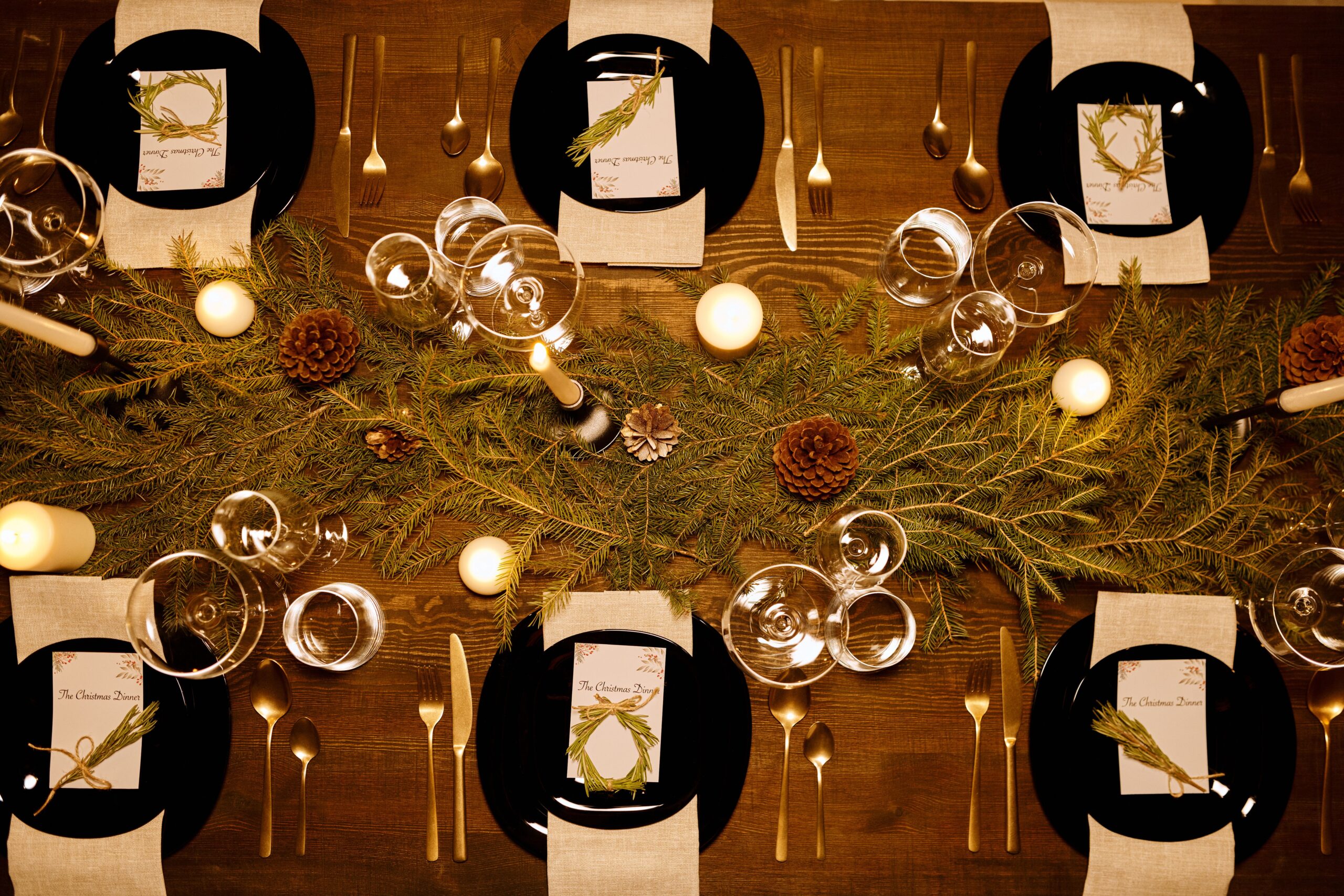
Paper Christmas place card ideas should solve a small table problem: each guest needs a visible name marker that fits the setting and stays readable after the plates, napkins, and glasses are in place. A folded tent card, flat layered panel, clip-on card, or small ornament-shaped tag can work when the writing area and support are planned together.
This is a planning guide, not a record of a completed guest set. No place-card template was downloaded, printed, cut, or tested for this article. Proof the longest name, the smallest type, and the finished card at the real table before producing every card.
Decide what the card must do
A place card can identify a seat, hold a short welcome, or become a small favor after dinner. Those jobs need different amounts of space. A name-only card can be compact, while a card with a message needs a larger panel and a writing surface that is easy to reach.
Write the names in a separate list before choosing the shape. Check the longest name, punctuation, accents, and any titles that must appear. The finished list also helps you count cards and spot changes before the paper is cut.
Choose a format that stays upright
A folded tent card stands on its own and shows the name from one side of the setting. A flat card can rest on a napkin or plate, but it may slide when the table is moved. A layered panel can add contrast, while a clip or holder gives the card a replaceable support.
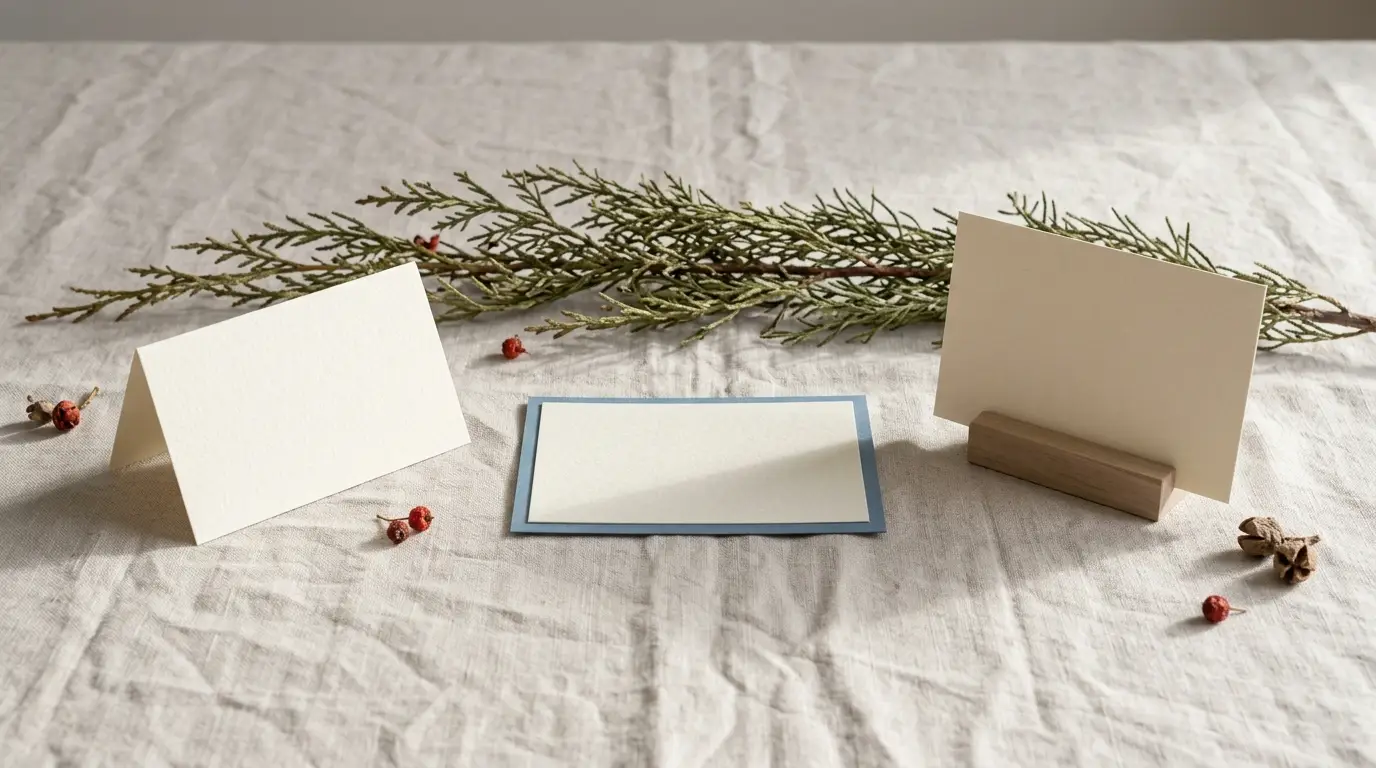
Enchanted Learning’s Christmas place-card format uses cardstock with a marked fold, and a holiday example from This Is Our Bliss combines a cut card with a small clip. The format should fit the surface where it will sit. A deep fold or wide base can crowd a small plate, while a narrow card may tip beside a large napkin.
Leave a clear writing area
Put the name in the calmest part of the design. Decorative branches, stars, berries, and cut edges can frame the panel, but they should not cross the letters. Leave a margin around the writing area so the name remains readable when the card is viewed at an angle.
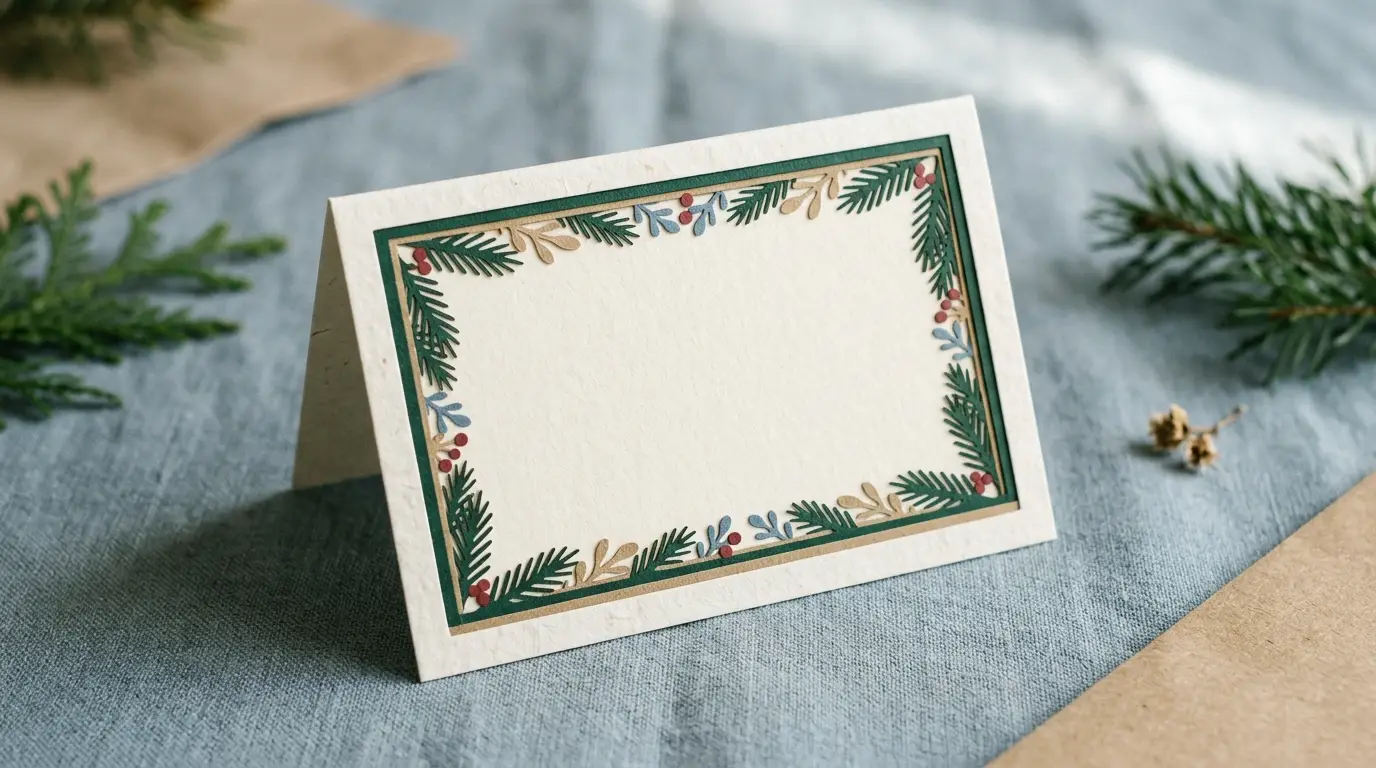
Decide whether the names will be handwritten, printed, or applied as separate paper letters. Each method affects the card size and the amount of contrast required. If a printer will handle the names, proof the exact stock and feed direction. If the names will be written by hand, test the pen on the finished paper rather than a different sheet.
Coordinate the card with the place setting
Place the card where a guest will look first, usually near the top of the plate or on the napkin. Keep it away from the fork and knife edges, the rim of a glass, and any food or sauce. A card that looks good in a flat lay can become hard to see once the setting is assembled.
Repeat one detail from the wider table design: a cream and evergreen palette, a red paper accent, a leaf silhouette, or a narrow border. The paper Christmas table decor guide covers the center strip and the order in which larger and smaller accents should be planned.
Make the set repeatable
Choose one master size and one assembly order. Cut the base cards first, then add the backing layer, border, motif, and name panel. Keep a paper sample beside the work area so the color order does not drift as the set grows.
Make a spare card for late changes and keep the final name list with the design file. If the cards use clips, ribbons, or holders, count those parts separately. A missing support can change the height or position of the finished name card even when the paper panel is correct.
Check readability at the table
Set out the complete place setting with the same plate, napkin, glass, and table covering. View the card from the doorway, from a standing guest’s approach, and from the chair. Check the longest name and the lowest contrast combination in the available light.
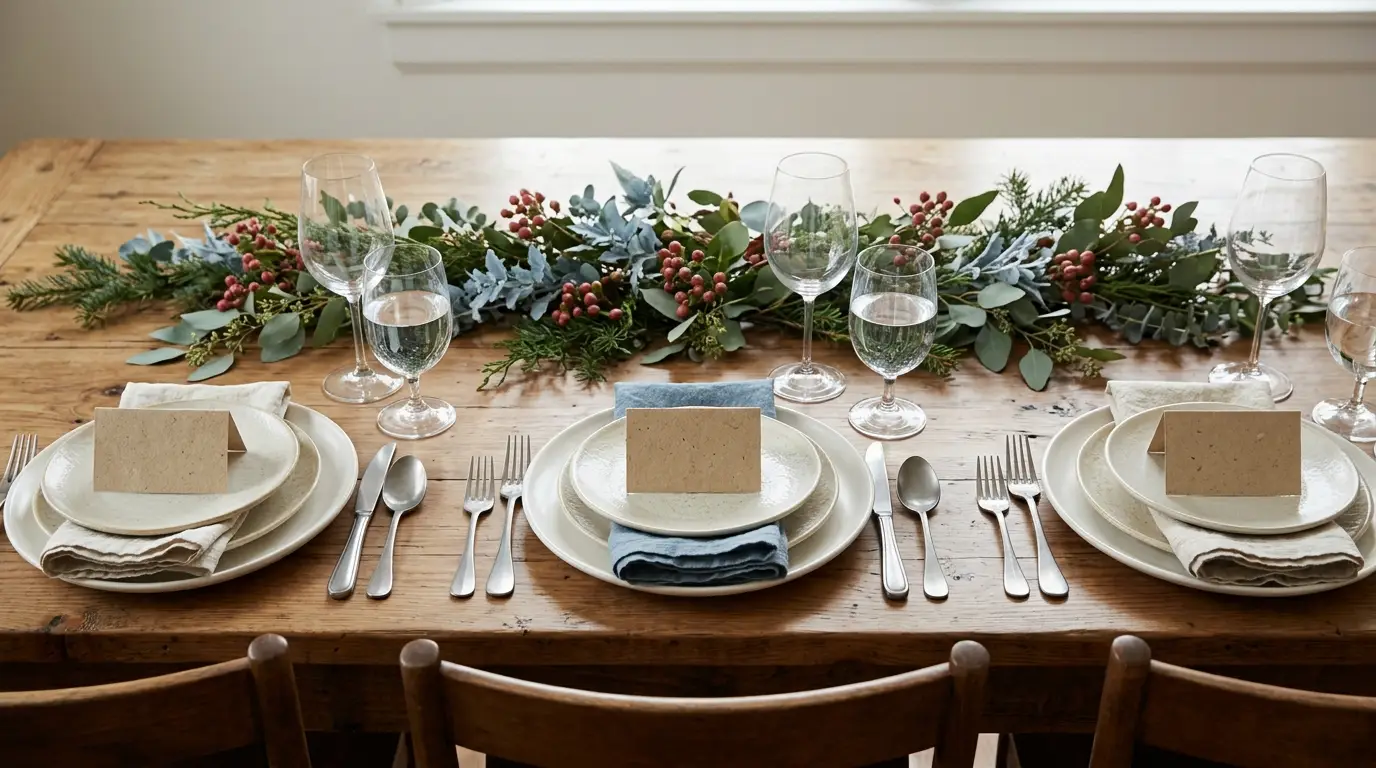
Move the card slightly if a centerpiece, napkin fold, or serving dish competes with it. The paper wedding place-card guide uses the same planning questions for fold, writing area, and table fit. The cardstock guide can help you compare the planned layer count with the paper the printer can feed.
Common mistakes
- Choosing a decorative shape before checking the longest guest name.
- Putting the name on a detailed edge or a low-contrast paper layer.
- Using a fold or holder that tips beside the napkin or plate.
- Printing the full set before checking the chosen stock and smallest type.
- Placing cards where glasses, cutlery, or a centerpiece hide them from approaching guests.
Disclosure: This guide contains no affiliate links. It describes planning choices supported by the named sources and does not claim a completed or tested Christmas place-card set.