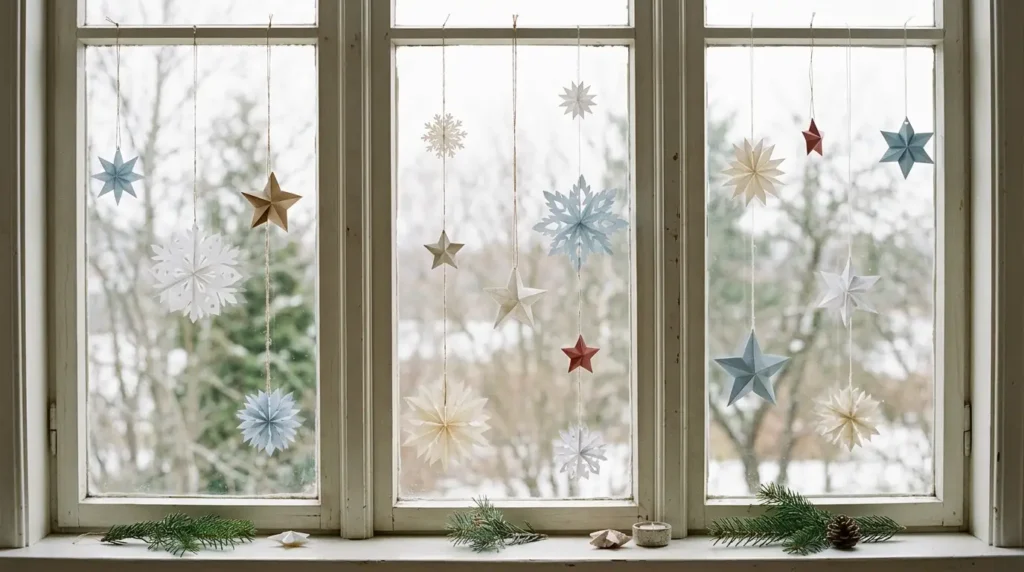
Paper Christmas window decorations can be flat snowflakes, layered stars, short garlands, or strands of shapes that hang in front of the glass. The window determines the format. A narrow pane may suit a vertical strand, while a wide window can carry a few large motifs with open space between them.
This is a planning guide, not a record of a completed window display. No paper pattern was downloaded, cut, hung, or tested for this article. Check the attachment method on the intended surface and follow the instructions for any tape, dot, rod, or hook before building the full arrangement.
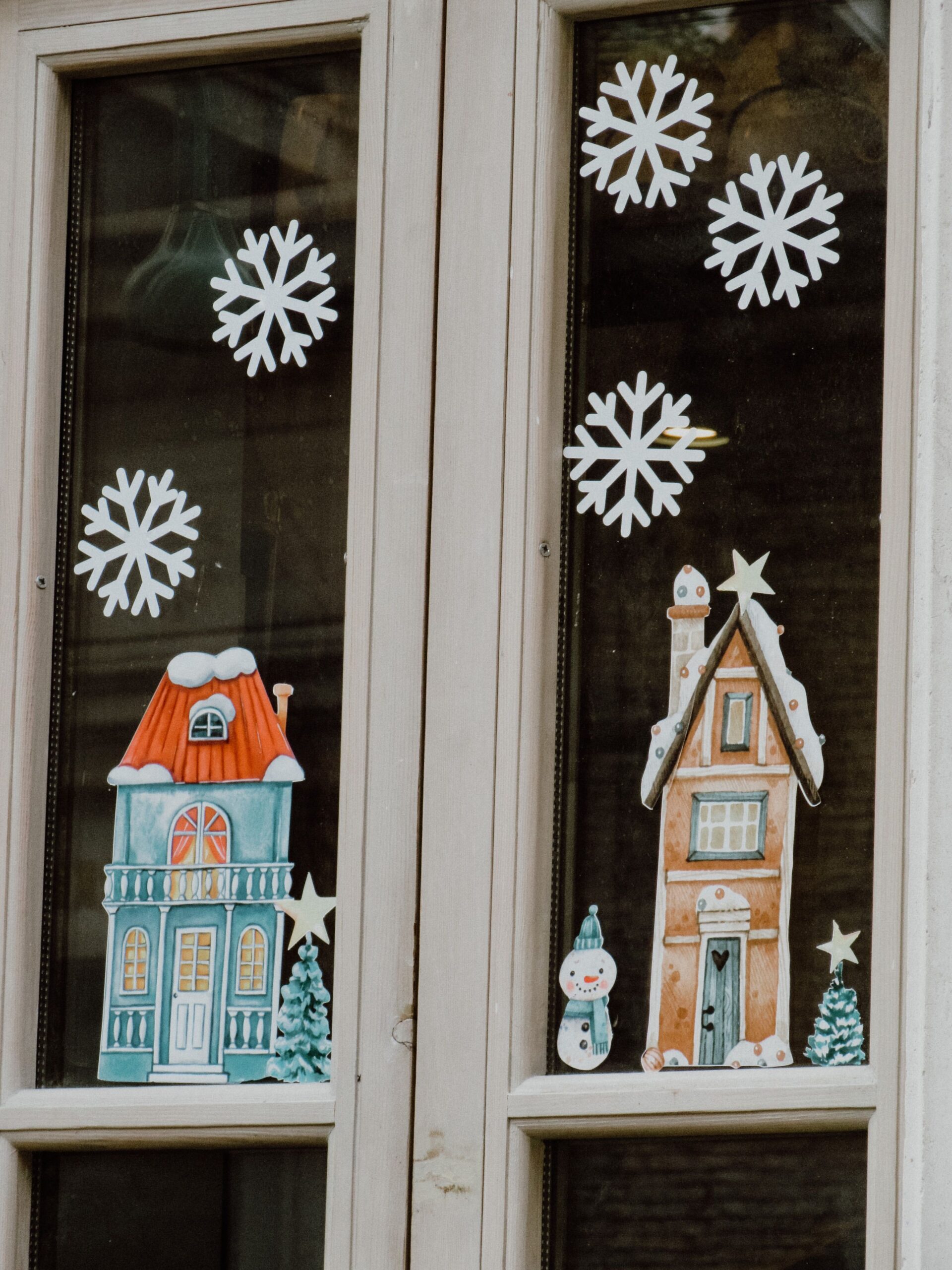
Match the format to the window
Measure the visible glass rather than the full frame. A flat snowflake can sit directly on the pane, while a hanging strand needs space above and below the motif. If the window opens, keep the decoration away from the handle, latch, and moving edge.
Decide whether the display should read from inside, from outside, or from both sides. A dense cut pattern may disappear against a bright sky, while a darker backing can make a light paper shape easier to see. Keep the main silhouettes simple enough to read at the distance where the window is normally viewed.
Choose paper that holds its shape
Light paper is easy to fold and cut, but it can wrinkle or curl after hanging. Heavier paper gives a snowflake or star more body, though it may take more effort to cut and fold. Martha Stewart’s snowflake guide makes the same distinction between easier-to-cut light paper and sturdier heavier paper.
Make one sample in the planned size. Hold it against the window in daylight and in the room’s evening light. Check the edges, the cut openings, and the amount of shadow. If the paper is too thin, a backing layer or a second offset shape may improve the outline without making the piece too heavy for its attachment.
Build flat snowflakes and stars
Flat snowflakes use the fold pattern and the cut pattern together. Keep enough uncut paper at the outer edges and around the center so the shape stays connected after unfolding. Straight cuts are easier to repeat across a batch; small curved cuts change the silhouette more quickly.
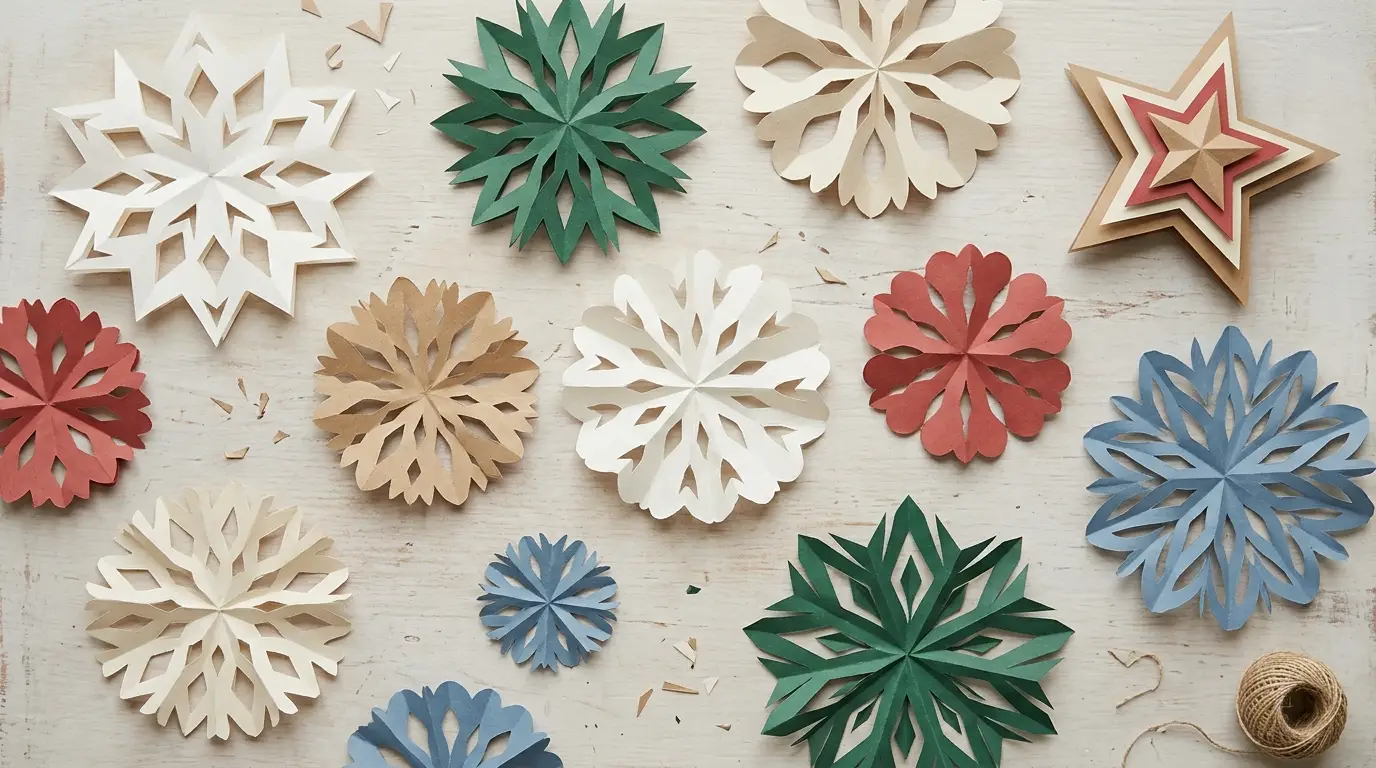
Layered stars can use a larger backing shape behind a smaller front shape. Offset the layers slightly so the edge remains visible. A narrow border is usually easier to read through a window than several tiny details packed into the center.
Add depth with hanging strands
A row of snowflakes on yarn or ribbon can create the impression of falling shapes without covering the whole pane. Use several strand lengths and leave gaps between the motifs. The strands should hang straight enough that the shapes remain face-forward instead of turning sideways.
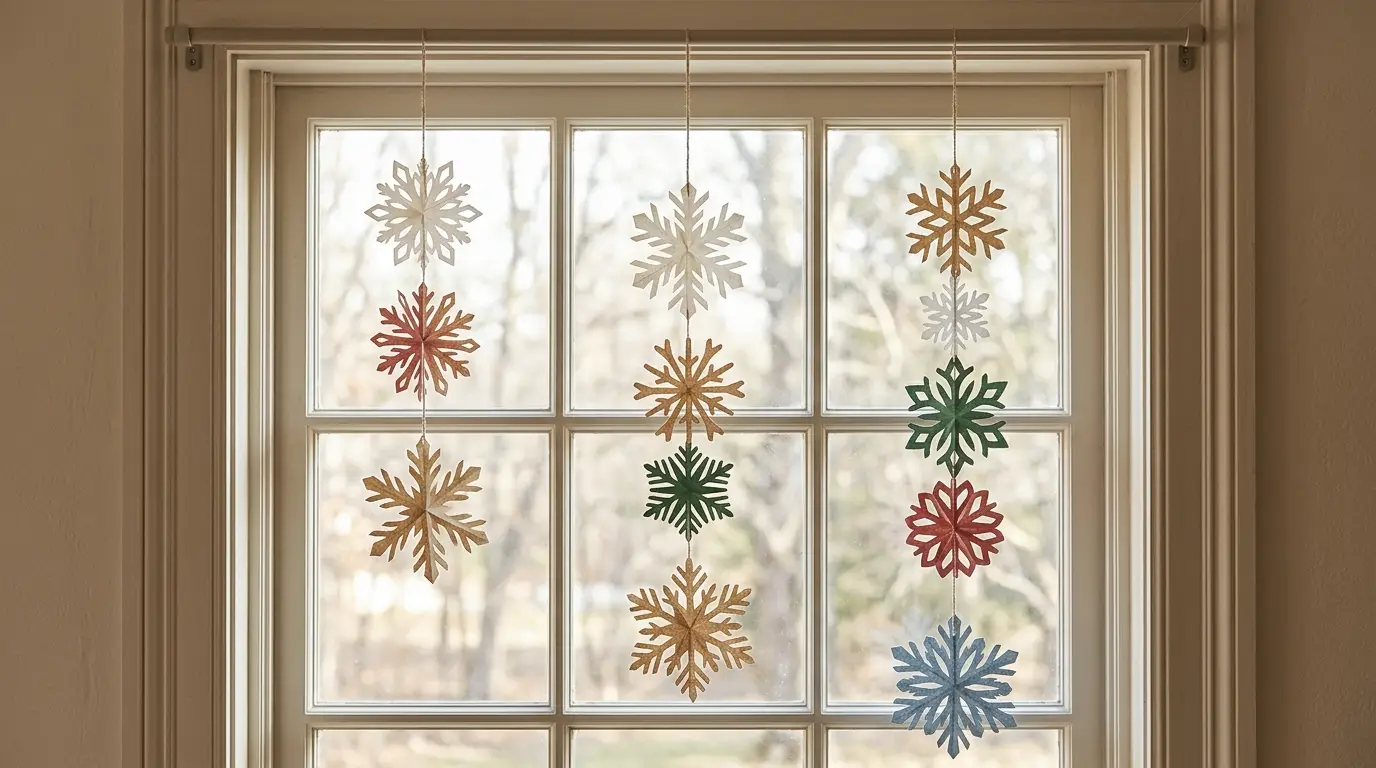
In My Own Style describes using strands tied to a tension-style curtain rod and also discusses a glue-dot attachment. These methods are surface-specific. Test a small piece first, keep the attachment away from a hot or damp area, and confirm that the decoration can be removed without harming the finish.
Plan the view and the attachment
Lay the paper shapes on the floor in the same order as the window. Mark the left and right edges, the highest attachment point, and the lowest hanging point. This makes it easier to compare a centered arrangement with an asymmetrical one before you commit to the full set.
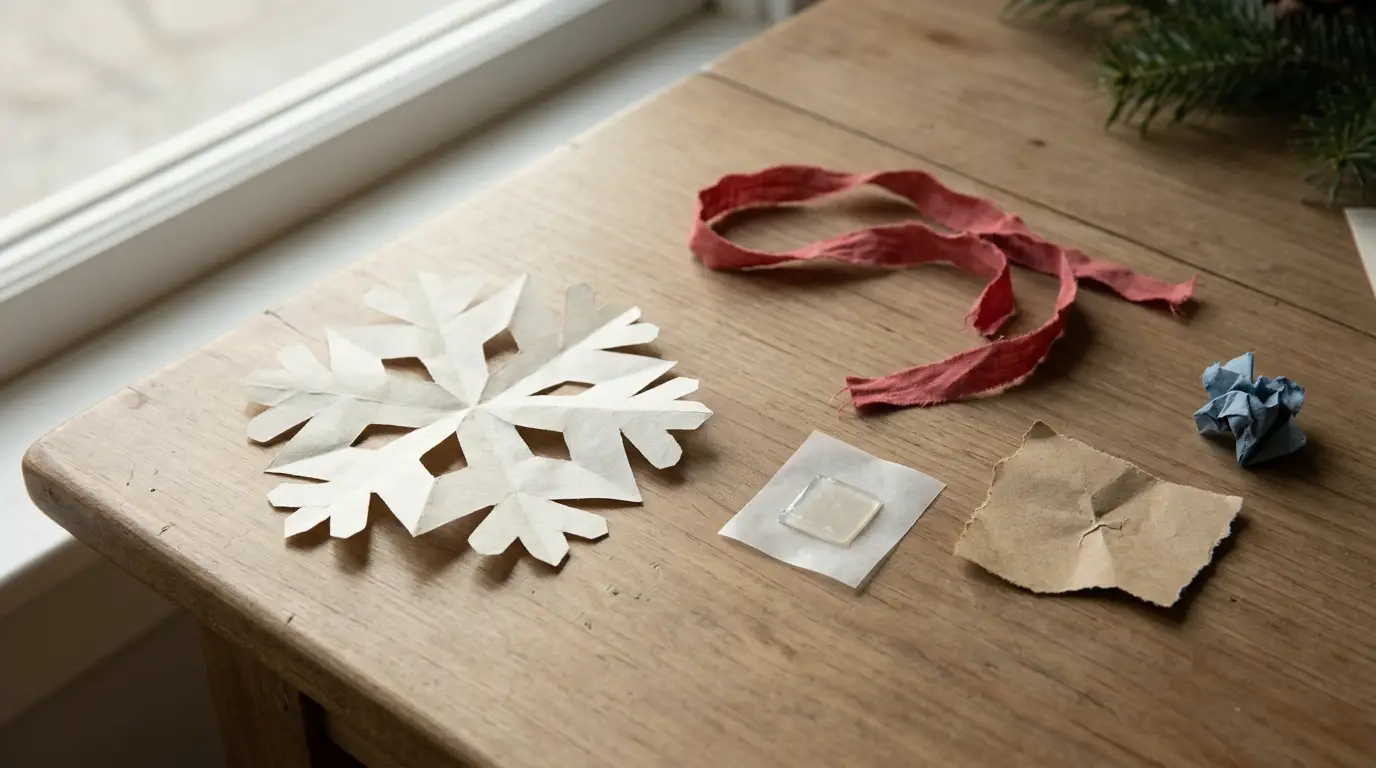
Use a light attachment at a broad, reinforced part of the paper. A tiny hole near a narrow cut edge can tear when the piece moves. The paper snowflake garland guide covers spacing for a short hanging line, while the paper garland guide covers the wider question of repeat length and display scale.
Store the display after winter
Remove the paper before it becomes damp, crushed, or tangled. Flat snowflakes can be stacked between clean sheets of paper. Hanging strands need to be wrapped around a loose card or stored in a shallow box so the shapes do not fold around each other.
Label the strand length and the window it fits. That small note saves time the following season and makes it easier to replace one damaged snowflake without redesigning the whole display. For a tree-based hanging format, see the paper Christmas ornaments guide.
Common mistakes
- Measuring the whole window frame instead of the glass that will actually be decorated.
- Using a paper weight that curls, tears, or overwhelms the attachment point.
- Cutting too close to the center or outer edge and weakening the snowflake.
- Hanging every strand at the same length and losing the open gaps between motifs.
- Assuming an adhesive is removable without testing it on the intended surface.
Disclosure: This guide contains no affiliate links. It describes planning choices supported by the named sources and does not claim a completed or tested paper Christmas window display.